
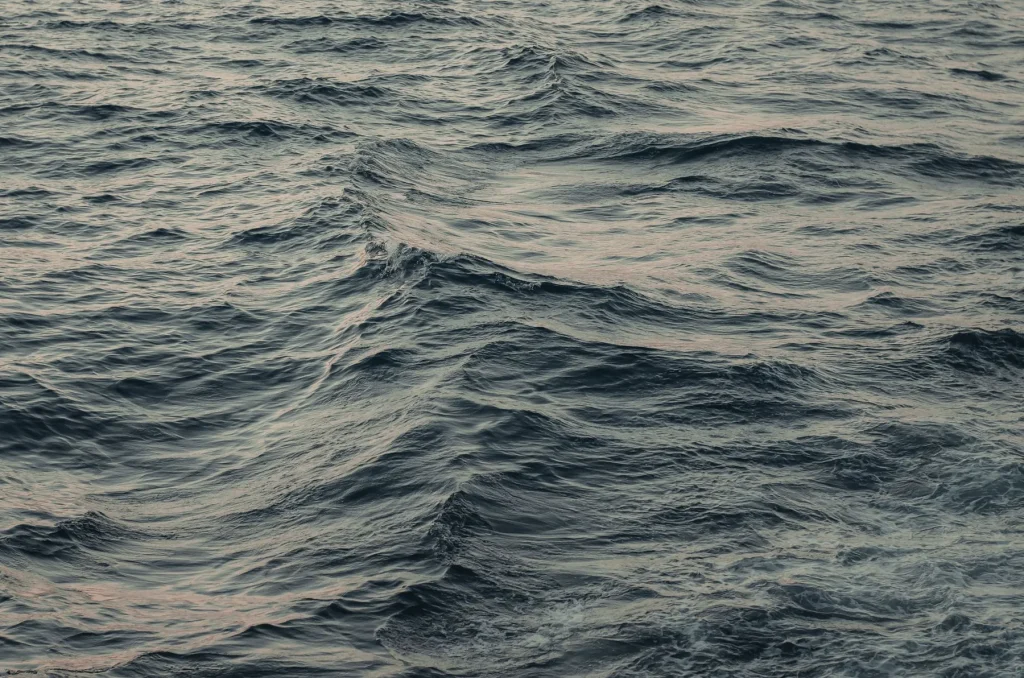
Claude Debussy, one of the greatest French composers, left his mark on the history of music with his masterful work, La Mer. Composed in Burgundy in 1903, far from the ocean, this piece nevertheless embodies a profound connection with marine elements. How was an artist able to capture the essence of the sea without being physically near it?
This work, structured in three movements, is often compared to a symphony. It reflects Debussy’s passion for the vastness of the sea, nurtured by his childhood near the coast. The innovative use of brass and percussion heightens the evocation of waves and underwater life.
The 1905 premiere of La Mer was met with skepticism, but it is now celebrated as a masterpiece. To learn more about the work, explore this in-depth analysis of its structure.
Introduction to Debussy’s La Mer
A revolutionary piece was born amid the tranquility of Burgundy. In 1903, Claude Debussy began composing La Mer, far from the coast yet profoundly inspired by the vastness of the sea. Consisting of three movements, the work is often described as a set of symphonic sketches.
The genesis of this piece was shaped by a complex personal context. Debussy, then involved with Emma Bardac, found a source of inspiration in their relationship. However, the situation also affected the work’s reception, particularly because of the marital scandal surrounding the composer.
La Mer premiered on October 15, 1905, at the Concerts Lamoureux. Featuring 120 musicians, its orchestration was innovative for the time. Rehearsals conducted by Camille Chevillard were difficult. Debussy was often bewildered by the conductor’s poor understanding of his work.
The subtitle Three Symphonic Sketches reflects the unique nature of the piece. As François-René Tranchefort observed, La Mer is a “symphony” that transcends traditional conventions. To learn more, discover everything you need to know about La Mer.
| Event | Date | Details |
|---|---|---|
| Composition | Summer 1903 | Work begins in Bichain, Burgundy. |
| Premiere | October 15, 1905 | First performance at the Concerts Lamoureux in Paris. |
| Birth of Chouchou | October 30, 1905 | Birth of Claude-Emma, the daughter of Debussy and Emma Bardac. |
Compared with Debussy’s other works, La Mer was composed in less than two years, a relatively short period. By contrast, pieces such as Nocturnes and Images required several years of work. This speed testifies to the intense inspiration that guided the composer.
Debussy’s Marine Inspirations
Seascapes always occupied a central place in Claude Debussy’s imagination. From an early age, he was fascinated by the vastness of the sea, a passion that profoundly influenced his work.
Childhood Memories and the Mediterranean
In 1870, Debussy discovered the Mediterranean at Cannes. This first encounter with the sea marked his childhood and nurtured his future artistic projects. His father, who envisioned a naval career for him, also contributed to this early fascination.
In correspondence with André Messager, Debussy referred to his memories of the sea, emphasizing their effect on his creativity. These moments spent by the water forged his intimate connection with aquatic landscapes.

The English Channel and the Atlantic Ocean
Later, Debussy developed a preference for landscapes along the English Channel, particularly at Pourville and Jersey. In 1904, he traveled to Jersey with Emma Bardac, an experience that strengthened his attachment to the Atlantic.
The contrast between the Mediterranean and the Atlantic held an important place in his imagination. Although different, these two maritime worlds inspired his compositions in distinctive ways.
The influence of painters such as Turner and Monet is also noteworthy. Their depictions of the sea guided Debussy in his search for a pictorial form of musical expression. To learn more about this inspiration, explore this in-depth analysis of La Mer.
The Structure and Movements of La Mer
Debussy’s La Mer is distinguished by its three-movement structure. Each section embodies a different facet of aquatic landscapes, creating a unique narrative and emotional progression. This musical architecture reflects exceptional artistic mastery.
From Dawn to Noon on the Sea
The first movement, entitled From Dawn to Noon on the Sea, follows a modified sonata structure. It begins with a subtle evocation of dawn, featuring musical motifs that suggest the rising sun. The brass, including four muted horns, adds a rich and profound texture.
This movement is characterized by a slow but powerful progression culminating in a brilliant coda. Here, Debussy captures the changing light and the day’s mounting energy.
Play of the Waves
The second movement, Play of the Waves, takes the form of a scherzo. It features harp interjections and complex rhythmic motifs that evoke the capricious motion of the waves. The polyphony, described as “prestigious” by Jean Marnold, heightens the impression of fluidity and dynamism.
This movement contrasts with the first through its light, dancing character while maintaining thematic coherence.
Dialogue of the Wind and the Sea
The third movement, Dialogue of the Wind and the Sea, explores dramatic tension. Percussion instruments, particularly antique cymbals and the tam-tam, play a central role. This dialogue between natural elements creates a powerful, evocative atmosphere.
The movement’s structure recalls a rondo, with recurring themes that intertwine and develop. It concludes the work on a note that is both tumultuous and serene.
Debussy’s Compositional Techniques
Debussy’s musical innovations redefined the boundaries of composition in the early twentieth century. In La Mer, he introduced revolutionary harmonic and orchestral approaches, marking a turning point in the history of music.

Harmonic and Orchestral Innovations
Debussy used whole-tone scales to create a fluid, dreamlike atmosphere. Combined with tremolo string clusters, this technique evokes the motion of the waves. The orchestra thus becomes a tool for painting soundscapes.
The use of mutes and unusual playing techniques adds subtle nuances. Extreme dynamics ranging from ppp to fff intensify the work’s expressiveness. These choices demonstrate exceptional mastery of orchestral techniques.
The Pictorial Quality of the Music
Debussy drew inspiration from Impressionist painters such as Monet and Turner. Like a canvas, his music captures shifting light and the textures of water. This pictorial approach is reflected in the score, where every note seems to possess its own color.
The influence of the gamelan ensembles he discovered at the 1889 Exposition Universelle is also noteworthy. Exotic timbres and complex rhythms enrich the work, creating a unique fusion of East and West.
| Technique | Description |
|---|---|
| Whole-tone scales | Create a fluid, dreamlike atmosphere. |
| Tremolo string clusters | Evoke the motion of the waves. |
| Extreme dynamics | Heighten expressiveness, from ppp to fff. |
To explore these techniques further, read this in-depth analysis of Debussy’s manuscripts. These sketches reveal the corrections and reflections that shaped La Mer.
The Critical Reception of La Mer
The reception of La Mer at its premiere came as a genuine shock to Debussy. On October 15, 1905, the work was presented to a perplexed audience at the Concerts Lamoureux. Contemporary critics called the piece “harsh” and “unpleasant,” revealing their failure to understand its innovative character.

Camille Chevillard’s conducting at the premiere was criticized for lacking refinement. Dissatisfied with the performance, Debussy decided to conduct the work himself in 1908. This decision marked a turning point in the perception of La Mer, which began to be appreciated for its complexity and beauty.
The Premiere and Initial Reactions
At its premiere, La Mer was met with skepticism. Critics emphasized its experimental character, judging it too far removed from the conventions of the time. This response nevertheless contrasted with the enthusiasm of some listeners, who regarded it as a revolutionary work.
The Evolution of the Work’s Reputation
After 1908, the reputation of La Mer gradually changed. Historic recordings, particularly those by Ernest Ansermet and Pierre Boulez, contributed to its recognition. Today, the work is considered a masterpiece, illustrating the evolution of musical tastes.
To learn more about this transformation, explore this in-depth analysis of its critical reception.
Conclusion
Claude Debussy’s work La Mer remains a major piece in the symphonic repertoire. It marked a turning point in the history of music, influencing composers such as Charles Kœchlin and Jean Cras. Its impact extends beyond the classical world and even reaches film music, as in the famous Disney short film.
This creation continues to be programmed in concert halls, demonstrating its enduring appeal. Louis Laloy described the piece as an “ocean of sound,” capturing the essence of Debussy’s art. Compared with the marine works of Britten or Takemitsu, it stands apart through its unique and timeless approach.
To take this analysis further, discover a comparative listening survey of La Mer. This work embodies the perfect fusion of life and creation, leaving an indelible mark on the history of music.