
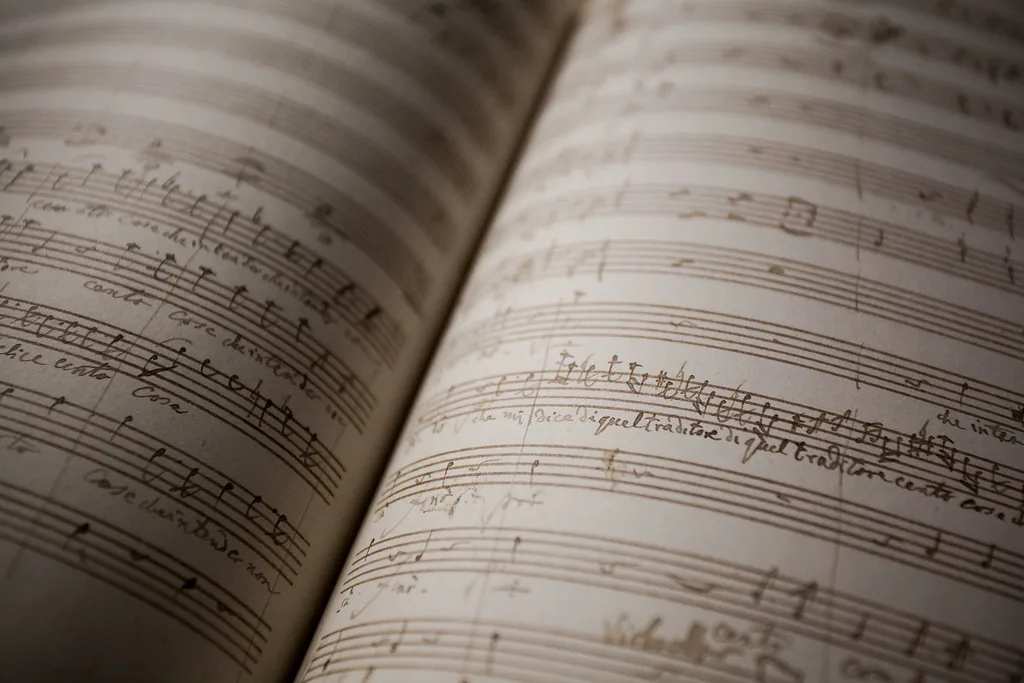
Claude Debussy created La Mer between 1903 and 1905, a period marked by personal challenges. Despite these difficulties, the work became a major artistic achievement. What makes its creation unique is that it was composed in Burgundy, far from the ocean, demonstrating the power of imagination.
Although Debussy had never been a sailor, he had a deep passion for the sea. He captured its essence through his memories and artistic vision. The subtitle “three symphonic sketches” reflects his pictorial approach, inspired by the visual arts.
The first performance of La Mer took place on October 15, 1905, at the Concerts Lamoureux. Despite institutional recognition, including the Legion of Honour in 1903, the work sparked debate because of its innovative character. To learn more about its creation, read this in-depth analysis.
Debussy’s Inspiration for La Mer
Debussy’s fascination with the sea gave rise to a memorable work. From childhood, he was captivated by vast stretches of water, a passion that profoundly influenced his creative work.
Debussy’s Passion for the Sea
Claude Debussy developed a deep love of the ocean from an early age. At eight, during stays in Cannes, he discovered the Mediterranean, an experience that left a lasting mark on his imagination. Later, he preferred the turbulent waters of the English Channel and the Atlantic, abandoning fashionable seaside resorts in favour of their natural restlessness.
Childhood Memories and Their Influence
Debussy often referred to his maritime memories as a source of inspiration. “I have countless memories,” he said, using these moments as creative material. These experiences nurtured his artistic approach, allowing him to capture the essence of the sea without resorting to realistic descriptions.
The Artistic and Literary Context
Japanese art, particularly Hokusai’s print “The Great Wave,” played a key role in Debussy’s imagination. This influence is visible in the original 1905 score. Authors such as Pierre Louÿs and Camille Mauclair also inspired his work, particularly the first movement, From Dawn to Noon on the Sea.
To learn more about the impact of these influences, read this in-depth analysis.
The Historical Context of the Composition
Between 1903 and 1905, Claude Debussy experienced a period of profound personal and artistic upheaval. These years were marked by events that deeply influenced his composition.
Debussy’s Personal Life During the Composition
In 1904, Debussy became embroiled in a major marital scandal. He left his wife, Rosalie Texier, for Emma Bardac, a relationship that caused a social and emotional rupture. This inner turmoil fuelled his creative energy, enabling him to transform his emotions into a powerful work.
In October 1905, the birth of his daughter, Claude-Emma, brought new light into his life. The event coincided with the completion of his work, adding a personal dimension to its creation.
Key Events from 1903 to 1905
In 1903, Debussy received the Legion of Honour, an institutional distinction that marked a turning point in his career. However, the period was also marked by personal challenges, including his exile in Jersey with Emma Bardac to escape criticism.
These years were a mixture of success and hardship, reflecting the tumultuous period in which he composed.
The Influence of Painting and Japanese Culture
Debussy was a great admirer of the visual arts, particularly Japanese painting. His personal collection of prints, including “The Great Wave” by Hokusai, played a key role in his inspiration.

This iconic print was even chosen as the visual emblem for the original score, illustrating the flourishing of Japonism in Europe at the time. Debussy successfully fused these influences to create a work that transcends artistic boundaries.
The Musical Structure of La Mer
The musical structure of La Mer reveals a fascinating complexity. Comprising three movements, the work offers a profound exploration of the ocean through innovative orchestral techniques.
The Three Movements: From Dawn to Noon on the Sea, Play of the Waves, Dialogue of the Wind and the Sea
The first movement, From Dawn to Noon on the Sea, begins slowly and gradually grows more animated. It evokes the morning light and the ocean’s initial calm. The final crescendo symbolises the brilliance of noon.
The second movement, Play of the Waves, is a rhythmic scherzo. It captures the capricious movement of the waves through tremolos and glissandos. This section is a masterful study in fluidity.
The final movement, Dialogue of the Wind and the Sea, is turbulent and dramatic. It stages an exchange between the wind instruments and the strings, symbolising the power of nature.
Orchestration and Compositional Techniques
Debussy uses a rich and varied orchestra. Harps, timpani and the English horn contribute distinctive nuances. Horizontal polyphony, with several superimposed melodic lines, creates a complex texture.
Techniques such as tremolos and glissandos imitate the movement of the waves. This innovative approach gives the work remarkable fluidity and transparency.
Impressionist Elements in the Music
Musical Impressionism is expressed through shifting plays of timbre. Debussy avoids monotony by using a multitude of aquatic figurations. These elements create a sense of movement and lightness.
The work also draws inspiration from Japanese art, particularly Hokusai’s print “The Great Wave.” This influence is visible in the original score, where the ocean is represented pictorially.
To learn more about this musical structure, read this in-depth analysis.
The Reception of La Mer at Its Premiere
At its 1905 premiere, Claude Debussy’s *La Mer* prompted contrasting reactions. Presented at the Concerts Lamoureux, the work divided critics between admiration and incomprehension. Some praised its innovation, while others criticised its unconventional character.
The Initial Reviews and Their Impact
The initial reactions were marked by a degree of perplexity. Some detractors spoke of a “disintegration of sonata form,” reproaching Debussy for moving away from classical traditions. Others compared *La Mer* with Beethoven’s Fifth Symphony, highlighting a perceived lack of grandeur.
Jean Marnold, however, defended the work, praising its “prestigious polyphony” and “unimagined sonorities.” His support helped counterbalance the negative reviews and highlight Debussy’s originality.

The Work’s Defenders
Despite the attacks, *La Mer* found influential defenders. The Mercure musical played a key role by emphasising the importance of this creation. Admirers saw Debussy as a pioneer opening the way to a new era in the history of music.
To learn more about the reception of *La Mer*, read this in-depth analysis.
La Mer’s Place in Music History
Over time, *La Mer* became a cornerstone of the orchestral repertoire. Renowned conductors such as Toscanini and Karajan programmed it regularly, confirming its status as a major work. It also influenced composers such as Ravel and film-score composers.
Debussy succeeded in fusing post-Romanticism and modernity, creating a work that transcends eras. Today, *La Mer* remains a symbol of musical innovation and the power of imagination.
The Legacy of La Mer in Modern Music
The legacy of *La Mer* continues to resonate in contemporary music. Often regarded as an Impressionist masterpiece, it has influenced many composers and remains a benchmark among modern orchestral works.

Debussy’s Influence on Later Composers
Debussy paved the way for a new musical approach. Artists such as Luc Brewaeys transcribed his Preludes for orchestra, pushing the boundaries of interpretation. His work also inspired film composers, as in The Piano.
La Mer in Contemporary Orchestral Repertoires
Today, *La Mer* is a mainstay of modern repertoires. Conductors such as Gergely Madaras have analysed its technical challenges, particularly its tempos and balance of sound. The work is often programmed alongside compositions by Benoît Mernier, creating unexpected resonances.
Modern Interpretations of the Work
Contemporary reinterpretations of *La Mer* explore its transparency and fluidity. Festivals such as those in Aix-en-Provence and Lucerne showcase the work, while cinematic and choreographic adaptations renew its interpretation.
Conclusion
Despite the initial criticism, *La Mer* has established itself as a timeless work. Its visionary boldness transcended convention, marking a turning point in music history. Today, it is celebrated for its universality and its ability to capture the essence of the sea.
The legacy of Claude Debussy continues to inspire future generations. With more than 150 recorded performances, this creation remains a mainstay of modern orchestral repertoires. Performance practices continue to evolve, but the work retains its emotional power.
To explore the subject further, discover the manuscripts and preparatory sketches displayed at the Musée Debussy in Saint-Germain-en-Laye. This successful fusion of music and visual art bears witness to Debussy’s creative genius, whose influence endures today.