
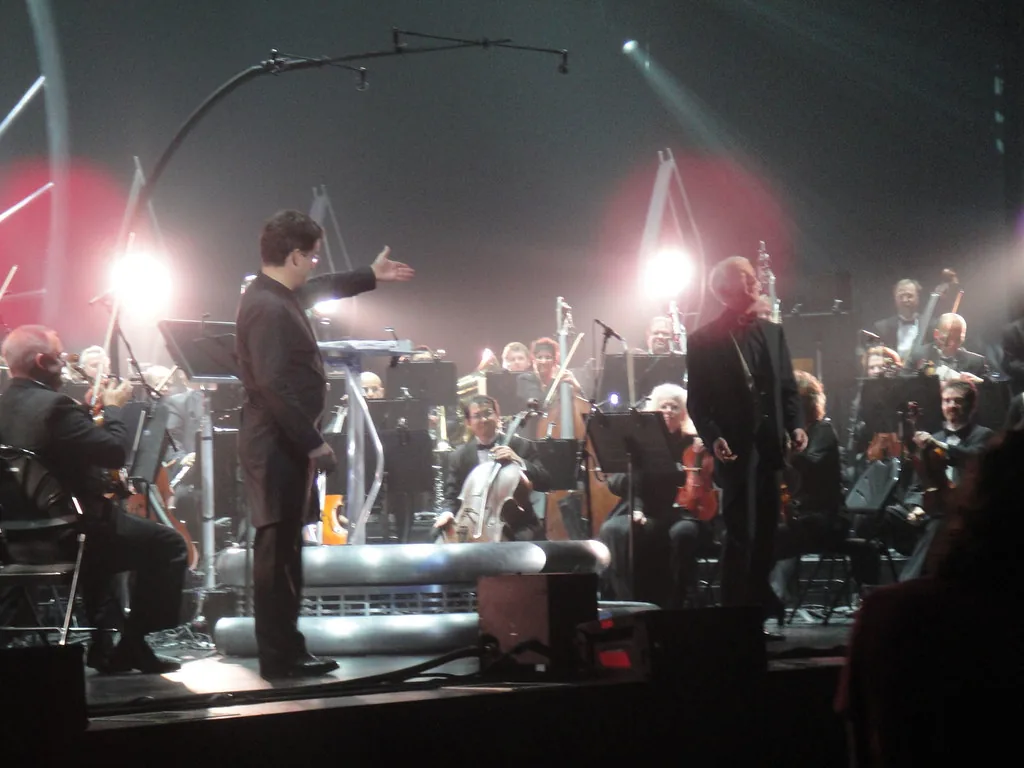
Claude Debussy, a major figure in French music, left his mark on history with his unique and innovative style. This ranking highlights his most significant pieces, ranging from piano compositions to orchestral and lyrical works.
Each selection is based on specific criteria: popularity, musical innovation and cultural impact. These works also reflect the key periods of his career, offering an overview of his artistic development.
Debussy’s style, characterized by fluid harmony and evocative atmospheres, can be found in each of these creations. Immerse yourself in this genius’s musical world and discover pieces that continue to inspire today.
Introduction to Claude Debussy and his musical legacy
Born in 1862, Claude Debussy revolutionized music with his bold approach. From a very young age, he displayed exceptional talent, entering the Paris Conservatoire at just 10 years old. His life was shaped by decisive events, such as his exile in Cannes during the Paris Commune.
His aunt Clémentine played a key role in his musical vocation. He later won the Prix de Rome in 1884 with L’Enfant prodigue. This award marked the beginning of a brilliant career, but also of a conflict with musical academicism.
The 1889 Universal Exposition was a turning point. His discovery of Javanese gamelan profoundly influenced his style, leading him to adopt pentatonic scales and create an innovative harmonic language.
Debussy’s life and influence on classical music
Debussy was initially captivated by Wagner before rejecting his style to explore new paths. His work, including the Prélude à l’après-midi d’un faune, redefined the conventions of classical music. He succeeded in blending tradition and innovation, paving the way for new generations of composers.
Debussy’s importance in the Impressionist movement
Debussy is often associated with the Impressionist movement, although he rejected that label. Rich in atmosphere and nuance, his compositions evoke images and emotions. This approach influenced not only music but other art forms as well.
| Event | Year | Impact |
|---|---|---|
| Birth in Saint-Germain-en-Laye | 1862 | Beginning of a life shaped by music |
| Entry into the Paris Conservatoire | 1872 | Rigorous academic training |
| Prix de Rome | 1884 | Official recognition of his talent |
| Discovery of Javanese gamelan | 1889 | Major influence on his style |
1. Clair de Lune: a timeless melody
Among Debussy’s most famous creations, Clair de Lune stands out for its timeless beauty. Taken from the Suite bergamasque, this piece was composed between 1890 and 1905. It perfectly embodies the essence of musical Impressionism, with its fluid harmonies and evocative atmospheres.

The history and inspiration behind Clair de Lune
Clair de Lune was inspired by Paul Verlaine’s poem evoking a moonlit night. Debussy translated this poetic atmosphere into music, creating a work that seems to float between dream and reality. The revisions he made until 1905 attest to his attention to detail and pursuit of perfection.
The so-called “aquatic” harmonies are characteristic of this piece. They reflect the influence of water, a recurring theme in Debussy’s work. These nuances have helped make Clair de Lune an introductory piece for beginner pianists.
Clair de Lune’s impact on popular culture
Over time, Clair de Lune has transcended the boundaries of classical music. More recently, it was used in the film Everything Everywhere All at Once, reinforcing its status as a timeless work. Available at four difficulty levels on flowkey, it remains accessible to all piano enthusiasts.
Orchestral versions of Clair de Lune offer a new perspective on this piece. They highlight the richness of its harmonies and the emotional depth of the original work.
| Aspect | Details |
|---|---|
| Inspiration | Poem by Paul Verlaine |
| Composition period | 1890-1905 |
| Recent use | Film Everything Everywhere All at Once |
| Availability | 4 difficulty levels on flowkey |
2. Arabesque No. 1 – Deux Arabesques: balance and grace
In 1888, at only 26 years old, Debussy composed Arabesque No. 1, a piece embodying balance and grace. Inspired by Islamic decorative motifs, this work marked a turning point in music for the piano. Its cascading finale and fluid structure make it a memorable piece.
The musical structure of Deux Arabesques
The ABA form of Arabesque No. 1 reflects harmony between music and the visual arts. Debussy uses parallel thirds and harmonic pedal points, techniques that were innovative for the time. This structure evokes a light, almost weightless dance.
Compared with Schumann’s arabesques, Debussy’s is distinguished by the independence of the hands. This technical complexity makes it challenging for pianists while offering listeners an immersive experience.
How Debussy revolutionized piano music
Debussy redefined pianistic style with his Deux Arabesques. By moving away from classical conventions, he introduced innovative harmonies and unprecedented sound textures. This approach influenced many contemporary composers, particularly in film music.
The influence of the Suite bergamasque can be felt in this work, in which Debussy explores poetic and evocative atmospheres. His legacy continues to inspire today’s musicians, making him a pioneer of modern music.
3. Des pas sur la neige: a wintry atmosphere
In 1910, Debussy composed a piece that captures the essence of winter with remarkable precision. Des pas sur la neige, the sixth prelude in Book I, is a musical exploration of loneliness and cold. The marking “sorrowful and slow” guides the interpretation, creating a melancholy and introspective mood.

The musical representation of winter
Debussy uses harmonic clusters to evoke the crunch of snow beneath footsteps. These dissonant chords, combined with carefully placed silences, create the impression of a frozen winter landscape. The technique recalls Tchaikovsky’s compositions, but with a uniquely Debussyan touch.
The connection with the landscapes of Debussy’s Norman youth adds a personal dimension to this work. Memories of past winters seem to permeate every note, creating a profound emotional connection.
The techniques used to create this atmosphere
The use of silence is a key element of this piece. Debussy uses pauses to heighten the sense of isolation and reflection. Control of the sostenuto pedal is also crucial to maintaining the ethereal atmosphere throughout the piece.
Available in an “advanced” version on flowkey, this work remains a technical challenge for pianists. It demands subtle control of touch and heightened sensitivity to convey the emotion contained in every measure.
4. La fille aux cheveux de lin: poetry in music
Debussy’s music transcends eras, and La fille aux cheveux de lin is a striking example. This prelude, taken from his 1910 collection, is a perfect fusion of poetry and melody. Inspired by Leconte de Lisle’s poem, it evokes a young woman with golden hair, a symbol of purity and natural beauty.

The piece’s literary inspiration
Leconte de Lisle’s poem, written in 1852, served as the basis for this work. Debussy captured the essence of its words, transforming poetic assonance into fluid harmonies. The repeated notes, for example, evoke light filtering through the young woman’s hair.
This approach shows how Debussy integrates literature into his music. He does not merely translate the words but creates an atmosphere that extends them. It is this sensitivity that makes him a master of modern classical music.
The musical characteristics of La fille aux cheveux de lin
The piece is based on a pentatonic scale, giving it apparent simplicity as well as emotional depth. The right hand plays a lyrical melody while the left provides understated accompaniment. This structure reflects the balance between lightness and gravity.
- The piano writing is fluid, with arpeggios recalling the movement of hair.
- Strategic silences add a contemplative dimension.
- Walter Gieseking’s historic 1936 recording remains a benchmark for performers.
The influence of this work can be heard in the soundtracks of composers such as Joe Hisaishi. It continues to inspire, proving that Debussy’s music remains timeless.
5. Reflets dans l’eau: an exploration of sound
Water occupies a central place in Debussy’s musical world, and Reflets dans l’eau is a masterful illustration of it. Taken from the 1905 Images, this piece captures the play of light and movement on the water’s surface. Debussy uses innovative techniques to evoke this element, creating an atmosphere that is both fluid and spellbinding.
The representation of water in Debussy’s music
Debussy was always fascinated by water, a recurring theme in his work. In Reflets dans l’eau, he explores this element’s sonic nuances. Enharmonic chords and mirrored arpeggios evoke luminous reflections on the water’s surface. This technique creates a sense of continuous motion, as though the listener were immersed in an aquatic landscape.
The influence of Japanese prints is also perceptible. Debussy draws inspiration from their formal construction to structure his piece. This approach enables him to create a visual and sonic work in which every note seems to paint a picture.
The complex arpeggios and their meaning
Arpeggios play a key role in Reflets dans l’eau. They demand great technical mastery, particularly because of the wide hand stretches. These arpeggios, often compared with those in Ravel’s Jeux d’eau, add a hypnotic dimension to the piece.
Measures 34 to 38 mark the work’s harmonic climax. Here Debussy uses harmonic clusters to intensify the emotion. These passages challenge pianists but offer listeners an immersive experience.
| Aspect | Details |
|---|---|
| Year composed | 1905 |
| Source of inspiration | Japanese prints |
| Key technique | Mirrored arpeggios |
| Technical challenge | Wide hand stretches |
When practicing this piece, it is advisable to focus on the left-hand leaps. Precise control of these movements is essential to convey the fluidity of water. Reflets dans l’eau remains a major work in the piano repertoire, demonstrating Debussy’s genius for exploring the sounds of the natural world.
6. La neige danse: hypnotic and spellbinding
With its 5/4 meter, La neige danse offers a unique musical experience. Taken from Children’s Corner in 1908, this piece captures the magic of winter through fluid melodies and evocative harmonies. Debussy succeeds in transforming the lightness of snowflakes into a composition that is both poetic and technically demanding.

The dance of snowflakes in music
Debussy uses trills and arpeggios to evoke swirling snowflakes. Overlapping pulses create a sense of continuous motion, as if the snow were dancing in the air. This approach recalls the illustrations in the original score, where every note seems to sketch a winter landscape.
The 5/4 meter, unusual for the period, adds a hypnotic dimension to the piece. It reflects the irregularity of snowflakes while maintaining a fluid and coherent structure. This innovation shows how Debussy pushed the boundaries of classical music.
The technical challenges for pianists
Playing La neige danse requires precise coordination between the hands. The rapid trills and complex arpeggios demand advanced technical command. Pianists must also manage the strategic silences that heighten the piece’s contemplative atmosphere.
- Right-hand and left-hand coordination: essential for conveying fluidity.
- Trill control: to evoke the swirling snowflakes.
- Silences: they add an introspective dimension.
According to flowkey’s advice, it is best to begin slowly in order to master the technical passages. This approach makes it possible to progress while respecting the spirit of the piece.
| Aspect | Details |
|---|---|
| Year composed | 1908 |
| Meter | 5/4 |
| Inspiration | Swirling snowflakes |
| flowkey advice | Begin slowly |
“La neige danse is an invitation to escape, with every note seeming to float through the air like a snowflake.”
7. Et la lune descend sur le temple qui fut: Javanese inspiration
The 1900 Universal Exposition profoundly shaped Debussy’s musical imagination. It was at this event that he discovered Javanese gamelan, traditional Indonesian musical ensembles. This encounter inspired Et la lune descend sur le temple qui fut, a piece taken from Images pour orchestre.
The influence of Indonesian music on Debussy
The exotic sounds of gamelan opened new horizons for the composer. Debussy incorporated Javanese musical modes, such as the pelog scale, to create mysterious and evocative atmospheres. This approach marked a turning point in his style and influenced American minimalists such as Steve Reich and Philip Glass.
A comparison with recordings of Balinese gamelan reveals striking similarities in rhythmic and harmonic structure. Debussy adapted these elements to his own musical language, creating a unique work that transcends cultural boundaries.
Pentatonic scales and how they are used
In this piece, Debussy uses pentatonic scales to evoke a distant and timeless world. Lacking semitones, these scales create an impression of simplicity and purity. They recall traditional Asian melodies while blending perfectly with modern orchestration.
The harps and celesta play a key role in this work, adding a dreamlike dimension. The meticulous orchestration reflects Debussy’s technical mastery and his ability to use each instrument to create a spellbinding atmosphere.
“Et la lune descend sur le temple qui fut is an invitation to travel, with every note seeming to tell a distant story.”
At its premiere in 1907, this piece was praised for its originality and emotional depth. Today it remains a testament to Debussy’s open-mindedness and his ability to integrate diverse influences into his art.
8. La plus que lente: a Parisian waltz
La plus que lente, a work composed for the dancer Ève Lavallière, embodies the spirit of the Belle Époque. Written in 1910, this waltz reflects the atmosphere of Parisian cafés, where artistic and social life flourished. Debussy explores asymmetrical rhythms shaped by the influence of the American cakewalk, a dance style then in fashion.
The atmosphere of Parisian cafés in the music
Debussy captured the essence of Parisian cafés, meeting places and sources of inspiration for artists. The fluid melody and subtle harmonies evoke lively conversations and fleeting moments of love. Often performed at the Cabaret du Chat Noir, this piece reflects the cultural vitality of the period.
The jazz elements in La plus que lente
The influence of jazz can be felt in the proto-jazz syncopations and the use of the augmented ninth chord. These elements add a modern touch to the waltz while preserving its traditional charm. Compared with the waltzes of Ravel and Satie, La plus que lente stands out for its harmonic boldness and innovative rhythm.
| Aspect | Details |
|---|---|
| Year composed | 1910 |
| Inspiration | Ève Lavallière and the cakewalk |
| Style | Waltz with jazz elements |
| Context | Paris during the Belle Époque |
This work, often associated with opera and the Parisian stage, remains a testament to Debussy’s musical innovation. It continues to inspire performers and listeners, offering an immersion in the spellbinding world of French music.
9. Voiles – Prelude No. 2, L. 117: evocation and nostalgia
In the world of Debussy’s preludes, Voiles stands out for its spellbinding atmosphere and harmonic innovation. Composed between 1909 and 1910, this piece almost exclusively uses the whole-tone scale, creating a tonal ambiguity that evokes a mysterious seascape. This work is a perfect example of Debussy’s style, in which music becomes a sound painting.
Rich chords and their emotional impact lie at the heart of this piece. Debussy uses fluid harmonies and subtle nuances to create a sensation of floating. The dynamics from pp to ppp demand advanced technical mastery, particularly in the use of the una corda pedal. These elements contribute to the dreamy and nostalgic atmosphere of Voiles.
The rich chords and their emotional impact
The chords in Voiles represent a bold exploration of harmony. Debussy layers chords to create a complex sound texture. Inspired by Javanese gamelan, this technique gives an impression of continuous movement, as though the sails of a boat were dancing in the wind.
The tonal ambiguity characteristic of the whole-tone scale adds a mysterious dimension to the piece. It evokes an inner journey in which every note seems to tell a story. This approach influenced film composers such as Bernard Herrmann, who drew on this aesthetic in his own creations.
Freedom of expression in Voiles
Debussy allows performers considerable freedom in Voiles. Tempo and dynamic markings are minimal, leaving performers to bring the piece to life. This freedom reflects Debussy’s musical philosophy, which favored emotion and expression over the rigidity of academic rules.
Compared with Chopin’s Nocturnes, Voiles is distinguished by its lack of a clearly defined melody. The piece is based on repetitive motifs and harmonic variations, creating a hypnotic atmosphere. This structure allows listeners to lose themselves in a sound world in perpetual motion.
| Aspect | Details |
|---|---|
| Composition period | 1909-1910 |
| Scale used | Whole-tone scale |
| Technical difficulty | Controlling dynamics from pp to ppp |
| Influence | Film composers |
“Voiles is an invitation to escape, with every chord seeming to sketch a distant horizon.”
This piece remains a technical challenge for pianists, but it offers listeners an immersive experience. It demonstrates Debussy’s genius for exploring the expressive possibilities of music.
10. Sérénade pour une poupée: childhood in music
Sérénade pour une poupée, taken from Children’s Corner, is a piece that captures the innocence and joy of childhood. Composed between 1906 and 1908, this work was dedicated to his daughter Claude-Emma, nicknamed “Chouchou,” and reflects a father’s love and tenderness for his child.
The dedication to his daughter Chouchou
Debussy composed this piece for his daughter when she was only a few years old. The gentle melody evokes a child’s games and laughter. The ascending thirds, symbolizing childish smiles, add a poetic dimension to the work.
The piece’s playful and joyful elements
The gigue rhythm characteristic of this piece recalls the movements of a music box. The repetitive motifs and development of the main theme over 56 measures create a cheerful, lighthearted atmosphere. This structure reflects the playful spirit of childhood.
Compared with Fauré’s Berceuses, Sérénade pour une poupée stands out for its joyful character and lively rhythm. It also played a therapeutic role for Debussy, helping him overcome the difficulties associated with his illness.
To learn more about this work, discover the details of Children’s Corner.
Claude Debussy’s legacy in modern music
Claude Debussy’s musical legacy continues to resonate in contemporary creation, influencing generations of composers. His innovative approach paved the way for new forms of expression, both in the classical field and in other musical genres.
Debussy’s influence on contemporary composers
Major figures such as Olivier Messiaen, Pierre Boulez and Toru Takemitsu drew on Debussy’s work to develop their own styles. Messiaen, for example, adopted complex harmonies and evocative atmospheres, while Takemitsu incorporated elements of Japanese music, drawing inspiration from Debussy’s discovery of gamelan.
In jazz, Bill Evans rediscovered the Préludes, reinterpreting them with a modern sensibility. This fusion of jazz and classical music demonstrates the versatility of Debussy’s legacy.
The critical reception of his work over the years
The reception of Debussy’s work has evolved over time. Initially criticized for rejecting convention, he is now celebrated as a pioneer. The 2020 exhibition at the Musée d’Orsay highlighted his influence on opera and contemporary music, confirming his timeless status.
The musicological debate between Impressionism and Symbolism remains relevant, demonstrating the complexity of his legacy. Electronic reinterpretations, such as those by Jean-Michel Jarre, attest to his relevance in modern music.
- Impact on cinema: from Disney to Christopher Nolan, his works inspire memorable soundtracks.
- Analysis of his legacy in minimalist music, with composers such as Philip Glass.
- Current projects: new critical editions of the scores to deepen the study of his work.
| Composer | Influence |
|---|---|
| Olivier Messiaen | Complex harmonies and evocative atmospheres |
| Pierre Boulez | Exploration of new musical structures |
| Toru Takemitsu | Integration of Japanese elements |
| Bill Evans | Jazz reinterpretation of the Préludes |
“Debussy opened a door to a new sound world, where every note becomes a color on a musical canvas.”
Debussy’s legacy remains alive, influencing not only classical music but a wide variety of genres. His work continues to inspire, proving that his genius transcends the boundaries of time.
Conclusion: why Debussy remains a timeless genius
Claude Debussy’s legacy continues to captivate the musical world through its universality and innovation. His revolutionary harmonies redefined music, opening the way to new explorations of sound. Even today, his works inspire performers and composers around the world.
Recordings of his pieces, from historic versions to modern reinterpretations, attest to their enduring relevance. To discover his world, explore his scores on platforms such as flowkey, where every note reveals the depth of his genius.
Debussy succeeded in transcending eras, creating a musical language that speaks to everyone. Marked by a unique sensitivity, his work remains an invitation to escape and reflect. Immerse yourself in his world and let the magic of his music carry you away.