
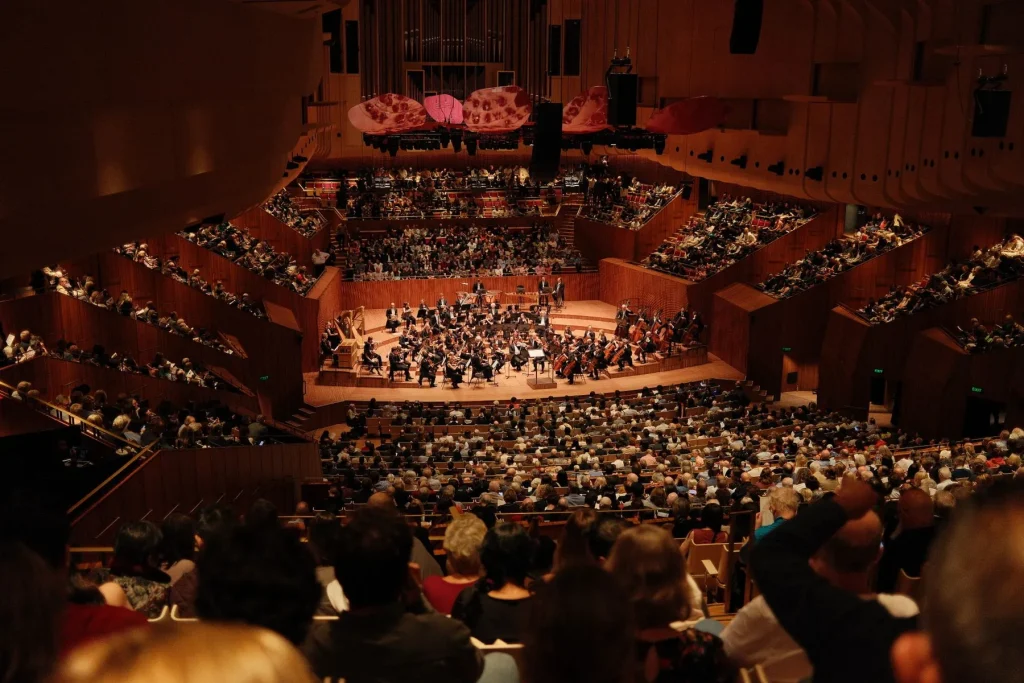
Prelude to the Afternoon of a Faun is a major work of Impressionist music. Composed by Claude Debussy, this piece marked a turning point in the history of Western music. Its innovative architecture and compositional techniques make it essential listening and study.
Inspired by Stéphane Mallarmé’s poem, this work has a symbiotic relationship with the text. The score’s 110 measures correspond to the poem’s 110 alexandrines, creating a unique harmony between literature and music.
Analyzing its structure reveals the musical revolution initiated by Debussy. To learn more about this iconic piece, see this detailed resource.
Introduction to Prelude to the Afternoon of a Faun
At the heart of the nineteenth century, a musical revolution began to take shape. Claude Debussy broke with the monumental orchestral traditions of the Romantic era. This break can be heard in his smaller instrumental sections and search for a new form of expression.
Historical and artistic context
In a post-Wagnerian historical context, Debussy explored new paths. He drew inspiration from Greek mythology, particularly the faun, a flute-playing satyr. This figure symbolizes freedom and sensuality, central themes of the work.
Analysis of the Boucher painting that inspired Mallarmé reveals a correspondence between visual art and music. In Debussy’s own words, he sought to capture “the general impression of the poem”.
Stéphane Mallarmé’s influence
Mallarmé’s poem played a key role in the creation of this work. Debussy used it as inspiration to forge a harmony between literature and music. The premiere on December 22, 1894, was a historic moment.
| Element | Detail |
|---|---|
| Inspiration | Greek mythology and Mallarmé’s poem |
| Context | Post-Wagnerian search for expressiveness |
| Premiere | December 22, 1894 |
The work’s genesis
The birth of this musical piece was marked by creative challenges. Debussy initially envisioned a tripartite structure comprising a prelude, an interlude, and a paraphrase. He later abandoned this plan in favor of a more concise and evocative form.
The composition of this work proceeded alongside that of Pelléas et Mélisande. This period was marked by an intense search for expression and innovation. Conductor Gustave Doret played a key role in the orchestral premiere, helping Debussy bring his vision to life.
Debussy and the composition
Debussy drew inspiration from Mallarmé’s poem, but their collaboration on a theatrical version did not come to fruition. Even so, the composer captured the essence of the text, creating a unique harmony between literature and music. He described his approach as “beaver science”, emphasizing his painstaking and innovative work.
The first performances
The premiere took place in December 1894 at a concert of the Société nationale. The work initially caused a scandal, but it quickly gained recognition. Performances have continued to evolve ever since, reflecting the piece’s importance in music history.
Analysis of the musical structure
Analysis of the musical structure reveals a bold innovation. The work stands out for its unique architecture, which breaks with traditional conventions. The ABCBA arch form proposed by Barraqué illustrates this departure.

The score’s 110 measures correspond to the 110 alexandrines of Mallarmé’s poem. This symbolic symmetry reinforces the harmony between literature and music. Fluid transitions and thematic neutralizations play a key role in this structure.
Form and architecture of the work
The form of this piece is characterized by the absence of traditional development. Instead, Debussy uses recurring motifs and subtle variations. This approach creates a continuous movement without a strongly marked pulse, defying the audience’s expectations.
A striking example is the paradoxical cadence between measures 67 and 74. This section illustrates the innovative use of musical time, in which the melody seems suspended in space.
The three main sections
The structure can be divided into three main sections, each marking a stage in the music’s evolution. Fluid transitions connect them and maintain the unity of the work. The period in which this piece was created gave rise to an innovative architecture.
| Section | Characteristics |
|---|---|
| Introduction | Flute theme, dreamlike atmosphere |
| Development | Thematic variations, absence of a marked pulse |
| Conclusion | Return of the opening theme, paradoxical cadence |
For a deeper analysis, see this detailed resource.
The musical themes
The musical themes of this work reveal symbolic and technical depth. Each theme serves a narrative role, reflecting the faun’s desires and emotions. These motifs, often described as leitmotifs, create a rich and evocative musical fabric.
The flute theme
The flute theme opens the work with a sensual, dreamlike melody. Often associated with erotic symbolism, this motif embodies the faun’s freedom and desires. Its fluidity and lack of a strongly marked pulse create an enchanting atmosphere.
Debussy himself described this passage as
“a shepherd with his backside in the grass”
, emphasizing its pastoral and intimate character.
The oboe theme
The oboe contrasts with the flute, bringing a denser, more expressive texture. This theme evolves throughout the work, reflecting the faun’s changing moods and aspirations. Its narrative role is essential to understanding the musical progression.
The orchestral theme
The orchestra plays a central role in the development of the themes. Inspired by Chopin’s style, particularly the Nocturne, Op. 27, No. 2, this motif combines harmony and rhythm to create a complex texture. Motivic combinations among the different instruments enrich the musical narrative.
| Theme | Characteristics |
|---|---|
| Flute | Sensual melody, erotic symbolism |
| Oboe | Dense texture, narrative development |
| Orchestra | Chopinesque inspiration, motivic combinations |
The instruments and their roles
In this work, every instrument plays an essential role in creating a unique atmosphere. Debussy uses timbre innovatively, bringing a rich and evocative palette of sound to life. The orchestration reveals meticulous attention to detail, with each section contributing to the whole.

The flute: the faun’s voice
The flute occupies a central place in this piece. It embodies the faun’s voice, expressing his desires and emotions. The flute solo, performed by Georges Barrère, opens the work with a sensual, dreamlike melody. Often described as a leitmotif, this motif creates an enchanting atmosphere.
Debussy uses the flute as an extension of the voice, capturing the essence of the mythological character. Its fluidity and lack of a strongly marked pulse reinforce the impression of freedom and sensuality.
The strings and woodwinds
The strings and woodwinds bring a dense, expressive texture. The woodwinds, particularly the oboe and English horn, introduce subtle contrasts. They evolve throughout the work, reflecting the faun’s changing moods.
The strings, meanwhile, create a soft, continuous envelope of sound. Their role is essential in maintaining the piece’s unity. The layering of timbres, particularly at measure 85, illustrates Debussy’s mastery of orchestration.
Percussion and harps
The percussion and harps add a unique dimension to the work. With their watery ripples, the harps evoke a fluid, shifting atmosphere. They reinforce the impression of lightness and fluidity.
The antique cymbals, used in a pioneering way, add a touch of mystery. The horn trio at measure 106 illustrates Debussy’s innovative use of timbre. These elements help create a rich and complex sonic texture.
| Instrument | Role |
|---|---|
| Flute | Voice of the faun, sensual melody |
| Strings | Soft envelope of sound |
| Woodwinds | Expressive contrasts |
| Harps | Watery ripples |
| Percussion | Touch of mystery |
To learn more about this work’s orchestration, see this detailed resource.
Debussy’s orchestration
Debussy’s orchestration in this work marks a break with Wagnerian traditions. The composer rejects massive tuttis in favor of instrumental solos, thereby creating a unique palette of sound. This approach reveals a constant search for expression and innovation.

Debussy uses timbres innovatively, combining woodwinds and brass to create multidimensional soundscapes. This technique enables him to explore extreme registers, offering unprecedented expressive richness. Compared with the orchestration of La Mer, that of this work is more intimate and poetic.
Choice of instruments
The composer gives instrumental solos—particularly the flute and oboe—a central place. These instruments embody the faun’s voice, expressing his desires and emotions. The woodwinds and strings provide a dense texture, while the harps and percussion add a mysterious dimension.
Debussy exploits the extreme registers of each instrument, creating subtle contrasts and an enchanting atmosphere. This approach reflects his attention to detail and his mastery of orchestration.
The use of timbre
Timbres play a key role in this work, making it possible to capture the overall impression of Mallarmé’s poem. Debussy uses instrumental combinations to evoke nature and the faun’s emotions. The harps, for example, create watery ripples, reinforcing the fluid, shifting atmosphere.
As Viñes noted, Debussy’s orchestration has a “tangy” character, marked by subtle nuances and intense expression. This technique contributes to the work’s sonic richness.
| Aspect | Characteristics |
|---|---|
| Instruments | Instrumental solos, woodwind-brass combinations |
| Timbres | Extreme registers, subtle nuances |
| Atmosphere | Intimate, poetic, multidimensional |
For a deeper analysis, see this detailed resource.
Harmonies and rhythms
The exploration of harmonies and rhythms in this work reveals unprecedented boldness. Debussy breaks with traditional conventions, introducing innovative techniques that marked a turning point in music history.

Harmonic innovations
Debussy uses whole-tone scales and modes of limited transposition, creating unprecedented mediant progressions. These harmonic choices, such as the paradoxical cadence between measures 67 and 74, blur traditional tonal reference points.
Floating pedal points play a key role, creating a sense of continuous movement. This approach contrasts with the techniques of Wagner and Franck, who favored more rigid structures.
The treatment of musical time
Musical time is treated in a revolutionary way. Debussy abandons traditional meter in favor of fluid, indeterminate rhythms. This break creates a dreamlike atmosphere in which the pulse seems to fade away.
This innovation had a major impact on modern music, influencing genres such as jazz and film music. Debussy’s work remains a touchstone for composers seeking to explore new sonic dimensions.
| Aspect | Characteristics |
|---|---|
| Harmonies | Whole-tone scales, paradoxical cadence |
| Rhythms | Fluidity, absence of a strongly marked pulse |
| Impact | Influence on jazz and film |
The connection with Mallarmé’s poem
The connection between Prelude to the Afternoon of a Faun and Mallarmé’s poem constitutes a unique fusion of literature and music. Debussy succeeded in transcending words through sound, creating an artistic symbiosis that defies the boundaries between the two disciplines.
Literary and musical correspondences
The score’s 110 measures correspond exactly to the 110 alexandrines of Mallarmé’s poem. This symbolic symmetry reinforces the harmony between the two works. Debussy captured the essence of the text, transforming each line into a thematic variation.
The silences in the music play a crucial role, functioning as poetic punctuation. They allow the listener to sense the faun’s breathing, strengthening the work’s dreamlike atmosphere.
The dreamlike atmosphere
The work’s dreamlike atmosphere is directly inspired by Mallarmé’s poem. Debussy used fluid harmonies and indeterminate rhythms to evoke a dream world. As he said himself:
“The poem’s ascending motion guides the music toward a mysterious dimension.”
This approach immerses the listener in a world where nature and symbolism blend harmoniously.
- The thematic variations reflect the faun’s emotional development.
- The musical climaxes correspond to the text’s high points.
- Jankélévitch’s interpretation emphasizes the work’s noonday mystery.
Interpretations and adaptations
Debussy’s work has inspired many interpretations, particularly in dance. The 1912 ballet, created by the Ballets Russes, redefined how this piece is perceived. This adaptation marked a turning point in the history of modern dance.
The ballet’s creation
The 1912 ballet, choreographed by Nijinsky, caused an artistic scandal. Its portrayal of the nymphs and the faun was considered daring, even provocative. The choreography, often described as “copulation with Nothingness”, overturned the conventions of its time.
Diaghilev, founder of the Ballets Russes, played a key role in this adaptation. He enabled Nijinsky to explore innovative movements that reflected the work’s dreamlike essence. Their collaboration produced a visually and musically revolutionary version.
Orchestral versions
Orchestral interpretations of this piece have also evolved over time. Conductors such as Chevillard and Boulez brought their own individual touch. Each conductor sought to capture the work’s unique atmosphere while respecting Debussy’s intentions.
A comparison between the concert and ballet versions reveals fascinating differences. While the orchestral version emphasizes musical fluidity, the danced adaptation explores a more explicit narrative dimension. These variations attest to the work’s richness and versatility.
The legacy of Prelude to the Afternoon of a Faun
The legacy of this musical piece transcends eras and genres. It not only marked a turning point in music history, but also influenced generations of composers. Its impact can still be felt today across various artistic fields.
Influence on modern music
Prelude to the Afternoon of a Faun is often considered the starting point of modern music. As Stravinsky declared:
“It is the beginning of modern music.”
This work paved the way for new harmonic and rhythmic explorations, influencing genres as varied as jazz and film music.
Pierre Boulez, a major figure in contemporary music, emphasized its foundational role in musical Impressionism. The spectralists in particular drew on this work to develop their innovative approach to timbres and textures.
Its place in Debussy’s output
This piece occupies a central place in Debussy’s output. It served as a bridge between his early compositions and later creations such as Pelléas et Mélisande (1902). Paul Dukas noted that this work “marked a break with traditional conventions, opening up new artistic possibilities.”
Compared with Jeux and La Mer, this piece stands out for its intimate character and bold exploration of musical expression. It perfectly embodies the composer’s stylistic evolution.
| Aspect | Details |
|---|---|
| Influence | Impact on jazz and film |
| Legacy | Inspiration for Boulez and the spectralists |
| Comparison | Analysis of Jeux and La Mer |
To learn more about Debussy’s legacy, see this detailed resource.
Understanding the structure of Debussy’s Prelude to the Afternoon of a Faun
An in-depth study of this work reveals a harmonious fusion of poetry and music. The often-analyzed structure of this piece displays an innovative architecture that marked music history.
Summary of the key elements
A summary of the key elements helps explain the work’s fluidity. Divergent analyses converge on the idea of a fluid, evolving architecture. The flute theme plays a unifying role, linking the piece’s different sections.
Formal and harmonic innovations, such as the use of whole-tone scales, illustrate the break with traditional conventions. This approach allowed Debussy to create a unique work in which every element fits perfectly into the whole.
The importance of structure
The importance of the structure lies in its ability to transcend the boundaries of classical music. Debussy created a work in which fluidity and coherence blend harmoniously. As he said himself:
“Music must humbly seek to give pleasure.”
This philosophy is reflected in every measure of the score, where expression and innovation lie at the heart of the composition.
Conclusion
The legacy of this work continues to inspire future generations. Its structural innovations, such as the use of whole-tone scales and fluid rhythms, marked a turning point in the history of music. These elements, analyzed in this article, reveal the depth of Debussy’s creation.
The analytical questions raised by this piece remain relevant today. They invite listeners to rediscover the work using the insights provided here. This approach makes it easier to appreciate the symbiosis between Mallarmé’s poem and the musical composition.
Future research could further explore this work’s influence on contemporary music. As Mallarmé writes, “Farewell, you pair…”, an invitation to continue exploring this timeless creation.