
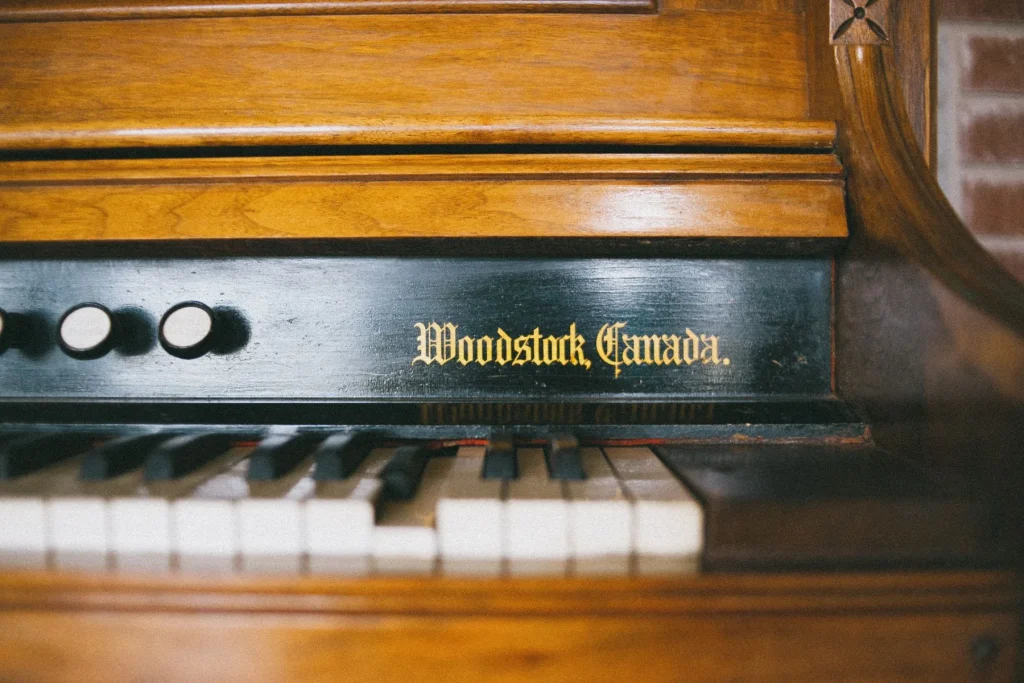
Claude Debussy’s Two Arabesques are iconic pieces of the Impressionist repertoire. They captivate listeners with their fluidity and expressiveness, while presenting performers with both technical and artistic challenges.
This guide is designed to support pianists as they learn these works. Drawing on the expertise of renowned musicologists such as Hans-Martin Theopold, it offers practical advice and in-depth analysis.
Critical editions, such as those published by Henle and Peters, are also highlighted to help ensure an authentic interpretation. Whether you are a beginner or an experienced pianist, this guide will help you explore the beauty of this timeless music.
Introduction to Debussy’s Arabesques
Between 1888 and 1891, Claude Debussy composed pieces that revolutionized music. These early works, including the Arabesques, already demonstrate his harmonic boldness and rejection of classical structures.
The importance of the Arabesques in Debussy’s work
The Arabesques played a foundational role in the emergence of musical Impressionism. They emphasize tone colors and reject traditional conventions. This innovative approach influenced generations of composers.
Why this guide is essential for pianists
Performing the Arabesques on the piano presents specific challenges, such as polyrhythms (three against two) and subtle use of the pedal. This guide helps explain these technical and stylistic nuances, making the learning process more accessible.
History and context of the Two Arabesques
At the age of 26, Claude Debussy composed a work that marked a turning point in the history of music. The Two Arabesques, written before major pieces such as “Clair de lune,” already reflect his boldness and rejection of convention.

These early compositions, written while he was studying at the Conservatoire, draw inspiration from literary Symbolism and the harmonic innovations of the period. They stand out for their fluidity and pioneering use of modes and pentatonic scales.
The origins of the Arabesques: an early work
The Two Arabesques emerged from a period of research and experimentation. Influenced by composers such as César Franck and Gabriel Fauré, Debussy explored new sonorities. These pieces, often compared with contemporary works, already foreshadow musical Impressionism.
The dedications and earliest reviews from the period attest to the originality of these compositions. They reveal an artist searching for a unique musical identity far removed from established paths.
Debussy’s influence on Impressionist music
Debussy had a profound impact on 20th-century music. His Arabesques influenced composers such as Maurice Ravel, who adopted his innovative approach. The subtle use of instruments and sonic textures opened up new artistic possibilities.
This aesthetic revolution, initiated by Debussy, continues to inspire musicians and listeners today. His legacy remains alive, testifying to the power of his creative genius.
| Composer | Work | Influence |
|---|---|---|
| Claude Debussy | Two Arabesques | Harmonic revolution |
| César Franck | Prelude, Chorale and Fugue | Structural innovations |
| Gabriel Fauré | Nocturnes | Exploration of modes |
Musical analysis of Arabesque No. 1
Debussy’s Arabesque No. 1 is a work that combines grace and complexity. It is distinguished by its ABA structure, in which the middle section introduces expressive rubato. This score reveals all the subtlety of Impressionism, with right-hand triplets contrasting with a duple rhythm in the left hand.
Structure and technical characteristics
The ABA form of this piece features a flowing introduction and a chromatic middle section. Harmonic modulations, such as the shift from E major to A major, add emotional depth. Henle editions, with fingerings by Theopold, offer practical solutions for difficult passages.
Technical challenges for pianists
Performing this work on the piano presents specific challenges. Hand independence is crucial, particularly in passages where triplets are set against a duple rhythm. Dynamic control, ranging from pp to mf, requires great precision.
For the arpeggios, using the weight of the arm rather than rigid fingering is recommended. This approach preserves the fluidity and lightness characteristic of the work. Comparing the Henle and Peters editions can also help pianists choose the version best suited to their style.
Expert advice for interpreting the Arabesques
Interpreting Debussy’s works requires a highly specific technical and artistic approach. Advice from experts such as Hans-Martin Theopold is invaluable in achieving this. His methods, based on years of experience, help pianists approach these pieces with confidence.

Hans-Martin Theopold’s recommendations
Hans-Martin Theopold, known for the 226 sets of fingerings he created for Henle, favors natural ergonomics. His method promotes a smooth legato without excessive use of the pedal. He also suggests exercises for rapid lateral movements, which are essential in technically demanding passages.
Another key consideration is pedal control. Theopold advises avoiding “harmonic mud” while still creating the hazy sound characteristic of the Impressionist style. Finally, he recommends shaping phrases by imitating the breath of wind instruments to achieve maximum expressiveness.
How to master Debussy’s Impressionist style
Mastering this style requires an understanding of the importance of nuance and tone color. Debussy often uses subtle harmonic modulations and complex textures. Pianists must therefore focus on dynamic precision, moving smoothly from pp to mf.
A practical example illustrates this approach: measures 15 to 18 of the work, according to the Peters edition, require special attention to resolve the polyrhythms. Comparing different editions, such as Henle and Peters, can also help pianists choose the score best suited to their style.
Buying guide: choosing the right score
Choosing the right score for performing Debussy’s works is essential for a rewarding musical experience. A high-quality score makes learning easier and helps reveal the work’s technical and artistic nuances. Here are some tips for making the right choice.

Recommended editions: Peters and others
Among the available editions, the Peters edition revised by Roy Howat is particularly well regarded. Published in 2018, it contains nine pages supplemented with contextual notes. These educational comments help pianists better understand Debussy’s intentions.
The Henle edition, by contrast, offers an Urtext version faithful to the original manuscript. It is ideal for those seeking an authentic interpretation. Here is a comparison of the two editions:
| Edition | Advantages | Average price |
|---|---|---|
| Peters | Educational commentary, contextual notes | €10 |
| Henle | Urtext version, fidelity to the manuscript | €12 |
Where to download or buy the score
For immediate access, online platforms such as imusic-school offer PDF and MIDI files. These digital versions are convenient for use on a tablet or computer. Specialist music stores such as Paul Beuscher also provide quality guarantees.
Here are some tips for checking the quality of a score:
- Check the durability of the paper.
- Make sure the ornaments and annotations are legible.
- Choose editions that include links to masterclasses.
Finally, the average price varies between €7 and €12 depending on the edition. Investing in a high-quality score is a step toward a successful interpretation of Debussy’s works.
Conclusion
Exploring the nuances of Claude Debussy’s compositions opens a door to musical Impressionism. Choosing a suitable edition, such as one published by Peters or Henle, is essential for an authentic interpretation. Gradually mastering techniques such as polyrhythms and subtle pedaling makes it possible to appreciate the full beauty of these works.
To go further, discover other Impressionist pieces, such as the Estampes or the Préludes. Online resources, such as imusic-school courses with Jeff Martin, can enrich your learning. Feel free to share your interpretations in the comments and exchange ideas with other enthusiasts.
To conclude, remember this thought from Debussy: “Music is the arithmetic of sounds as optics is the geometry of light.” Immerse yourself in this world of sound and let it inspire you.