
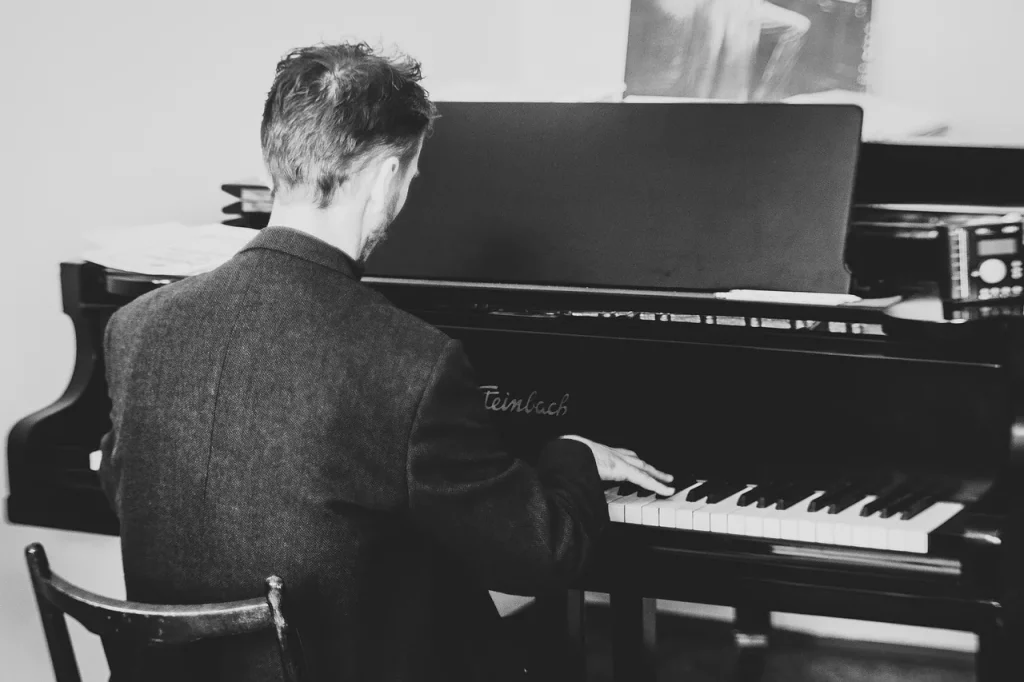
Rêverie is one of Claude Debussy’s best-known works. Composed in 1890 and published in 1891, it embodies the spirit of musical Impressionism. Although Debussy himself expressed a certain disdain for the piece, its gentleness and expressiveness have captivated listeners.
Performing this composition on the piano requires a delicate balance between technique and emotion. Every note must reflect Debussy’s distinctive sensitivity while respecting the musical structure. This duality makes it an exciting challenge for pianists.
The work has also been reinvented, notably in a version for oboe and piano. This arrangement demonstrates the versatility of Rêverie and its power to inspire. To learn more about its history and interpretations, consult this resource.
This guide explores the historical, analytical, and practical aspects of this iconic piece. Immerse yourself in Debussy’s world and discover how to bring his music to life.
Historical context of Rêverie
This work was composed during a period of intense artistic activity. In 1890, the composer moved in Symbolist circles, a movement that profoundly influenced his style. Rêverie reflects this dreamlike, poetic atmosphere.
The composition of Rêverie
The piece was written in 1890, when Debussy was seeking to explore new forms of expression. Inspired by Théodore de Banville’s poem “Le zéphyr à la douce haleine,” it embodies a fusion of music and literature. Its publication by Choudens in 1891 met financial needs, but it quickly found an audience.
The first performances and their reception
The first public performance took place on February 27, 1899, and was given by Germaine Alexandre. Although Debussy described the piece as “bad” in a 1904 letter, it was transcribed for various instruments, demonstrating its versatility. To learn more about the context in which it was created in 1890, consult this resource.
Debussy and his relationship with Rêverie
Despite its success, Debussy disowned this work several times. Nevertheless, it remains an iconic example of his Impressionist style. This paradox between rejection and posterity adds a fascinating dimension to the history of the composition.
Musical analysis of Rêverie
Immerse yourself in the musical world of this piece through a detailed analysis. Written in G major, the work is distinguished by its modulations to E major and its skillful use of arpeggios and pedals. Its three-part structure—introduction, theme A, theme B—creates a fluid and captivating progression.

Structure and key
The piece begins with a 16-bar introduction, followed by two contrasting themes. Suspended cadences add subtle tension, while the modulations enrich its expressiveness. This musical structure is a perfect example of the balance between simplicity and complexity.
Melodic and harmonic elements
The fluid, dreamlike melody is supported by modal harmonies, particularly the Lydian mode. Added sevenths and ninths provide a unique color. B pedal points and fourths and fifths polarize the melodic line, creating a mesmerizing effect.
The use of arpeggios and pedals
Arpeggios play a central role, giving the piece its fluid, dreamlike character. Harmonic pedal points reinforce the dissonances and add depth. Combined with syncopation, these techniques create a rich and expressive texture.
“Music is the art of sounds that speaks to the soul.”
| Element | Description |
|---|---|
| Key | G major with modulations to E major |
| Structure | Introduction, theme A, theme B |
| Techniques | Arpeggios, pedals, syncopation |
To deepen your understanding of the musical structure, consult this resource. This analysis will help you better appreciate the subtleties of this iconic work.
Advice for interpreting Rêverie
To bring this composition to life, mastering both technique and expressiveness is essential. Every note must reflect the profound emotion that animates the work. Here are a few tips to guide you.
Understanding emotion and feeling
This piece evokes a fluid, dreamlike atmosphere that is often compared to water. As Gaston Bachelard said, “water is a metaphor for musical language.” To convey this fluidity, focus on kaleidoscopic reflections and subtle nuances.
Specific piano techniques
Mastery of the piano is crucial. Here are some key techniques:
- Control the arpeggios to maintain fluidity.
- Balance the right and left hands.
- Use the pedals precisely to enrich the harmonies.
Avoid an excessively slow tempo, which could make the piece “syrupy,” as critic Guy Sacre laments. Instead, opt for a strict andantino.
Personal interpretation and creativity
Each performer can add a personal touch. Vary the nuances without overusing vibrato, particularly in versions for oboe. Work on the syncopations and shifts in register to add depth.
| Element | Advice |
|---|---|
| Fluidity | Convey the aquatic atmosphere |
| Technique | Master the arpeggios and pedals |
| Creativity | Vary the dynamics and phrasing |
By following this advice, you will be able to interpret this Rêverie with precision and emotion while respecting the spirit of the work.
Conclusion
Rêverie embodies the essence of musical Impressionism, blending simplicity and depth. This work by the composer Claude Debussy remains a timeless symbol of his genius, despite his own reservations.
With its fluid structure and complex harmonies, it invites personal exploration. Arrangements for various instruments and benchmark recordings, such as those by Jean-Efflam Bavouzet and Aldo Ciccolini, attest to its enduring legacy.
Inspired by water and dreams, this piece encourages every performer to bring their own unique feeling to it. As one quotation puts it: “Nature is no longer silent; it is our departure that she mourns…”