
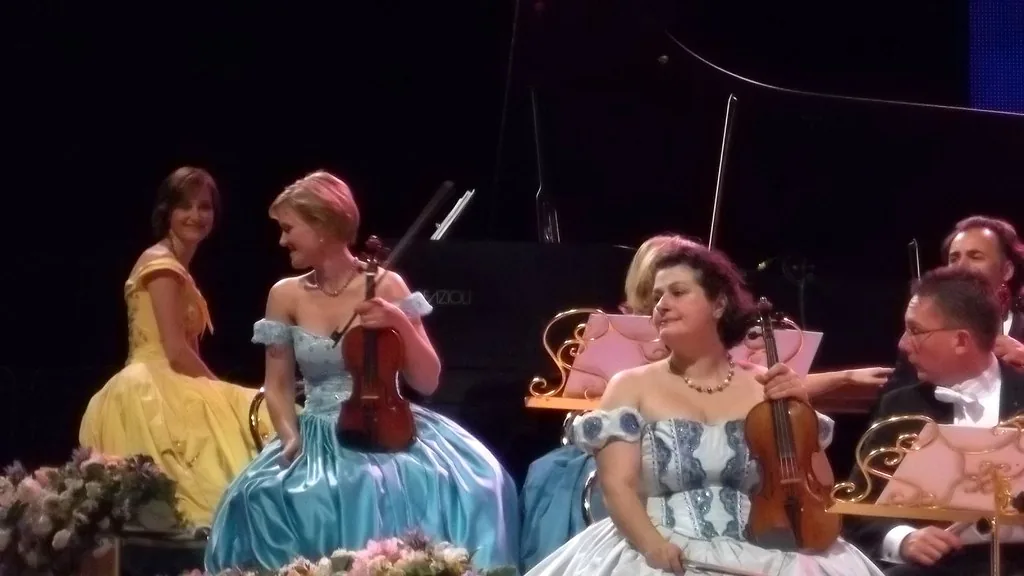
Premiered in December 1893 by the Ysaÿe Quartet, Debussy’s work marked a turning point in the history of chamber music. Although its first performance received mixed reviews, the piece is now recognized for its harmonic innovation and influence on modern composers.
Originally entitled “1st Quartet”, this piece appeared to promise a sequel that never materialized. Its unique style, combining orchestral sonorities with a traditional structure, opened up new possibilities for string quartets. For musicians and enthusiasts, this work remains an essential reference.
If you would like to explore this piece in detail, the Urtext edition from Henle Verlag offers an accurate and reliable score. Immerse yourself in Debussy’s world and discover why this work continues to inspire today’s generations.
Introduction to Debussy’s String Quartet
In 1893, a landmark work emerged in the world of chamber music. Composed by Claude Debussy, this string quartet represents a break with the musical traditions of the period. Influenced by his travels with Nadezhda von Meck, Debussy incorporated Russian and Romani elements while drawing inspiration from the Eastern sonorities he discovered at the 1889 Exposition Universelle.
Historical and musical context
At the end of the nineteenth century, France was experiencing a period of musical transition. Debussy, then a young composer, moved away from Germanic influences to create a unique style. Although criticized at first, his string quartet marked a turning point in the history of chamber music. Contemporary critics even described the work as “unplayable,” a testament to its boldness.
The quartet’s importance in Debussy’s work
This quartet is Debussy’s only completed work in the genre. It reflects his stylistic development and his desire to push the boundaries of music. Compared with the quartets of Ravel (Op. 10) and Haydn (Op. 76), Debussy’s stands out for its innovative harmonies and connection to literary Symbolism. It also influenced later composers such as Bartók and Shostakovich.
| Composer | Work | Characteristics |
|---|---|---|
| Debussy | String Quartet | Bold harmonies, Eastern influences |
| Ravel | Quartet, Op. 10 | Classical structure, subtle nuances |
| Haydn | Quartet, Op. 76 | Traditional form, melodic balance |
To learn more about the life and work of Claude Debussy, consult this comprehensive resource. His string quartet remains an essential work for understanding the evolution of modern music.
Detailed analysis of the composition
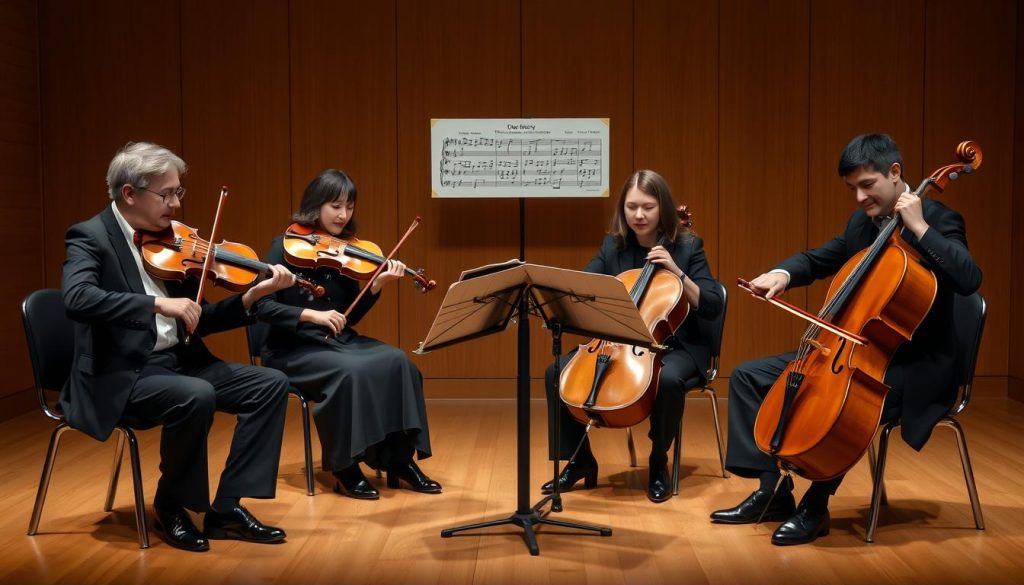
Debussy redefined musical conventions with his 1893 string quartet. Consisting of four movements, this work is a striking example of his innovative genius. Each section contributes to a cyclical unity, linking themes and motifs coherently.
Structure and movements
The quartet opens with Animé et très décidé, an energetic movement that introduces the principal themes. Next comes Assez vif et bien rythmé, in which the viola takes on a concertante role, adding a distinctive dimension. The third movement, Andantino, provides a melodic respite, while Très modéré concludes the work with great emotional depth.
Harmonies and musical innovations
Debussy uses pentatonic modes and the whole-tone scale to create unprecedented sonorities. Bowing techniques, such as the use of harmonics and mutes, add orchestral effects. These innovations opened up new avenues for string quartets.
The instruments and their roles
The viola stands out in the second movement, contributing a rich texture. The violins, meanwhile, face technical challenges such as double stops and extreme registers. The interaction between the sections illustrates Debussyan counterpoint, in which each instrument contributes to the whole without losing its individuality.
Guide to Debussy’s String Quartet: resources and scores
To perform this work accurately, having the right resources is essential. Full scores and separate parts make it possible to understand the nuances and technical challenges of this composition. Here is an overview of the recommended editions and advice for a successful performance.
Available scores and recommended editions
Henle’s Urtext edition (HN 9999) is an essential reference. It includes detailed commentary by Ulrich Krämer, offering valuable insights for musicians. The Durand (DD00473800) and Bärenreiter (BA9414) editions are also reliable choices suited to different levels of expertise.
Where to find the separate parts
Separate parts for two violins, viola, and cello are available from Durand and Bärenreiter. These editions make it easier to study each instrument individually while providing a better understanding of the ensemble. Musicians value their clarity and accuracy.
Performance advice
The third movement often presents rhythmic difficulties. Take the time to study the dynamics and tempo changes. In polyphonic crescendos, be sure to balance the voices to avoid overwhelming the overall sound. Finally, facsimile editions can be useful for exploring the composer’s original intentions.
Conclusion: why download our guide?
To deepen your understanding of this work, our resource offers a comprehensive analysis and practical tools. It summarizes the key analytical and technical points while giving you access to comparisons of critical editions. You will also find annotated excerpts from the separate parts, ideal for in-depth study.
Testimonials from professional ensembles highlight the technical challenges of this piece, helping to ensure a performance informed by musicological research. With direct links to the recommended scores, this resource is an indispensable tool for musicians and enthusiasts.
Available from Henle in digital (€18) and physical (€33) editions, this limited offer is an opportunity not to be missed. Download it now and immerse yourself in the world of this landmark work.