
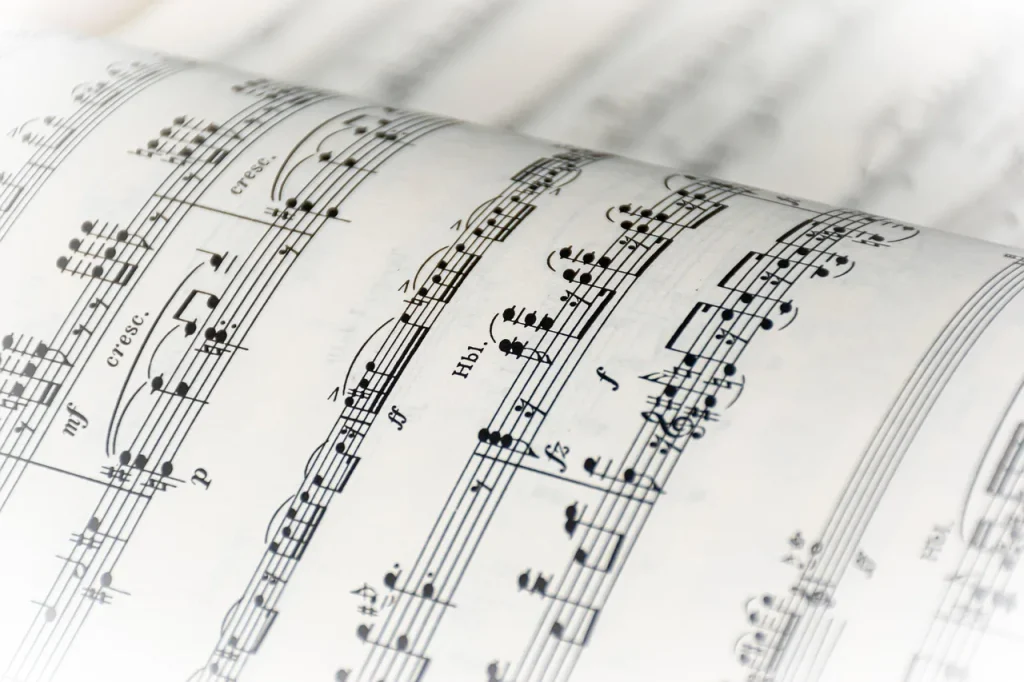
Learning to play Clair de lune on the piano is a dream for many musicians. This iconic work by Debussy continues to captivate amateurs and professionals alike. Thanks to suitable resources, it is now more accessible than ever.
Simplified versions with visual cues and annotated sheet music are available. These tools let you progress at your own pace, even if you are a beginner. Video tutorials, such as those from AuPiano.fr, offer an effective method for mastering each passage.
Choosing sheet music suited to your level is essential. Whether you are a beginner or an experienced player, resources are available to support you. Immerse yourself in the world of Clair de lune and discover why this piece remains timeless.
Introduction to Debussy’s Clair de lune
Delve into the fascinating history of this timeless work, inspired by Symbolist poetry. Composed in 1890 and published in 1905, *Clair de lune* is part of Claude Debussy’s *Suite bergamasque*. This piece is a true gem of classical music, distinguished by its dreamlike atmosphere and technical complexity.
Inspired by Paul Verlaine’s poem “Fêtes galantes,” the work embodies the spirit of Symbolism. It explores themes such as melancholy and fleeting beauty, translated into music through rich harmonies and flowing melodies.
Technically, *Clair de lune* presents unique challenges. Written in 9/8 time and in the key of D-flat major, this piece requires great independence between the hands. Pianists must master dynamic nuances to convey the work’s full subtlety.
“Music is the art of sounds that speaks to the soul.”
The cultural impact of *Clair de lune* is immense. This piece has influenced many composers and remains a benchmark in contemporary music. Whether in film, advertising, or concert performance, it continues to move listeners around the world.
| Element | Details |
|---|---|
| Composition date | 1890 |
| Publication date | 1905 |
| Structure | 4 movements (Prelude, Minuet, Clair de lune, Passepied) |
| Key | D-flat major |
| Time signature | 9/8 |
The *Suite bergamasque*, of which *Clair de lune* is a part, is a collection of pieces that reflects Debussy’s artistic development. Each movement offers a unique musical experience, but *Clair de lune* is the one that has captivated audiences.
Free Sheet Music Guide for Debussy’s Clair de lune
For pianists, finding the right sheet music is a crucial step. Fortunately, several platforms offer free resources to help you play this iconic work.
Where to find free sheet music
Several websites offer reliable versions of Clair de lune. Here is a selection of platforms to explore:
- imusic-school: offers a downloadable PDF together with a MIDI file for better understanding.
- AuPiano.fr: provides sheet music with colored notes and visual cues, ideal for beginners.
- IMSLP: an extensive online library of classical sheet music, including works by Debussy.

How to check the quality of sheet music
Before downloading sheet music, it is essential to check its quality. Here are a few criteria to consider:
- The inclusion of fingering to make learning easier.
- The accuracy of nuances and dynamic markings.
- The absence of errors in the measures or key signature.
Paid versions often offer additional benefits, such as detailed annotations or arrangements for different ability levels. However, free versions can be just as effective if chosen carefully.
Finally, be wary of unauthorized copies, which may contain errors. Always favor reputable sources to ensure the best possible musical experience.
Learning to play Clair de lune
Mastering this iconic piece requires a structured approach and suitable techniques. Whether you are a beginner or an intermediate player, progressive methods and targeted exercises will help you improve effectively.
Basic techniques for beginners
To begin working on this piece, practice each hand separately. AuPiano.fr’s progressive method offers 7 steps for mastering complex passages. This allows you to focus on movements and fingering without feeling overwhelmed.
The 9/8 rhythm may seem confusing. To master it, practice counting in triplets. This will help you feel the work’s characteristic flow.
Finally, familiarize yourself with the sostenuto and una corda pedals. They play a key role in creating the piece’s dreamlike atmosphere.
Exercises to improve hand independence
Hand independence is essential for performing this piece. Here are some exercises to strengthen this skill:
- Breaking the piece into manageable sections: practice each section separately before putting them together.
- Finger-strengthening exercises: practice left-hand arpeggios to improve fluidity.
- Expressive techniques: experiment with controlled rubato and nuanced dynamics to add emotion.
For optimal learning, use video resources to see hand placement and the required movements.
| Element | Details |
|---|---|
| Progressive method | 7 steps for practicing the hands separately |
| 9/8 rhythm | Counting in triplets |
| Pedals | Sostenuto and una corda |
| Practice program | 6 weeks with progressive goals |
By following these tips and maintaining regular practice, you will be able to play this work with confidence and precision. For more details, consult this resource on breaking the piece into manageable sections.
Additional resources for pianists
To deepen your piano practice, explore these additional resources. These tools will help you progress more quickly and discover new musical horizons.

Online piano lessons
Online piano lessons are an excellent option for pianists of all levels. Platforms such as AuPiano.fr and imusic-school offer suitable courses with sheet music, MIDI files, and explanatory videos.
AuPiano.fr’s Premium Pack, for example, is available for €4.99 per level. It includes annotated sheet music, synchronized audio files, and instructional videos. These resources are ideal for progressive, structured learning.
Jeff Martin, on imusic-school, also offers a course entitled “Classical Piano Pieces.” This program is designed to help you master iconic pieces such as Clair de lune.
Instructional videos and simplified sheet music
Instructional videos are a valuable tool for seeing techniques and movements. They help you understand every detail of a piece and progress at your own pace.
Simplified sheet music, meanwhile, includes colors and recommended fingering. It makes reading notes easier and learning more accessible, especially for beginners.
In addition, tempo-slowing software can be used to practice difficult passages. These technological tools are particularly useful for refining your playing.
| Platform | Content | Price |
|---|---|---|
| AuPiano.fr | Sheet music, MIDI, videos | €4.99/level |
| imusic-school | Lessons, audio files | Monthly subscription |
| IMSLP | Classical sheet music | Free |
Finally, consider joining online mutual-support communities. These spaces allow you to exchange advice, tips, and historical resources, such as biographies of Debussy or musical analyses.
Conclusion
Exploring the nuances of *Clair de lune* on the piano is a rewarding experience. Whether you choose free or paid resources, the key is to find tools suited to your level. Platforms such as IMSLP and AuPiano.fr offer reliable sheet music to support you.
Despite the technical challenges, regular practice will help you progress. To deepen your interpretation, consult masterclasses or listen to historical recordings. These resources will help you grasp the full subtlety of this timeless piece.
Finally, feel free to download the recommended sheet music and embark on this musical journey. *Clair de lune* is much more than a piece for piano: it is an invitation to explore the beauty of classical music.