
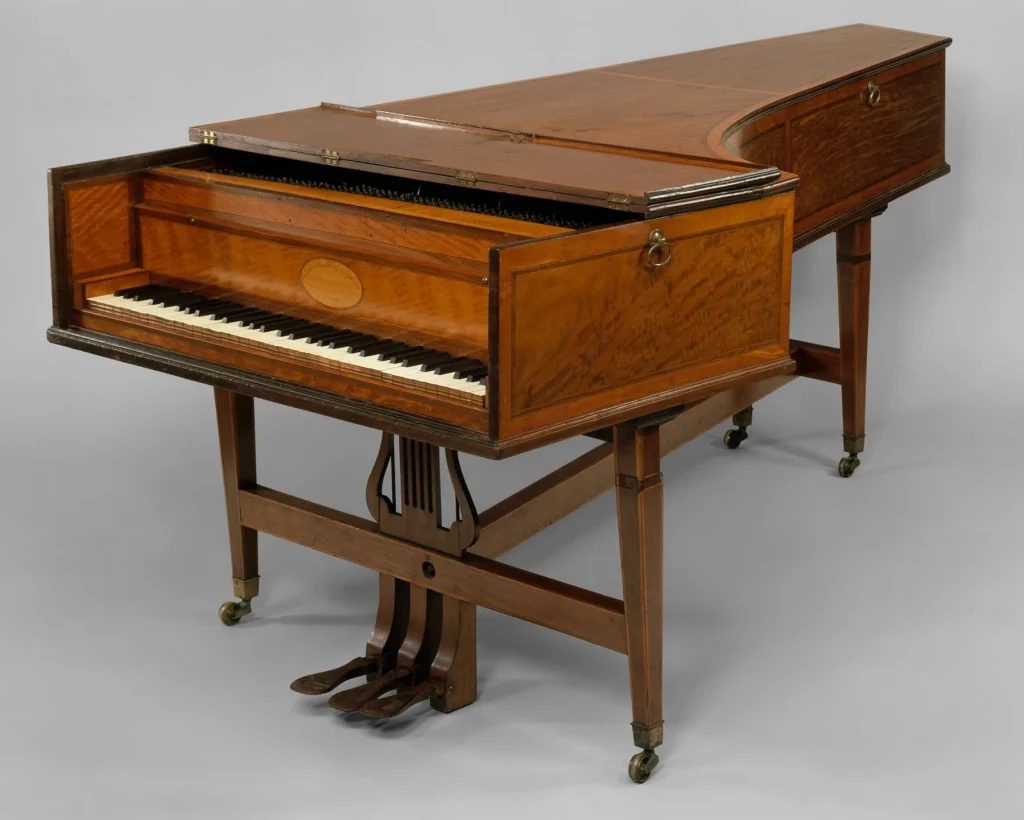
Among the most famous works in the piano repertoire, Debussy’s Clair de lune holds a special place. Inspired by Verlaine’s poem, this piece has become a symbol of Impressionist music. Its dreamlike atmosphere and spellbinding melodies captivate listeners.
This guide offers an in-depth exploration of the work. You will discover its technical nuances, such as the 9/8 time signature and its characteristic duplets. We will also examine its historical context and its connection with Verlaine’s poetry.
Structured in 7 sections, this guide will take you through a complete analysis. From interpretation to adaptations, every aspect will be explained to provide a thorough understanding of this iconic piece.
Introduction to Debussy’s Clair de lune
Clair de lune embodies the essence of Impressionist music. Composed in 1890, it was published in 1905 as part of the revised Suite bergamasque. Originally titled Promenade sentimentale, the work was renamed to better reflect its poetic atmosphere.
Inspired by Paul Verlaine’s poem, Clair de lune establishes a symbiotic relationship between the text and the musical language. The title evokes a moonlit night, an image Debussy conveys through fluid melodies and subtle harmonies.
The stylistic elements of the piece, such as its use of the pedal and 9/8 rhythms, perfectly illustrate the Impressionist style. These techniques create a dreamlike atmosphere characteristic of Debussy’s music.
Before publication, the piece’s structure underwent significant changes. These adjustments helped Clair de lune become one of the most beloved works for piano. This introduction paves the way for an in-depth historical analysis in the next section.
The history of Clair de lune
The history of Clair de lune reveals a fascinating evolution. Originally titled Promenade sentimentale, the piece underwent changes before becoming the work we know today. These changes reflect Debussy’s artistic choices and his pursuit of perfection.

Origins and inspiration
Inspired by Paul Verlaine’s poem, Clair de lune establishes a deep connection between text and music. The title evokes a night bathed in moonlight, an image Debussy conveys through fluid melodies and subtle harmonies. This musical transposition shows how the composer captured the essence of the poem.
The transformation of Promenade sentimentale into Clair de lune also illustrates Debussy’s stylistic evolution. Early versions of the piece reveal his constant search for the perfect balance between form and emotion.
Publication and reception
The collaboration with the publisher Fromont in 1905 led to the publication of the definitive version. This edition marked a turning point in the work’s history, and it quickly gained popularity. Its initial critical reception was mixed, however, with some considering the piece too experimental.
Over time, Clair de lune became an essential classic. Adaptations such as Chris Hazell’s version for oboe and orchestra have contributed to its renown. These interpretations show the way in which the work continues to inspire musicians.
An excerpt from the Suite bergamasque, Clair de lune is undoubtedly one of Debussy’s best-known pieces. Its dreamy, lyrical melody invites contemplation and inner calm.
Musical analysis of Clair de lune
A musical analysis of this piece reveals fascinating technical subtleties. It helps us understand how Debussy created a unique atmosphere through precise musical choices. Here, we will explore the structure, tempo, and playing techniques that define the work.
Structure and tempo
The 9/8 time signature is a key element of the piece. It gives it a characteristic fluidity, reinforced by the Andante marking. This marking is often misinterpreted, however. Jacques Rouvier advises against taking it too literally, recommending some freedom in the tempo.
From measure 15 onward, the judicious use of rubato adds an expressive dimension. This choice heightens the emotion while respecting the overall structure. Debussy’s characteristic harmonic progressions also play a central role in the dreamlike atmosphere.
Playing techniques
Layering the sound planes is essential when performing this piece. The left hand should remain in the background, creating a subtle foundation for the right-hand melodies. This technique gives the work depth.
The frequently used parallel thirds symbolize moonlight. They require particular care to preserve their fluidity. Finally, the sostenuto pedal plays a decisive role. It allows the chords to resonate and creates an enveloping atmosphere.
- Analysis of the 9/8 time signature and its expressive implications.
- Study of Debussy’s characteristic harmonic progressions.
- Study of the parallel-thirds technique and its lunar symbolism.
- Comparison of the original directions with modern interpretations.
- The role of the sostenuto pedal in creating the atmosphere.
Interpretation and practical advice
To perform this work convincingly, it is essential to master certain technical and expressive aspects. The Rouvier method, for example, proposes specific fingerings and careful control of dynamics. These elements help recreate the piece’s dreamlike atmosphere.

Choosing the tempo
Tempo plays a central role in interpretation. The Andante marking suggests a moderate pace, but avoiding uniformity is crucial. Jacques Rouvier recommends a degree of rhythmic freedom to preserve expressiveness. This approach brings out the emotional nuances.
In the central section, a subtle crescendo toward the Un poco mosso adds tension. Specific exercises are recommended to achieve this. These practical lessons help reconcile metrical precision with expressive freedom.
Layering the sound planes
Layering the sound planes is a key technique. The left hand should remain in the background, creating a discreet harmonic foundation. The right hand, by contrast, should predominate and carry the melody fluidly.
The sustained notes, particularly from measure 15 onward, reinforce the nocturnal atmosphere. These chords require a delicate touch to reproduce the effect of a night-light. The following table summarizes the essential techniques:
| Technique | Practical advice |
|---|---|
| Layering the sound planes | Subdued left hand, expressive right hand |
| Sustained notes | Delicate touch for a nocturnal effect |
| Tempo control | Rhythmic freedom to avoid uniformity |
“Performing this piece depends on a subtle balance between technique and emotion.”
Finally, comparing benchmark recordings is useful. These analyses reveal how historic performers approached the work. Such interpretive approaches enrich understanding and inspire new perspectives.
Clair de lune in culture and adaptations
Beyond its status as a masterpiece of piano music, this piece has transcended the boundaries of classical music to establish itself in popular culture. Its spellbinding atmosphere and timeless melodies have inspired a wide range of adaptations, from cinema to the philharmonic orchestra.

Cultural influence
Hollywood cinema has often drawn on this work to create memorable moments. An iconic scene in Ocean’s Eleven, starring Brad Pitt and George Clooney, uses the melody to heighten the emotion. This choice shows how classical music can enrich a film’s narrative content.
In popular culture, the piece has become a symbol of reverie and contemplation. It is frequently used in advertisements, ballets, and even video games. These artistic collaborations attest to its ability to adapt to a variety of contexts.
Orchestral adaptations
Orchestral adaptations have allowed listeners to rediscover the work from a new perspective. One notable selection is Albrecht Mayer’s reinterpretation of the piece for oboe with a philharmonic orchestra. Orchestrated by Chris Hazell, this version highlights the instrument’s tonal nuances.
Furthermore, thematic parallels can be drawn with other works inspired by nature, such as Ravel’s Jeux d’eau. These comparisons reveal how composers have explored the theme of water through different musical languages.
Finally, recent jazz and electronic reinterpretations show that the piece continues to inspire artists. These modern adaptations prove that its charm remains intact, even in contemporary musical styles.
Conclusion
Clair de lune, with its poetic atmosphere and spellbinding melodies, remains a timeless work. It embodies the universality of Debussy’s musical language, expressing emotion through subtle harmonies and fluid rhythms.
To deepen your understanding, explore additional materials, such as annotated scores or available masterclasses. These resources will help you discover the technical and expressive elements that make this piece a masterpiece.
Finally, organize an active listening session using the advice in this guide. Compare it with other works by Debussy, such as La Mer or Reflets dans l’eau, to better understand the evolution of his style.