
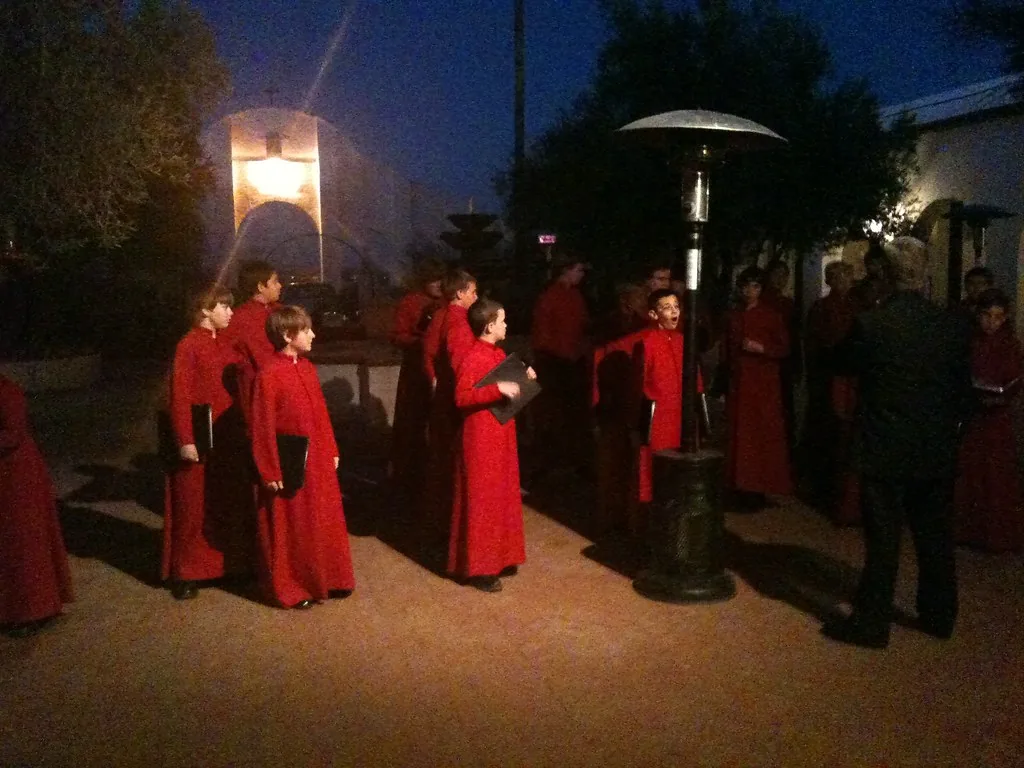
Composed in 1791, the Ave verum corpus is a work that embodies the beauty and depth of sacred music. Written for choir, strings, and organ, this piece reveals Mozart’s unique talent for conveying emotion with touching simplicity. At the time, the composer was experiencing both financial and physical hardship, making this composition even more significant.
Intended for the Feast of Corpus Christi, this work is a perfect example of Mozart’s ability to create a spiritual atmosphere. The motet begins with soothing gentleness before progressing into darker passages, thus illustrating the duality of life and death. The piece has also inspired many musicians, from classical to jazz, attesting to its timeless character.
In this article, we will explore the historical context, analyze the musical structure, and reflect on the enduring legacy of this composition. Emotion, according to Mozart, transcends time and cultures, making this work a treasure accessible to all.
Historical context and origins of Mozart’s Ave verum corpus
In 1791, Mozart’s life was marked by personal and professional trials. Struggling with financial difficulties, he sensed that his death was near, prompting him to return to sacred music. He had not composed a religious work for eight years, since the Mass in C minor, K. 427.
That year, his wife Constanze was staying in Baden, an Austrian spa town, for medical treatment. It was there that Mozart met Anton Stoll, the local choirmaster. This meeting proved decisive, as it gave rise to an important musical project.
Mozart’s personal and artistic circumstances in 1791
Mozart faced numerous challenges in 1791:
- He was deeply in debt, which weighed heavily on his morale.
- His health was fragile, and he may have sensed that death was near.
- He chose to return to sacred music, a form of expression he had set aside.
The setting of the composition: Baden and Anton Stoll’s commission
In Baden, Mozart dedicated his motet to Stoll in gratitude for his kindness. The motet was intended to be performed during the Feast of Corpus Christi, a celebration of the Blessed Sacrament. This local and ecclesiastical setting is essential to understanding the significance of the composition.
The liturgical text and its spiritual meaning
The Latin text, which dates from the 14th century, is an eight-line Eucharistic prayer. It celebrates the body of Christ, a central theme in Christian liturgy. The lines evoke crucial elements:
- The virgin birth
- The Crucifixion
- The pierced side
- A plea concerning the Last Judgment
The connection with sacred music in Mozart’s work
This motet belongs to the broader context of Mozart’s sacred music. Interestingly, he received the commission for his Requiem, K. 626, shortly afterward. This connection between his sacred works underscores the continuity of his artistic endeavors.
Deliberately modest in scale, the motet is scored for a four-part choir, string orchestra, and organ. This simplicity highlights the vocal ensemble and gives the piece an intimate character.
Ultimately, the origins of this piece show how Mozart succeeded in combining liturgical tradition with personal expressiveness. This blend enriches his work and strengthens his legacy in the world of music.
Mozart’s Ave verum corpus: history and musical analysis
The composition of this motet is a true marvel of sacred art. It is divided into two distinct parts, each offering a unique perspective on Christian spirituality. This two-part structure is essential to appreciating the work’s depth.
Structure and division of the motet into two parts
The motet opens with a brief orchestral introduction, followed by Part A, which comprises the first four lines. This section is characterized by great rhythmic regularity, evoking medieval plainchant. The voices move in harmony, creating an atmosphere of contemplation.
Part B, by contrast, is distinguished by a change of key. The dissonant chords on the words “perforatum” and “sanguine” introduce emotional complexity. The voices enter successively on “Esto nobis praegustatum,” while the sopranos unfold a poignant melisma on the word “mortis.”
Analysis of the melody, harmony, and choir
The ensemble’s melodic beauty conceals a complete mastery of choral and orchestral writing. Part A creates an atmosphere of serenity, but the harmonic disruption in the fourth line, which evokes the Crucifixion, foreshadows Christ’s suffering. This contrast is characteristic of Mozart’s talent.
In Part B, the emotional intensity increases. The dissonances add spiritual depth and reinforce the plea expressed in the Latin text. This passage highlights Mozart’s ability to unite music and spiritual expression.
Emotional expression through the Latin text and music
The Latin text, which celebrates the body of Christ, is a Eucharistic prayer rich in meaning. Every word resonates with profound emotion, heightened by the music. The interaction between text and melody creates an immersive experience for the listener.
Comparisons with other sacred works and Romantic influence
This work can be compared with William Byrd’s Ave Verum Corpus, which offers a more restrained approach to the Passion. Brahms’s German Requiem also shares a similar atmosphere of contemplation. The beginnings of musical Romanticism can likewise be perceived in this composition, foreshadowing the heightened emotions of the 19th century.
Mozart’s gift for opera enabled him to deploy a varied range of emotions—suffering, fear, supplication, and serenity—within a sacred setting. This makes the motet an essential work that continues to inspire generations of musicians.
| Element | Part A | Part B |
|---|---|---|
| Structure | Four lines, consonant harmony | Four lines, dissonant chords |
| Atmosphere | Serenity, contemplation | Complexity, emotional intensity |
| Themes | Homage to the Blessed Sacrament | Suffering, supplication |
Interpretation and conducting: issues and challenges in performing the work
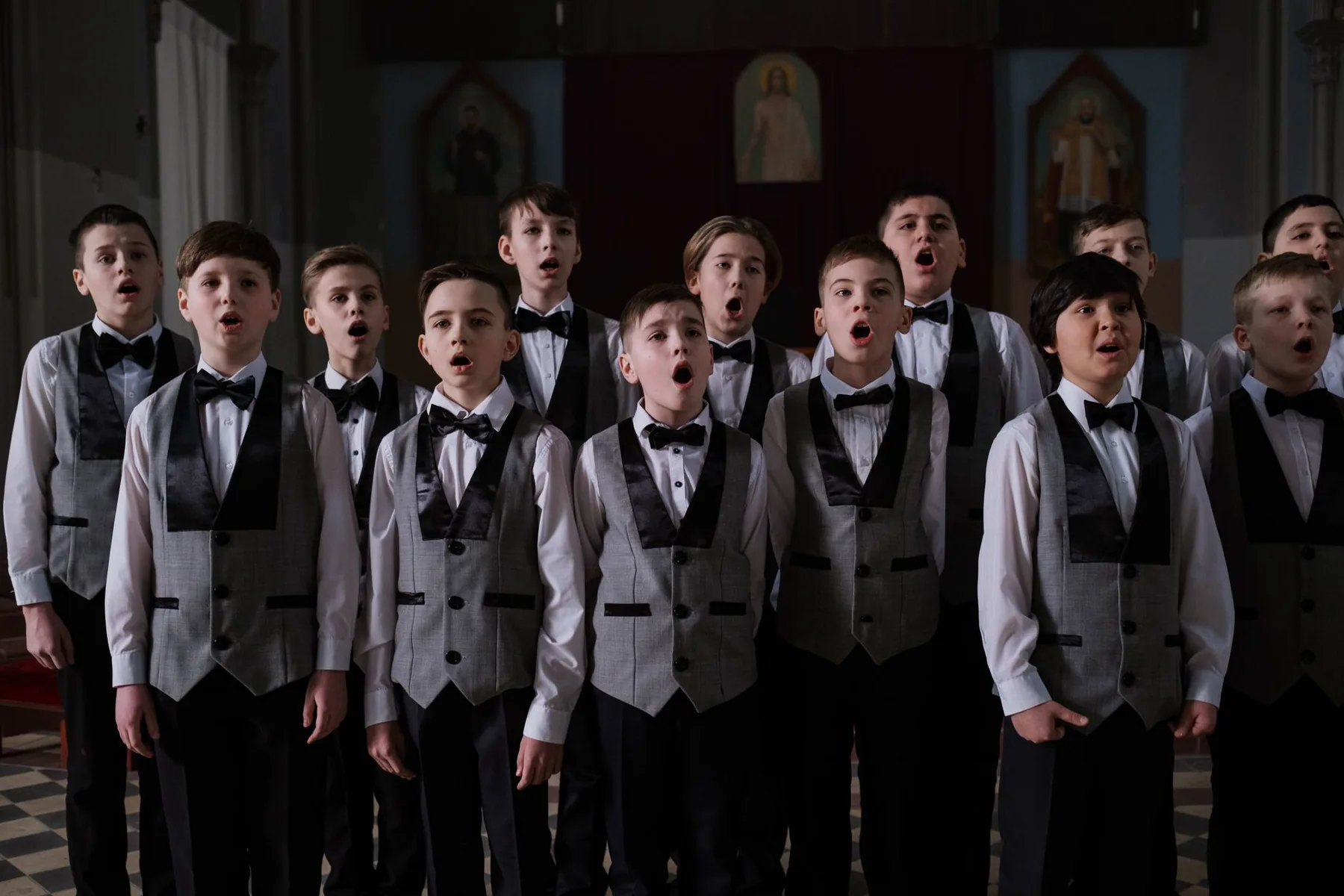
Interpreting Mozart’s work presents a genuine challenge. Musicians must navigate between tradition and innovation while respecting the piece’s depth. Each interpretation offers a new perspective on the beauty of this composition.
Diverse interpretive approaches—tradition and innovation
Approaches to interpreting this work vary considerably:
- The traditional liturgical approach adheres to the original ensemble: choir, strings, and organ.
- Contemporary approaches reimagine the piece while preserving its essence.
Historical transcriptions, such as Franz Liszt‘s 1871 version for solo piano, attest to this diversity. Liszt incorporated this version into his À la Chapelle Sixtine, where it was paired with Allegri’s Miserere.
In addition, Tchaikovsky‘s Mozartiana suite (1887) includes a Preghiera inspired by the work. These adaptations demonstrate the universality of Mozart’s music.
Technical challenges for choirs and instrumentalists
The performers face numerous technical challenges:
- For choirs, mastery of the harmonies and control of dynamics are essential.
- The voices must be balanced precisely, as the apparent simplicity of the writing demands great rigor.
- For the instrumentalists, the string orchestra must support the choir without overpowering it, while the organ must strike a balance between presence and restraint.
These technical aspects underscore the importance of a thoughtful interpretation in which every detail matters.
The conductor’s role in mastering the nuances
The conductor plays a crucial role in performing this piece. The ability to manage dynamics, tempos, and the breathing of musical phrases is decisive. Indeed, conveying the emotion contained in this work of fragile beauty depends on the conductor’s direction.
Modern interpretations, such as that of Icelandic pianist Víkingur Ólafsson, who recorded the work on his album Mozart and Contemporaries, illustrate how interpretation can shape the musical experience. Other unexpected versions, such as the jazz arrangement by Dimitri Naïditch, Gilles Naturel, and Arthur Alard in Mozart dans les étoiles, also demonstrate the piece’s adaptability.
Conclusion: the universality and timeless legacy of Ave verum corpus
Ave verum corpus remains an iconic work that continues to move listeners through the ages. The piece transcends centuries and cultures, touching everyone’s heart regardless of their background.
Its musical legacy is immense, influencing composers such as Haydn, Beethoven, Verdi, and Brahms. The choral works of Bach and Handel also bear the imprint of this inspiration. Today, it is regularly performed by choirs around the world, confirming its status as a pillar of classical music.
Moreover, this composition has inspired unexpected versions, ranging from Liszt’s Romantic piano transcription to modern jazz adaptations. The work thus illustrates the flexibility and modernity of sacred music.
In short, Ave verum corpus is a perfect example of emotion according to Mozart. Its apparent simplicity serves a spiritual depth that defies time. In a world searching for meaning, this piece offers refuge and uplift, reminding us of the importance of rediscovering the beauty of sacred music.