
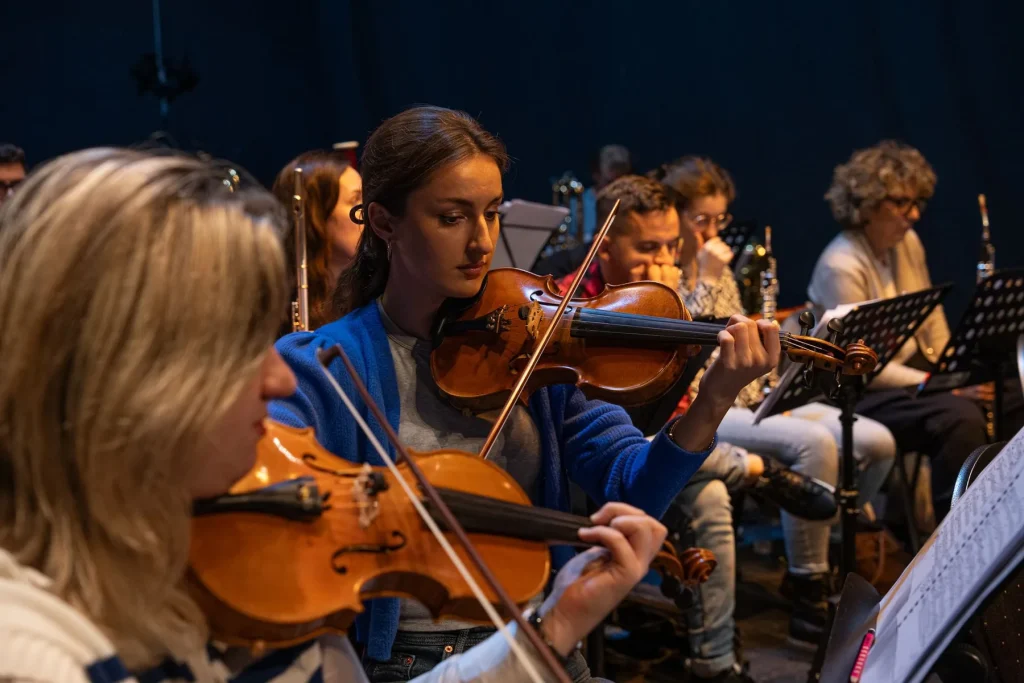
Mozart’s Requiem in D minor, K. 626, is a fascinating work. Composed in 1791, it represents the culmination of Wolfgang Amadeus Mozart’s creative genius. This masterpiece, left unfinished at his death, is steeped in mystery and emotion.
Among the most striking moments in this composition, the Dies irae sequence stands out. It evokes the Day of Wrath, a central theme in the Catholic liturgical tradition. Mozart imbued this medieval text with dramatic power, demonstrating his unrivalled talent.
In this article, we will explore the history, musical analysis and legacy of this iconic passage. We will discover how Mozart’s chosen key of D minor evokes profound feelings rooted in the afterlife. This journey will allow us to appreciate fully the grandeur of this unique work.
Historical context: the composition of the Requiem in 1791
The Requiem was composed during a turbulent period in Mozart’s life. The year 1791 was marked by personal and professional challenges. Wolfgang Amadeus Mozart, an acclaimed composer, was experiencing financial difficulties. His declining health and loss of public favour added to his troubles.
In July of that year, an anonymous messenger came to his home. He brought a mysterious commission: a Mass for the Dead on behalf of Count Franz von Walsegg. This eccentric nobleman was in the habit of presenting works commissioned from composers as his own. He intended to honour the memory of his young deceased wife.
Despite his health, already weakened by a mysterious illness, Mozart set to work. He believed that this Mass belonged to his preferred genre, church music. At the same time, he was working on other major works, including The Magic Flute and La clemenza di Tito.
The support of those around him was crucial during this period. His wife, Constanze, and his pupils Franz Xaver Süßmayr and Joseph Eybler helped to complete the score. Political tensions in Europe following the French Revolution and the decline in the number of concerts in Vienna affected every musician, including Mozart.
Although mysterious, the commission was providential for a struggling composer. The promised sum was substantial, and half had already been paid. This explains Constanze’s eagerness to have the work completed after her husband’s death on 5 December 1791.
Mozart’s Requiem: an iconic and unfinished work
Regarded as one of the most striking masterpieces in the sacred repertoire, the Requiem in D minor, K. 626, transcends its liturgical function. This Mass for the Dead attains a universal and profoundly human dimension, touching the hearts of those who hear it.
The structure of this masterly work consists of eight distinct parts:
- Introit (Requiem æternam)
- Kyrie
- Sequentia (including the Dies irae)
- Offertorium
- Sanctus
- Benedictus
- Agnus Dei
- Communio (Lux æterna)
Each section is carefully designed to evoke a range of emotions, making the work even more compelling. Mozart chose distinctive instrumentation, avoiding high woodwinds such as the flute and oboe. He selected darker timbres, particularly basset horns and trombones, thereby creating an intense and dramatic atmosphere.
The Dies irae stands out as the second movement of the Sequentia, following the Introit and Kyrie. This passage represents the dramatic climax of the entire work, bringing the choir to the fore; it holds a central place throughout the score. The soloists appear mainly in ensembles or short passages, such as the Tuba mirum.
It is important to note that the Requiem remained unfinished when Mozart died on 5 December 1791. At that point, only the Introit and much of the Sequentia had been written for the voices and basso continuo. Mozart’s treatment of the liturgical text also followed the practices of the period, as he chose not to set certain sections, such as the Gradual and Tract, to music.
The work lasts approximately one hour in performance, depending on the conductor’s choice of tempo. This duration allows the score’s full emotional richness to unfold and captivate the audience. Several versions of the Requiem now exist, ranging from the 1791 working score to the version delivered by Franz Xaver Süßmayr in 1792, which attempted to respect Mozart’s intentions.
Mozart’s Requiem occupies a prominent place in the history of sacred music. Its dramatic, almost theatrical tone renewed the genre, inheriting its composer’s operatic spirit. To learn more about this fascinating work, you can read this article.
| Part | Description |
|---|---|
| Introit | Requiem æternam, a solemn opening. |
| Kyrie | Prayer for mercy. |
| Sequentia | Includes the Dies irae, a key moment in the work. |
| Offertorium | Offering of souls. |
| Sanctus | Praise to God. |
| Benedictus | Proclamation of the blessing. |
| Agnus Dei | Prayer for peace. |
| Communio | Lux æterna, the promise of eternity. |
The legends surrounding the Dies irae and the Requiem
Accounts surrounding the Requiem are often tinged with mystery and legend. One of the most famous comes from Miloš Forman’s film Amadeus. It popularised the idea that Antonio Salieri, jealous of his friend and rival, commissioned the work in disguise. This dramatic version portrays Salieri as a Machiavellian figure prepared to torment Mozart and hasten his death.
The reality, however, is quite different. The true patron was Count Franz von Walsegg, an eccentric nobleman. He wished to pay tribute to his young deceased wife. His commission was shrouded in mystery, helping the legend to flourish.
This story grew over time, fuelled by Mozart’s premature death and later testimony from his wife, Constanze. It is important to set the historical record straight. Mozart and Salieri actually maintained courteous professional relations in eighteenth-century Vienna.
In July 1791, an anonymous intermediary came to Mozart’s home. The messenger had been sent by the count, who wished to honour his wife’s memory. Mozart’s final months were marked by intense creative activity despite his illness. He became convinced that he was writing his own Requiem, a tragic premonition that adds to the work’s depth.
On 4 December 1791, the day before his death, three singers gathered at his bedside. They performed the passages already composed, in a poignant scene that deeply affected those who witnessed it. Mozart died on 5 December 1791 at the age of 35 and was buried in a common grave in Vienna, in accordance with contemporary practice for people without means.
It is crucial to distinguish the romanticised account of the Requiem’s history from the facts established by musicologists. The manuscripts held by the Austrian National Library and contemporary correspondence attest to the true course of events. Reducing this work to a mere illustration of the legend would be a serious mistake. Above all, it remains a composition of exceptional depth and beauty.
Mozart’s Dies irae: understanding this passage from the Requiem
The Dies irae sequence, a true dramatic summit, presents itself as a meditation on mortality. This liturgical text, attributed to Thomas of Celano, describes the Day of Wrath with visionary force. In the Requiem, it forms the first stanza of the Sequentia, in D minor, Allegro assai, in 4/4 time, and comprises 68 bars.
The lines “Dies irae, dies illa, solvet saeclum in favilla, teste David cum Sibylla” establish the passage’s tone of sacred terror. This chant evokes the world dissolving into ashes, a powerful image that resonates with human fragility in the face of divine judgement.
Meaning and liturgical text of the Dies irae
The Dies irae is a medieval poem describing the Last Judgement. It erupts suddenly after the relative calm of the Introit and Kyrie. This dramatic passage introduces the great panorama of judgement, in which the choir becomes the protagonist in a scene of collective terror.
The passage’s dramatic place in the Last Judgement
Within the structure of the Requiem, the Dies irae plays a central role. It recalls human frailty before divine justice and calls for mercy for the dead. The passage’s brevity—just 68 bars—contrasts with its considerable emotional impact, achieved through an extreme concentration of musical resources.
The original Gregorian chant inspired Mozart, who preserved its spirit while transforming it through his harmonic and rhythmic genius. The passage belongs to the Requiem tradition, from the earliest medieval Masses for the Dead to the great Romantic tableaux of Berlioz and Verdi.
To appreciate the music fully, it is essential to understand the liturgical text. Mozart matches every word with unrivalled precision and expressiveness. We invite you to listen to the passage while following the score to hear how he renders each image musically: wrath, fire, ashes, terror and judgement.
Musical analysis of the Dies irae: structure and keys
The musical structure of this famous passage explores compelling keys and rhythms. The choice of D minor is particularly significant. This dark and tragic colour evokes themes of death and mystery already present in the Commendatore scenes in Don Giovanni.
D minor and its connotations
In Mozart’s music, D minor is associated with profound emotions. This key often symbolises death and the supernatural. It also appears, for example, in later works such as Schubert’s quartet Death and the Maiden, reinforcing its connection with sombre themes.
Rhythmic and harmonic elements
The passage’s rhythmic elements contribute to its power. The Allegro assai tempo, in 4/4 time, creates a palpable urgency. Syncopations illustrate cosmic upheaval, while an implacable pulse evokes the march towards judgement.
Mozart’s harmonic choices are bold. He uses abrupt modulations and striking dissonances to convey the terror of the text. This rigorous tonal framework gives the whole an architectural coherence.
Orchestration and instrumental choices
The passage’s orchestration is restrained, avoiding high woodwinds such as flutes and oboes. Mozart instead favours instruments with darker timbres, including basset horns, bassoons, trumpets, trombones and timpani. This selection heightens the work’s dramatic atmosphere.
The strings play a crucial role in the score. They create a swirling carpet of sound supported by rapid figures and tremolos. The winds provide dramatic punctuation, intensifying the music.
The timpani and trumpets, traditionally associated with majesty, add an apocalyptic dimension to the passage. This contributes to its solemnity and emotional impact.
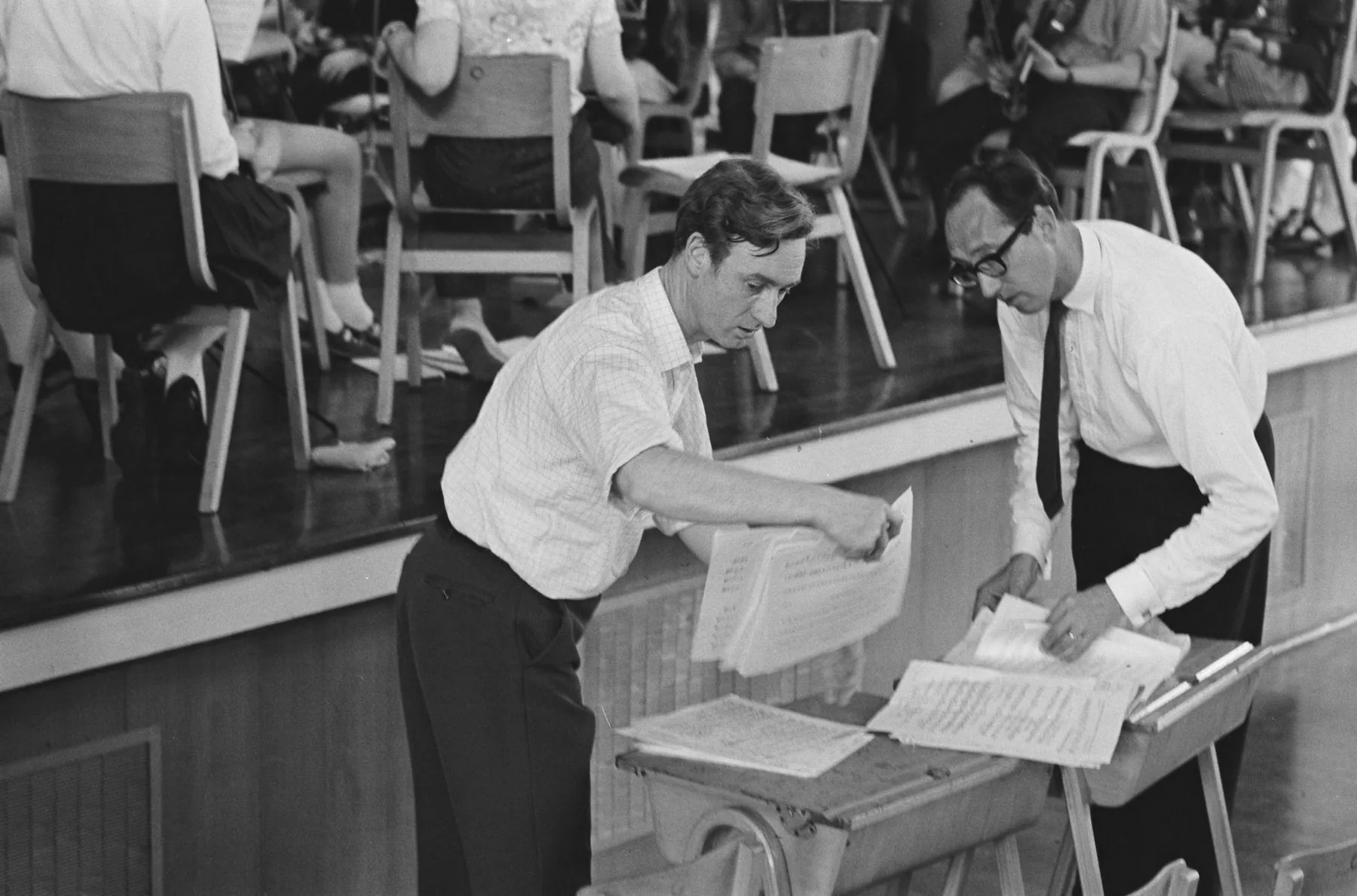
It is interesting to compare Mozart’s original version with Süßmayr’s additions to the orchestration. The manuscripts held by the Austrian National Library offer valuable evidence of these differences.
Finally, the choral writing is particularly striking. The four-part choir is treated as a massive, homophonic block. This creates an effect of earth-shaking power that contrasts with the more contrapuntal passages of the Kyrie.
This modernity in Mozart’s writing foreshadows aspects of Romanticism and even Expressionism. His ability to translate the most extreme emotions into music demonstrates his genius.
| Element | Description |
|---|---|
| Key | D minor, associated with death and the supernatural. |
| Tempo | Allegro assai, creating a sense of urgency. |
| Instruments | Basset horns, bassoons, trumpets, trombones, timpani. |
| Rhythm | Syncopations and an implacable pulse. |
| Choral writing | Four-part choir, creating a powerful effect. |
The role of the choir, soloists and orchestra in the Dies irae
In the Requiem, the interplay between choir, soloists and orchestra creates a unique musical experience. The choir, the true dramatic heart, plays a central role in the passage. Its four sections—sopranos, altos, tenors and basses—merge into a powerful mass of sound. This union embodies the voice of humanity before divine judgement.
The choir as the dramatic heart
Mozart uses the choir as a collective character. Drawing on his operatic experience, it simultaneously expresses the terror, supplication and tragic grandeur of the moment. The choral writing is predominantly homophonic and syllabic. In other words, all the voices declaim the text together, maximising both its dramatic impact and the intelligibility of the liturgical words.
The soloists’ contribution
The soloists do not appear in this particular movement. They do, however, have their place in other parts of the Sequentia, such as the Tuba mirum and Recordare. This creates an interesting contrast with the choir’s power and allows the score’s full richness to be appreciated.
Restrained and weighty orchestral accompaniment
The orchestral accompaniment in the Requiem is characterised by deliberate restraint and weight. Tremolo strings create an unsettling sonic background. The winds punctuate the music with dramatic interventions, while the timpani hammer out the implacable rhythm of judgement. This complementary relationship between choir and orchestra ensures that every element serves the expression of the text, without any pursuit of empty virtuosity.
It is also important to note how Mozart wrote the vocal parts with the capabilities of each section in mind. The ranges are appropriate, and the melodic lines serve the text’s expressiveness while remaining singable. This highlights the challenges faced by modern choirs, which must combine power, rhythmic precision and dramatic expression at a very fast tempo.
The passage’s dynamics alternate between terrifying fortissimo outbursts and more restrained moments. This creates a sonic relief that keeps the listener in a state of constant tension. Finally, the basso continuo, often played on the organ, supports the sonic structure and ensures the harmonic cohesion of the whole, in keeping with eighteenth-century sacred-music practice.
Influences and inspirations behind the Dies irae
The influences that shaped this iconic work are many and varied. Among them, Michael Haydn’s Requiem in C minor, composed in 1771, occupies a prominent place. At the age of 15, Mozart had the opportunity to play in the orchestra at the work’s premiere. The experience left a lasting impression on the young composer.
Michael Haydn’s Requiem and its impact
Haydn’s Requiem not only inspired Mozart but also influenced the overall structure and treatment of the choir in his own Requiem. The similarities between the two works are striking, particularly in certain melodic motifs. This connection reflects Mozart’s admiration for his predecessor.
Mozart’s reorchestration of Handel’s Messiah
In March 1789, Mozart reorchestrated Handel’s Messiah at Baron van Swieten’s request. This reorchestration had a significant impact on the writing of the Kyrie in his Requiem. Similarities can be heard between the Kyrie fugue and the “And with His stripes we are healed” movement from Messiah. Mozart’s admiration for Handel is also apparent in the choral grandeur of the Dies irae.
Other sources and musical traditions
François-Joseph Gossec’s Messe des Morts may also have been a source of inspiration. Mozart could have consulted this work at Baron van Swieten’s home. It displays similarities in its melodic motifs and orchestration. The tradition of Gregorian chant, with which Mozart was thoroughly familiar, also influenced his writing. He preserved its spirit while adding his personal touch.
The musical context of late eighteenth-century Vienna, marked by a revival of sacred music, also played a crucial role. Composers such as Michael Haydn and Mozart himself contributed to this movement. Works such as the motet Ave verum corpus, completed in June 1791, likewise attest to Mozart’s renewed interest in sacred music.
By synthesising these diverse influences, Mozart created a profoundly original work that surpasses its models through its expressive intensity and architectural coherence. Understanding these influences is essential to appreciating the Dies irae score fully: it belongs to a tradition while radically renewing it.
| Source of inspiration | Description |
|---|---|
| Michael Haydn’s Requiem in C minor | A work Mozart played at the age of 15, influencing his own composition. |
| Handel’s Messiah | Reorchestrated by Mozart, it influenced the writing of the Kyrie. |
| Gossec’s Messe des Morts | A possible influence on the melodic motifs and orchestration. |
| Gregorian chant | A tradition Mozart incorporated into his writing. |
| Viennese musical context | A revival of sacred music in the late eighteenth century. |
The unfinished composition and its completion by Süßmayr and Eybler
When Mozart died on 5 December 1791, the Requiem was in a delicate state. The choral voices and basso continuo had been written in full, but the orchestration was only sketched. Initial indications for the violins and winds were present, but much remained to be done.
Constanze Mozart, a widow burdened with debt, decided to have the work completed to fulfil Count von Walsegg’s commission. This would also allow her to receive the second half of the payment. Financial necessity motivated her decision to entrust the score to Joseph Eybler, a highly regarded pupil and friend of Mozart.
State of completion of the Dies irae at Mozart’s death
When Mozart died, sections of the Requiem, including the Dies irae, had largely been written. The Lacrimosa, however, stopped at the eighth bar, and several parts—including the Sanctus, Benedictus and Agnus Dei—were entirely missing. This left considerable scope for those who would take over.
Joseph Eybler’s contributions
Joseph Eybler received the score on 21 December 1791. He worked on orchestrating the stanzas from the Dies irae through to the Lacrimosa. Eybler wrote his additions directly into Mozart’s autograph score, scrupulously respecting the master’s style. Unfortunately, he had to abandon the task for unknown reasons.
Franz Xaver Süßmayr’s work
After Eybler withdrew, Franz Xaver Süßmayr, another of Mozart’s pupils, took over the work. Although Mozart reportedly regarded him as a “donkey”, he played a crucial role in completing the work. Süßmayr completed the orchestration of the winds and percussion and finished the Lacrimosa, which broke off after its eighth bar.
He also composed the missing sections, including the Sanctus, Benedictus and Agnus Dei. Süßmayr copied Eybler’s work while making his own changes, thereby creating two distinct manuscripts: the working score and the delivery score. This process created difficulties for musicologists, who have sometimes struggled to distinguish Mozart’s handwriting from Süßmayr’s.
In the 1960s, the discovery of a sketch for an Amen fugue suggested that Mozart had specific intentions for the conclusion of the Sequentia. Versions of the Requiem now range from Süßmayr’s traditional completion to modern reconstructions that attempt to follow Mozart’s surviving indications. To explore this fascinating history further, read this article.
Dramatic and emotional dimensions of the Dies irae
The work’s interpretation of the Last Judgement offers a unique perspective on the human condition. The passage evokes the terror of the Last Judgement with dramatic intensity inherited from opera. Mozart unleashes a formidable sonic storm in which the choir’s cries depict divine wrath, while cries of terror mingle with attempts to appease it.
Expression of fear, terror and judgement
In the Dies irae, the music expresses fear of judgement. Violent syncopations, striking dissonances and extreme dynamic contrasts create a sense of anguish. The implacable tempo plunges the listener into an experience of collective terror, making the gravity of divine judgement palpable.
Contrasts with moments of calm
This intense passage contrasts with more peaceful moments such as the Recordare and Lacrimosa. The Tuba mirum, with its solemn trombone solo, provides a reflective pause in the storm. The Sequentia’s dramatic progression thus moves from terror to majesty, then reaches supplication before ending in the tears of the Lacrimosa.
This work is not limited to a simple expression of terror. It invites meditation on the human condition in the face of eternity and the mystery of death. The passage’s emotional impact has endured since its creation, fascinating listeners through its ability to express the ineffable.
Finally, Mozart translated every nuance of the liturgical text into music. Every emotion—from initial wrath through fear to astonishment—is expressed with remarkable precision. Within the Requiem as a whole, this moment stands as the climax of an emotional journey extending from the opening prayer to the final light.
The universality of this message transcends the liturgical setting and touches every human being confronted with mortality and responsibility.
Modern interpretation and performance of the Dies irae
Modern performances of this iconic work offer a fascinating diversity of approaches. The Requiem lasts approximately one hour, varying according to the completion used and the conductor’s choice of tempo. Renowned conductors such as Bruno Walter, Herbert von Karajan and Joseph Krips have offered contrasting interpretations of the famous passage.
Some conductors favour speed and violence, while others choose a more solemn approach. Here are some key aspects of these different interpretations:
- Interpretive approaches: Great conductors, from historic recordings to recent performances on period instruments, each bring their own distinctive vision.
- Impact of tempo: A fast tempo heightens the violence and urgency of judgement, while a moderate tempo makes the details of the orchestral and choral writing easier to hear.
- Comparison of durations: Joseph Krips (1950) adopts a brisk tempo, giving the passage earth-shaking energy, whereas Karajan favours a majestic approach.
- Orchestral forces: Interpretive choices range from a large symphony orchestra accompanied by a massive choir to more chamber-like approaches that emphasise the transparency of the writing.
Contemporary staged approaches to the Requiem range from traditional liturgical performance to more theatrical productions that emphasise the work’s dramatic dimension. The passage presents numerous vocal challenges. Modern choirs must combine power, rhythmic precision, clarity of diction and dramatic expression at an often very fast tempo.
Benchmark recordings of the passage make it possible to compare different artistic visions and observe the evolution of performance practices over time. Editorial choices concerning the score—between Süßmayr’s traditional version and modern editions—seek to recover the composer’s intentions by eliminating posthumous additions.
Finally, musicological research has had a significant influence on contemporary practice. The rediscovery of period instruments and eighteenth-century playing techniques further enriches interpretation. The diversity of approaches demonstrates the work’s vitality and its ability to inspire continually renewed readings.
| Conductor | Approach | Performance duration |
|---|---|---|
| Bruno Walter | Speed and intensity | Approximately 55 minutes |
| Herbert von Karajan | Majesty and solemnity | Approximately 60 minutes |
| Joseph Krips | Earth-shaking energy | Approximately 50 minutes |
The legacy of Mozart’s Dies irae in classical music
Mozart’s Requiem left an indelible mark on classical music and influenced generations of composers. This iconic work paved the way for later requiems, notably those of Berlioz, Verdi and Fauré, each of whom brought a personal vision to the theme of death.
Influence on later requiems
Mozart’s Dies irae left a particularly strong mark on Hector Berlioz’s work. His 1837 Requiem magnifies the spectacular dimension of the Last Judgement. Berlioz uses enormous orchestral and choral forces, creating an apocalyptic atmosphere reminiscent of the intensity of Mozart’s passage.
Giuseppe Verdi’s Requiem, composed in 1874, likewise owes much to Mozart’s legacy. Verdi adopts a dramatic, almost operatic treatment of the liturgical text. His Dies irae is extraordinarily violent, almost literally echoing certain effects used by his predecessor while adding his own musical signature.
By contrast, Gabriel Fauré’s Requiem, completed between 1887 and 1890, offers a peaceful vision of death. Although it goes against the prevailing tradition, it remains indebted to Mozart in its choral writing and transparent orchestration, testifying to the lasting influence of Mozart’s work.
The Dies irae in popular culture and music
The Dies irae has also found a place in popular culture. The passage is often used in film to evoke death, judgement or terror. Its impact on the collective imagination is undeniable, reinforcing its status as an iconic work.
Contemporary adaptations of the Dies irae appear in genres ranging from jazz and rock to electronic music. These reinterpretations testify to the vitality of a work that continues to transcend periods and genres.
In short, Mozart’s Dies irae has become a musical archetype, an essential reference for any composer addressing the theme of death or the Last Judgement. Its legacy can be felt throughout the history of classical music, in which his Requiem occupies a special place both as the culmination of the Mass-for-the-Dead tradition and as the starting point for a renewal of the genre.
To explore the work’s impact further, read this article.
Conclusion
The Dies irae remains one of the most powerful passages in classical music, transcending its liturgical setting to attain universal significance. Its impact on later composers and its presence in popular culture testify to its emotional depth and formal perfection.
In this article, we have explored the historical circumstances surrounding its composition and the legends associated with it. We have also considered the reality of its completion by Eybler and Süßmayr.
Musical characteristics such as the key of D minor, the implacable tempo and the effective orchestration enhance the passage’s power. Understanding the liturgical text and the context of the Last Judgement is essential to appreciating how every nuance of the medieval poem is translated into music.
The Requiem occupies a unique place in music history as the culmination of a centuries-old tradition of Masses for the Dead. Despite its posthumous additions, the score retains an expressive power that continues to fascinate. Listen to the Dies irae with renewed attention to discover all its details.
Finally, the work invites reflection on the human condition and the mystery of death, while highlighting the importance of musicological research to a better understanding of its evolution. More than two centuries after its creation, the Dies irae continues to challenge our relationship with eternity.