
Richard Wagner left an immense legacy with the Ring of the Nibelung. Composed between 1848 and 1876, this tetralogy comprises Das Rheingold, Die Walküre, Siegfried and Götterdämmerung. It combines mythological themes with musical innovations.
Wagner drew inspiration from the Nibelungenlied and the Icelandic Eddas. This narrative epic is rich and profound.
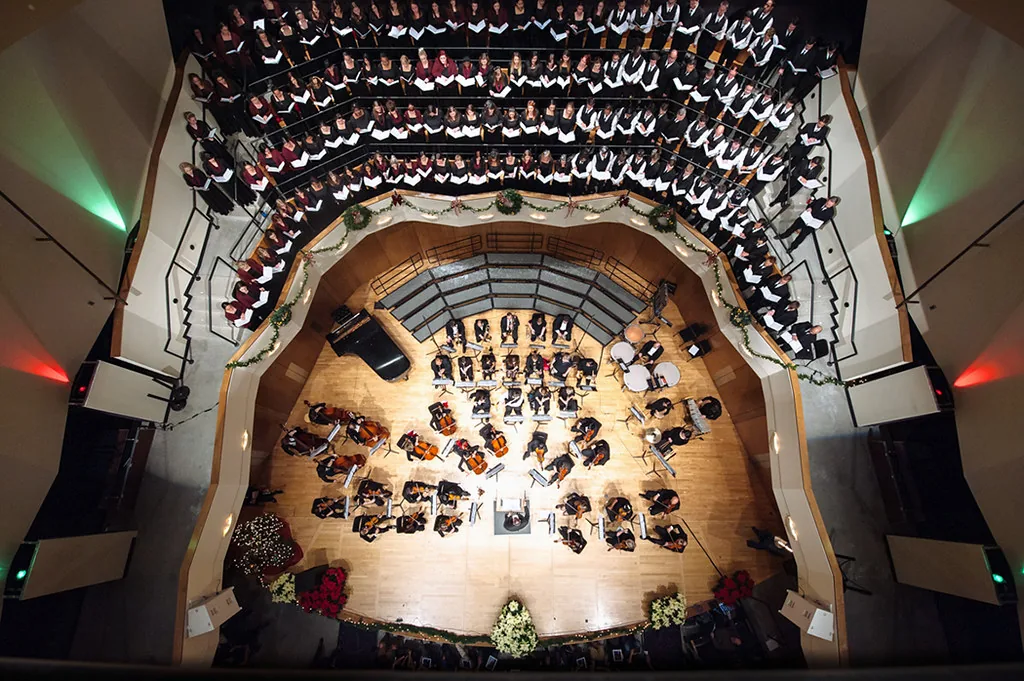
The Ring of the Nibelung illustrates the social and political issues of the nineteenth century. It features 34 characters and an orchestra of 125 musicians. It is an example of the union between spectacle and music.
The exploration of the Ring of the Nibelung shows Wagner’s influence on music. It addresses universal and timeless questions.
Introduction to Wagner’s world
The Wagnerian world is rich in myths and legends. Richard Wagner transformed opera by incorporating profound narratives. He addresses themes that still resonate in classical music today.
Wagner transformed music into an experience that touches deep emotions. He regarded the instruments of the orchestra as actors, changing opera. He combined music, drama and staging in a unique way.
Wagner created sounds that reinforce his narrative. His moving music continues to inspire many artists. His bold vision created a rich world for lovers of opera and classical music.
The foundations of the Ring of the Nibelung
The Ring of the Nibelung is an immense work that goes beyond traditional opera. It consists of four parts and lasts about 15 hours. Its main themes are power, guilt and the consequences of our actions.
Richard Wagner criticizes capitalism and human desires. He shows how our choices affect the world.
A monumental work and its issues
The Ring of the Nibelung is more than a simple opera. It was written over a period of 30 years, demonstrating Wagner’s tireless work. It explores humanity’s struggles against higher powers and questions desire and the human condition.
The tetralogy’s key characters
The characters in the Ring of the Nibelung are essential. Wotan, the father of the gods, embodies power and responsibility. Alberich, king of the Nibelungs, symbolizes greed and betrayal. Siegfried, the hero, represents heroism and the tragedies of the personal quest.
- Wotan: central figure and architect of the other characters’ destinies.
- Alberich: antagonist whose quest for power leads to destruction.
- Siegfried: tragic hero whose qualities lead him to glory and downfall.
The characters are associated with musical themes that underscore their nature and destiny. Their story illustrates themes of kingship, love and betrayal. It also shows the complexity of the relationships between the divine, the human and the mythical.
Richard Wagner: decoding the Ring of the Nibelung
Richard Wagner’s work, The Ring of the Nibelung, has tremendous depth. It comprises a prologue and three acts. These parts address themes such as power, greed and the quest for redemption.
The musical motifs, or leitmotifs, help the audience follow the characters and emotions. Whenever a character appears, particular music accompanies them. This enriches the audience’s experience.
Analysis of themes and motifs
Good and evil lie at the heart of the work. Wagner shows how human conflicts relate to myths. This helps us understand the characters’ motivations and inner struggles.
Recent productions, such as those at the Grand Théâtre de Genève, illustrate this approach. They use illusions to captivate the audience.
The narrative structure and its innovations
The structure of The Ring of the Nibelung is unique. It combines complex plots with a nonlinear organization. Wagner created the total work of art, in which music, text and staging blend together.
This structure has inspired many productions, including those in Bayreuth and New York. Modern productions, such as Robert Lepage’s, combine tradition and technology. For more details, consult this in-depth analysis of the Ring of the Nibelung.
The influences of Germanic mythology
Richard Wagner drew heavily on Germanic mythology for his great masterpiece, the Ring of the Nibelung. This story is based on Norse legends. They tell stories of courage, power and destiny.
Wagner adapted these themes to make them relevant to his time. He wanted to demonstrate the importance of these values.
Norse legends and their impact on the work
Norse legends lie at the heart of the Ring of the Nibelung. They offer rich characters and stories. These Wagnerian characters illustrate humanity’s struggle against fate.
By telling these stories, Wagner highlights the complex relationships between his characters. This gives his work moral and philosophical depth.
The relationship between Wagnerian myth and other narratives
The Ring of the Nibelung is not limited to Germanic mythology. It also enters into dialogue with Greek mythology. Themes such as the quest for identity and the struggle against fate appear in many narratives.
Wagnerian myth influenced works such as J. R. R. Tolkien’s “The Lord of the Rings.” These connections demonstrate the universal scope of its themes.
Wagner’s musical techniques
Richard Wagner transformed operatic music through his new techniques. He used the leitmotifs to help the audience identify with the characters. This made the operas more moving.
Wagner made every note a key element of the story. This created unique listening experiences. Every note tells part of the story.
The role of leitmotifs in the listening experience
The leitmotifs are more than simple themes. They connect the characters’ stories and emotions. Each motif has a profound meaning.
These musical elements immerse the audience in a world where music and story blend together. Wagner used this technique to touch the audience’s emotions.
Wagner, the orchestra and the teaching of opera
Wagner changed the role of the orchestra in opera. The orchestra is no longer mere accompaniment. It becomes an important actor that enriches the story.
Wagner demonstrated the orchestra’s importance in opera. This influenced modern composers. They seek to balance music and narrative to create immersive operas.
| Element | Description | Impact |
|---|---|---|
| Leitmotifs | Musical motifs representing characters or themes | Creation of an immediate emotional connection |
| Orchestra | Role transformed into that of narrator | Enrichment of the narrative and drama |
| Musical techniques | Integration of complex and innovative motifs | Influence on modern opera |
The historical reception of the Ring of the Nibelung
The first performance of the Ring of the Nibelung, in 1876, made opera history. It received mixed reviews but became a classic. Modern productions attest to its influence on the musical world.
Studies of the Ring of the Nibelung cover the period from 1917 to 2018. They analyze composers such as Alban Berg and Franz Liszt. Nearly 70% of the articles focus on traditional music and Wagner’s influence.
Debates about Wagner’s values remain relevant today. They appear in academic publications. A relevant article explores these controversies.
Musicological research also explores lesser-known sources. It demonstrates the richness of Wagner’s legacy. Comparative studies highlight musical developments.
| Year | Themes addressed | Number of articles |
|---|---|---|
| 1917-1940 | Initial reception and early criticism | 15 |
| 1941-1960 | Musicological and ethical analysis | 25 |
| 1961-1980 | Tradition versus modernity | 35 |
| 1981-2000 | Comparisons with other operas | 40 |
| 2001-2018 | Contemporary reinterpretations | 50 |
Conclusion
Richard Wagner’s Ring of the Nibelung is a masterpiece of the operatic repertoire. It presents an extraordinary wealth of themes, characters and music. Wagner captured the essence of humanity by addressing profound issues that continue to inspire us today.
Interpretations of the Ring of the Nibelung by artists such as Franz von Lenbach and Renoir demonstrate the complexity of Wagner’s legacy. This work left its mark on music and influenced German identity. It resonated in political and social contexts across the centuries.
Wagner’s legacy goes beyond music. It is an artistic and philosophical reflection on time. It reminds us of art’s challenges in the face of history. For more details about orchestras and musical development, consult this resource.