
Mozart’s Requiem is one of the most fascinating works in classical music. This masterpiece, catalogued as K. 626, is a Mass for the dead written for four soloists, choir and symphony orchestra. Tragically, the composer Wolfgang Amadeus Mozart died at the age of 35, leaving his work unfinished.
At the time of his death, only the Introit and Kyrie were complete. Mystery surrounds the commission for this composition, which was delivered by a messenger dressed in black. The patron, Count Franz von Walsegg, wanted the work to be presented as his own.
Mozart’s pupils, particularly Franz Xaver Süssmayr, played a crucial role in completing the Requiem. This blend of gentleness and pain, light and sorrow, continues to move music lovers. Let us delve into the mysteries of this legendary score.
1. Historical and social context of the Requiem commission
The year 1791 marked a turning point in Mozart’s life, between glory and despair. At the time, the composer was facing major personal challenges. He was ill and burdened with debts. His music, once celebrated, was being performed less and less often in Vienna following the death of his patron, Emperor Joseph II.
In these difficult circumstances, Mozart was living far beyond his means. He borrowed money wherever he could, worsening his precarious situation. The commission for a requiem came at just the right time, offering a glimmer of hope in his bleak daily life.
1.1. Mozart’s personal circumstances in 1791
In 1791, Mozart was a composer of genius, but his financial situation was alarming. He had to contend with creditors and debts of honour, some of them related to gambling. This grim picture was made worse by the loss of his position at court.
1.2. The mysterious patron: Count Franz von Walsegg
The mystery deepened with the arrival of a messenger from Count Franz von Walsegg. A music lover, the count had recently lost his young wife and wanted to pay tribute to her. He wished to present the work as his own creation, a practice he commonly followed.
1.3. Myths surrounding the commission and musical rivalries
Many legends surround this commission. The film Amadeus popularised the idea that Mozart’s rival, Antonio Salieri, had commissioned it. However, this version is widely regarded as fiction. The reality is far more complex and rooted in the musical rivalries of the period.
| Elements | Details |
|---|---|
| Financial situation | Burdened with debt and borrowing frequently |
| Patron | Count Franz von Walsegg |
| Reason for the commission | A tribute to his deceased wife |
| Myths | Rivalry with Salieri |
This combination of personal pressures and artistic rivalries created fertile ground for the composition of the work. The commission for the Requiem thus proved to be far more than a simple musical request; it reflected a troubled era and a composer in search of redemption.
2. The meaning and evolution of funeral rites and Masses for the dead
For thousands of years, humanity has turned to rituals to honour the dead. These practices are deeply rooted in our culture and express complex emotions in the face of death. Music in particular has always accompanied such moments, offering comfort and food for thought.
Origins of funeral rites and sacred music
Funeral rites date back approximately 100,000 years. Human beings feel a need to honour their dead, and music became an essential means of expression. Throughout the ages, it has conveyed rebellion, pain, resignation, consolation and hope.
The Requiem in the Western liturgical tradition
During the Middle Ages, liturgical chants followed the Gregorian rite. Initially monophonic and sung a cappella, they evolved into polyphonic compositions. These developments laid the foundations of Western sacred music, incorporating increasingly sophisticated vocal elements.
Historical examples of requiems before Mozart
The Renaissance saw the emergence of orchestration, enriching Masses for the dead. Approximately 1,600 works have been catalogued, demonstrating the importance of this theme in musical composition. The term “requiem” comes from the Latin “requies,” meaning “rest,” and appears in the antiphon “Requiem aeternam dona eis Domine.”
The earliest known polyphonic requiem is by Johannes Ockeghem, composed for the death of either Charles VII or Louis XI in the 15th century. This essential milestone in the genre’s history highlights the tradition that Mozart inherited when he received the commission for his own Requiem in 1791.
| Elements | Details |
|---|---|
| Origins of the rites | Approximately 100,000 years ago |
| Musical evolution | From monophony to polyphony |
| Number of works | Approximately 1,600 funeral Masses |
| First polyphonic requiem | Johannes Ockeghem |
3. 1791, a pivotal year: Mozart faces the commission and personal challenges
The year 1791 was a pivotal moment for the composer, when creativity collided with unprecedented personal challenges. This period was marked by intense musical productivity as Mozart juggled several commissions.
During this final year, he composed major works such as The Magic Flute and La clemenza di Tito, the latter opera completed in just three weeks to celebrate the coronation of Leopold II as King of Bohemia. At the same time, he created the Clarinet Concerto in A major, K. 622 and the Little Masonic Cantata, “Laut verkünde unsre Freude,” as well as the motet Ave Verum Corpus for the Feast of Corpus Christi.
Unfortunately, Mozart’s health deteriorated. He lived far beyond his means, accumulating considerable debts. The death of Emperor Joseph II, his patron, had also caused his standing in the musical world to decline. In these difficult circumstances, he received an anonymous commission for a requiem, accompanied by a substantial advance. This represented a glimmer of financial hope for the struggling composer.
The year was also marked by immense pressure. The demands of his work, combined with his health problems, forced him to maintain a relentless pace. One might almost describe it as burnout, so overwhelmed was he by his workload. Despite everything, he continued to push his creative boundaries, committing himself fully to every project.
The race against time intensified as December 1791 approached, while Mozart, only 35 years old, struggled to finish his works before his time ran out. This tragic yet inspiring period saw Mozart’s music continue to shine, even in the face of adversity.
4. The dramatic genesis of the unfinished Requiem
The creation of this tragic composition unfolded against a backdrop of pain and struggle. Growing increasingly ill, Mozart continued his work with determination. On 4 December 1791, an initial rehearsal was held at his bedside with three singers. Unfortunately, his condition forced those present to cut the rehearsal short.
Progress on the composition up to his death
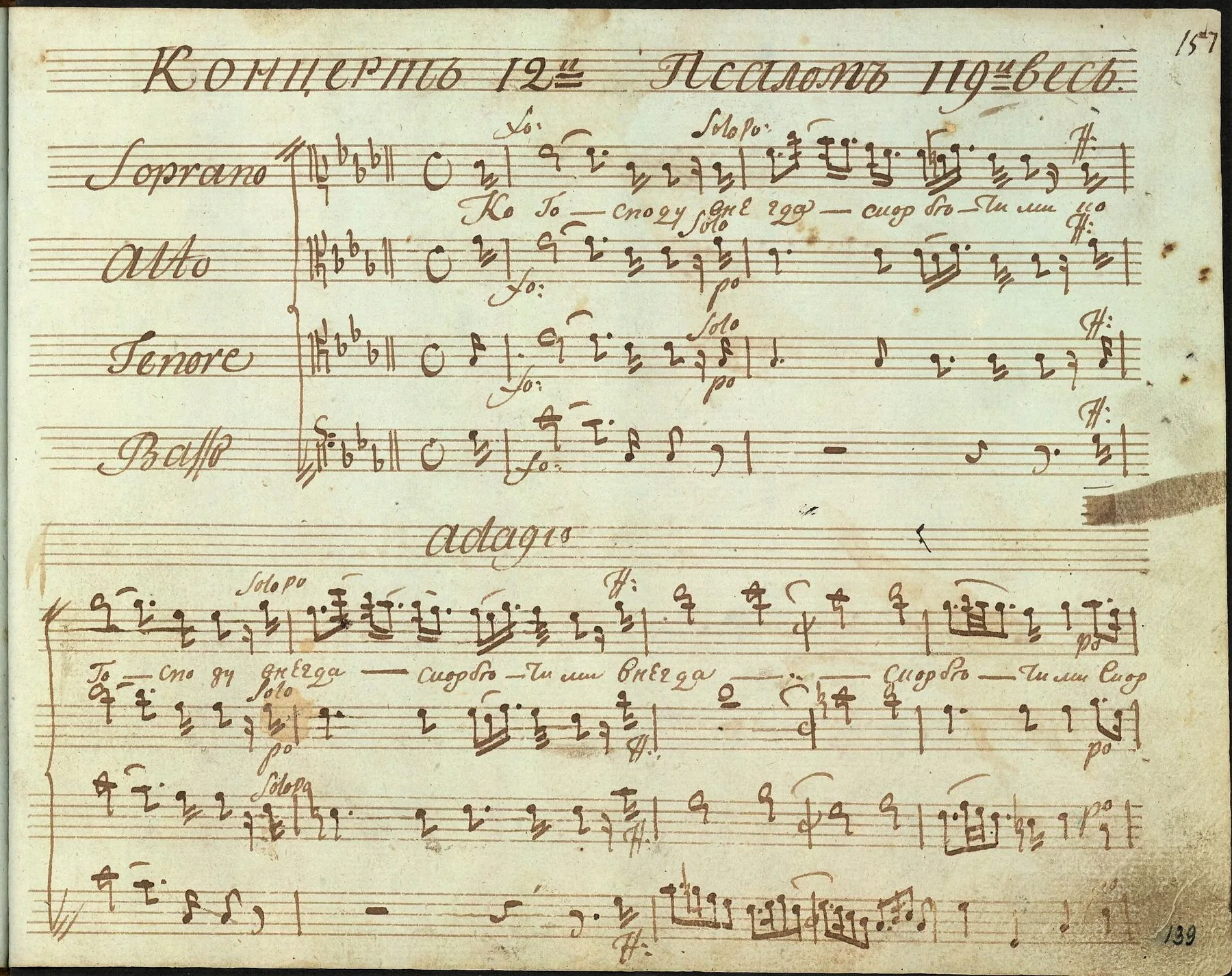
At the time of his death on 5 December 1791, the composer had completed only the Introit, including the orchestral and choral parts. The Kyrie and part of the Dies Irae were only partially written and included solely the choir and basso continuo. For the remainder, he had sketched a few orchestral passages, leaving the work unfinished.
Emotion and symbolism in the final manuscripts
The final eight bars, those of the Lacrimosa, are particularly charged with emotion. The text evokes a man rising from the ashes to be judged. Legend has it that Mozart burst into tears while writing these lines, aware that he was composing his own funeral Mass.
The rehearsals and the presence of loved ones at his bedside
Constanze Mozart, his wife, and his pupil Franz Xaver Süssmayr were at his side. They sang and performed the score, offering emotional support to the composer. Their constant presence underscored his race against death as Mozart struggled to complete what would become his musical testament.
| Elements | Details |
|---|---|
| Progress | Complete Introit; Kyrie and Dies Irae partially written |
| Rehearsal | 4 December 1791, interrupted because of Mozart’s weakness |
| Final bars | Lacrimosa, a symbol of pain and foreboding |
| Those present | Constanze and Süssmayr at his bedside |
5. The involvement of Mozart’s pupils in completing the work
Following the loss of her husband, Mozart’s wife Constanze faced a pressing obligation. She inherited not only his debts but also the responsibility of completing the Requiem. To fulfil the commission from Count Franz von Walsegg, she had to finish the work in order to receive the promised payment.
She initially approached Joseph Eybler, Mozart’s most highly regarded friend. Ultimately, however, Franz Xaver Süssmayr, a pupil to whom Mozart had entrusted his final secrets, played the central role. Süssmayr composed most of the work from the fragments left by his teacher.
He reused the original material conceived by Mozart, drawing on oral instructions and the notes that remained. Other pupils, including Maximilian Stadler, also helped to complete certain parts of the work. This posthumous collaboration was essential in bringing the masterpiece to life.
The pupils’ working method is fascinating. They drew on Mozart’s teachings, orchestrated the missing passages and completed the Offertorium. They also wrote the Sanctus, Benedictus, Agnus Dei and Communio, thereby respecting the composer’s spirit.
A successful deception took place when the score was delivered. Süssmayr imitated Mozart’s signature on the submitted manuscript. Deceived, Count Walsegg conducted the complete version of the work as early as December 1793, believing it to have been written entirely by the master.
This collaboration saved the work and preserved it for posterity. Despite controversies over the authenticity of certain sections, the importance of this undertaking is undeniable. It demonstrates a desire to honour a great composer while preserving his musical legacy.
6. Detailed analysis of the Requiem’s musical structure
The musical structure of this work is both complex and fascinating. It follows a precise liturgical order, beginning with the Introit and continuing through several important sections. Each part contributes to the composition’s solemn and moving atmosphere.
6.1. The Introit, Kyrie and Sequence (Dies Irae and its sections)
The Introit opens with the famous “Requiem aeternam,” creating an atmosphere of contemplation. The Kyrie follows, expressing a poignant plea. Next, the Sequence, the Dies Irae, unfolds in six distinct sections.
- Dies Irae: a terrifying passage evoking the Last Judgement.
- Tuba Mirum: a trombone solo announces the judgement, adding a dramatic dimension.
- Rex Tremendae: majestic in character, it emphasises divine greatness.
- Recordare: a prayer imploring mercy.
- Confutatis: dramatic in character, it evokes the separation of the righteous from sinners.
- Lacrimosa: infinitely sorrowful, it concludes the sequence with profound emotion.
6.2. The Offertorium, Sanctus, Benedictus, Agnus Dei and Communio
After the Sequence, the Offertorium is divided into two parts: Domine Jesu and Hostias. Each is carefully orchestrated to heighten the intensity of the Mass.
The Sanctus and Benedictus are moments of celebration, while the Agnus Dei calls for peace. Finally, the Communio, “Lux aeterna,” reprises musical motifs from the Introit, thereby bringing the composition full circle.
Mozart’s orchestral choices are significant. He deliberately omitted high woodwinds such as flutes and oboes in order to preserve the necessary gravity. The predominant use of D minor and related keys contributes to the work’s sombre, contemplative atmosphere.
This composition is written for four soloists, a four-part choir and a symphony orchestra. The balance between the sections written by Mozart and those completed by his pupils displays remarkable musical coherence.
7. The central role of the choir and musical symbolism
In Mozart’s work, the choir occupies a prominent position and acts as the true protagonist. It has the freedom to express an immense range of emotions in the face of death. The choir’s four sections follow one another in conveying human frailty, the divine power of the Last Judgement and the humility of supplication.
The composition also evokes hope in the resurrection and the solace provided by eternal light, the Lux aeterna. The expressive power of both the solo and choral voices creates moments of rare dramatic intensity, particularly in the Dies Irae, where the choir’s elemental force evokes the terror of the Judgement.
7.1. The expressive power of the voices and choir
The choral and solo voices come together to offer a unique musical experience. Rich harmonies and profound emotions combine to create a poignant atmosphere. Each vocal section contributes to this alchemy, enriching the work with unparalleled expressiveness.
7.2. Orchestral choices and their dramatic effects
Mozart’s orchestral choices are equally significant. By omitting the high woodwinds, he preserves the work’s gravity and solemnity. The trombone in the Tuba Mirum heightens the dramatic effect, while the use of D minor darkens the overall atmosphere.
7.3. Emotion between light and pain in the Requiem
This work blends gentleness and pain, light and sorrow. The balance between the expression of suffering and the hope of redemption is palpable throughout the score. Mozart’s dramatic, almost theatrical approach renewed the genre by infusing it with his genius as an opera composer.
Finally, the interaction between choir, soloists and orchestra creates a unique musical and spiritual experience. This alchemy continues to move listeners more than two centuries after the work was created. To learn more about this fascinating work, read this article about Mozart’s Requiem.
8. Remarkable interpretations and contemporary impact
This iconic work has received numerous memorable interpretations that testify to its emotional power. From its posthumous premiere in December 1793 under Count Walsegg to contemporary readings, the Requiem has captivated entire generations.
8.1. Great historical and modern interpretations
The great historical interpretations include those by renowned conductors who shaped the reception of the work during the 20th century. These interpretations often revealed hidden nuances and made it possible to explore new dimensions of the score.
8.2. Landmark concerts and notable recordings
Recent concerts include the performance by the Insula orchestra and the Accentus choir, conducted by Laurence Equilbey at the Salle Pleyel in Paris on 6 February 2014. At the Royal Chapel of Versailles, Hervé Niquet and Le Concert Spirituel performed the requiems of Mozart and Salieri. The Royal Opera of Versailles regularly programmes the work with soloists such as Marie Perbost (soprano), Mathilde Ortscheidt (mezzo-soprano), Bastien Rimondi (tenor) and Edwin Fardini (bass), conducted by Théotime Langlois de Swarte. These concerts are often paired with the Clarinet Concerto, K. 622, creating a coherent programme.
8.3. The Requiem in popular culture and cinema
The Requiem also has a notable presence in popular culture. Miloš Forman’s film Amadeus contributed greatly to popularising the work and the myths surrounding it. This film adaptation not only introduced the music to a broad audience but also reinforced its legendary status.
Modern interpretations continue to explore the score’s infinite expressive nuances. Through varied ensembles and innovative approaches, each performance offers a new perspective. The contemporary impact of this work, more than two centuries old, remains undiminished: its emotional power continues to fascinate performers and audiences.
| Elements | Details |
|---|---|
| Posthumous premiere | December 1793, conducted by Count Walsegg |
| Recent concerts | Insula orchestra and Accentus choir, Salle Pleyel, 2014 |
| Programming at Versailles | Royal Opera, various soloists, conducted by Théotime Langlois de Swarte |
| Iconic film | Amadeus by Miloš Forman |
9. Mozart’s Requiem: the history and secrets of an unfinished masterpiece
This iconic musical work is surrounded by mysteries and legends. Many stories circulate about its creation and have often been embellished over time. Some claim that the commission was delivered by a messenger dressed in black, while others describe a rivalry with Salieri, popularised by the film Amadeus. These accounts, however, deserve closer scrutiny.
9.1. Legends and truths surrounding the work
The legends surrounding this composition are fascinating but often misleading. Historical evidence reveals that the patron was Count Franz von Walsegg, who wanted to pay tribute to his deceased wife. In July 1791, Wolfgang Amadeus Mozart was in precarious circumstances, ill and in debt.
The first rehearsal took place on 4 December 1791, but the composer died the following day at the age of 35. At the time of his death, he had completed only the Introit. The Kyrie and part of the Dies Irae were only partially written and included just the choir and basso continuo.
Constanze, his wife, inherited the debts and first approached Joseph Eybler, followed by Franz Xaver Süssmayr. The latter composed most of the work from the fragments left by his teacher. Süssmayr used the original material to complete the Requiem in a version that is traditionally accepted, although later editions have proposed alternatives.
9.2. Mozart’s legacy and musical heritage
The name Amadeus, meaning “beloved of God,” aptly sums up the essence of this composer. At his death, he had written more than 620 works according to the Köchel catalogue, in which the Requiem bears the number K. 626. Émile Vuillermoz said, “Mozart composed as a bird sings,” highlighting the musician’s instinctive genius.
His musical legacy is considerable. The great requiems of the 19th century, such as those by Berlioz and Verdi, as well as Fauré’s in the 20th century, all bear the influence of his work. The Requiem is regarded as a musical testament, a work of light that transcends death.
Ultimately, this unique composition occupies a special place in the collective imagination, both as an unfinished masterpiece and as a symbol of Mozart’s creativity. Its impact endures, touching generations of musicians and listeners.
| Elements | Details |
|---|---|
| Patron | Count Franz von Walsegg |
| Date of death | 5 December 1791 |
| Works composed | More than 620 works |
| Köchel number | K. 626 |
10. Conclusion
The emotional power of this composition spans the ages and touches listeners’ hearts. Although unfinished, the Requiem remains one of the most fascinating works in the classical repertoire. Through its creator’s personal struggles, it reveals profound spiritual and dramatic depth.
Mozart’s pupils, particularly Süssmayr, played a crucial role in completing this testamentary work. Their dedication produced a version that continues to move audiences through its ability to express the full range of human emotions in the face of death.
Ultimately, this timeless masterpiece transcends its historical context. It invites rediscovery and attentive listening, promising to inspire the admiration of future generations. The Requiem therefore remains a symbol of beauty triumphing over death.