
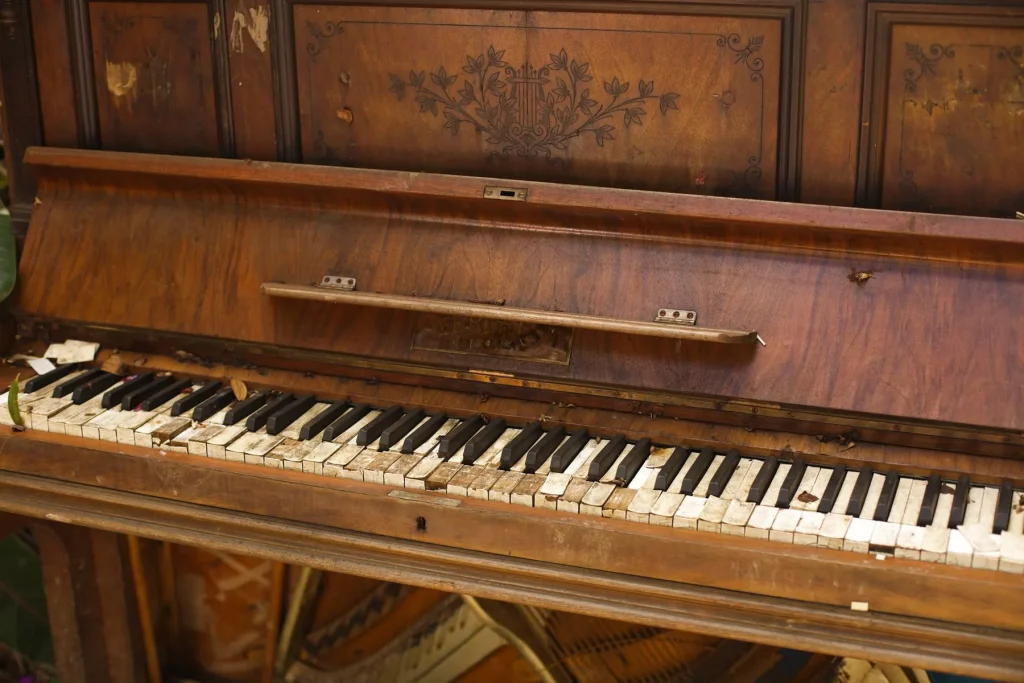
Classical music is rich in artistic legacies, and among them, the connection between Frédéric Chopin and Claude Debussy holds a special place. This French composer, known for his innovative style, drew some of his inspiration from the creations of his Polish predecessor.
This artistic relationship played a key role in the development of modern music. Chopin’s piano techniques and harmonic innovations left a lasting mark on Debussy’s work, particularly in iconic pieces such as “Clair de lune.”
This article explores the stylistic convergences between these two geniuses and reveals lesser-known aspects of their shared legacy. Delve into a detailed analysis of their influence on music history.
Introduction to Frédéric Chopin and Claude Debussy
Frédéric Chopin and Claude Debussy, two major figures in music, left their mark on their respective eras through their genius. Although their paths were distinct, they reveal fascinating similarities. Let us explore their histories to better understand their influence.
A brief biography of Chopin
Born in Poland in 1810, Frédéric Chopin displayed an exceptional talent for the piano from a very early age. His musical training began in childhood. In 1831, he settled in Paris, where he joined Romantic artistic circles. His relationship with George Sand profoundly influenced his work.
A brief biography of Debussy
Claude Debussy, born in 1862, studied at the Paris Conservatoire. Early on, he broke with academic conventions to explore new musical directions. His Valse romantique, composed in 1890, marked the beginning of his pre-Impressionist phase. His encounters with figures such as Mallarmé enriched his artistic world.
Although separated by a period of time, these two composers shared a relentless pursuit of innovation. Their legacy continues to inspire later generations.
Historical context of the two composers
The nineteenth century was a pivotal period in the development of music. Political and cultural revolutions profoundly influenced artistic creation. Paris, in particular, became a true laboratory for musical innovation.
The nineteenth century and the development of Romantic music
The Romantic movement redefined how composers approached their art. Figures such as Berlioz revolutionized orchestration, paving the way for new forms of musical expression. Parisian salons, where artists gathered, played a key role in spreading these ideas.
This era also saw the emergence of new piano techniques. Composers sought to explore deeper emotions, often inspired by political and social upheavals.
The era’s influence on their compositions
Chopin and Debussy responded differently to the influences of their time. While Chopin drew inspiration from Polish nationalism, Debussy was shaped by scientific discoveries, particularly in acoustics. These differences are reflected in their compositions.
- Political revolutions stimulated musical expression.
- Parisian salons enabled works to circulate rapidly.
- Pressure from music publishers influenced compositional choices.
To learn more about the development of Claude Debussy, discover his unique journey within this innovation-rich era.
The musical styles of Chopin and Debussy
The musical worlds of Chopin and Debussy reflect distinct yet complementary approaches. Each developed a unique style, shaped by his era and artistic aspirations. These two composers left an indelible mark on music history.
Romanticism in Chopin
Frédéric Chopin embodies the essence of Romanticism. His mazurkas and nocturnes are perfect examples of his profound sensitivity. Through these pieces, he explores intense emotions, often tinged with melancholy.
His use of ornamentation and rubato gives his music an emotional fluidity. These techniques reflect his desire to transcend the piano’s limitations, creating soundscapes rich in harmony.
Impressionism in Debussy
Claude Debussy, by contrast, paved the way for musical Impressionism. His “Valse romantique” illustrates his exploration of chromaticism and tonal colors. He sought to evoke atmospheres rather than tell stories.
Debussyan arabesques and the Symbolist use of modes demonstrate his innovative approach. Silences and pauses play a key role in his compositions, creating a sense of freedom and fluidity.
Chopin’s influence on Debussy
Frédéric Chopin’s musical legacy profoundly shaped Claude Debussy’s earliest compositions. This artistic connection is apparent from the French composer’s early works, in which clear traces of Chopin’s style can be found.

Debussy’s early works and Chopin’s imprint
At the beginning of his career, Debussy drew inspiration from Chopin’s piano techniques and harmonies. His Valse romantique, composed in 1890, is a striking example. Written before his Impressionist period, this piece reveals the direct influence of the Polish master.
Chopin’s nocturnes, in particular, left an indelible mark. Encoded quotations from these works appear in compositions such as Clair de lune. These references reveal profound admiration and meticulous study.
Études and waltzes: a musical legacy
Debussy paid tribute to Chopin by dedicating his own études to him. These pieces explore complex piano techniques while drawing inspiration from Chopin’s fluidity and expressiveness. The ABA form, often used in the waltzes of both composers, illustrates this stylistic continuity.
- Durand editions played a key role in Debussy’s rediscovery of Chopin.
- Contemporaries noted the Chopinesque character of Debussy’s performances, demonstrating his mastery.
- Debussy’s deconstruction of Chopin’s rhythmic formulas demonstrates a bold evolution.
Although transformed, this musical legacy remains a pillar of Debussy’s work. It even influenced his later compositions, in which subtle echoes of Chopin can be heard.
Comparison of compositional techniques
A study of their compositional techniques reveals fascinating differences and similarities between Chopin and Debussy. Although distinct, their musical languages reflect a shared pursuit of innovation and expressiveness. This analysis offers a better understanding of their influence on the development of music.
Harmony and melody in Chopin
Chopin uses unresolved ninth and eleventh chords, creating rich, complex harmony. His melodic lines, often fluid and expressive, reflect a profound Romantic sensitivity. The Op. 28 Preludes illustrate this approach, in which every piece becomes a unique world of sound.
Chopin’s treatment of dissonance is characterized by great emotional expressiveness. The bass lines, often melodic, support the harmonies while adding a narrative dimension. This technique directly influenced the way Debussy would later approach composition.
Harmony and melody in Debussy
Debussy, by contrast, developed enharmonic writing in works such as the “Valse romantique.” His use of harmonic clusters and modes creates evocative atmospheres. Bass notes, often used in clusters, contrast with Chopin’s melodic lines.
Book I of Debussy’s Preludes demonstrates a bold exploration of tonal colors. Silences and pauses play a key role, reflecting an innovative perspective on musical structure. Influenced by Javanese music, this approach moves away from the Polish folklore dear to Chopin.
The use of the piano by both composers
The piano was a central instrument in the works of Chopin and Debussy. These two composers used the keyboard in unique ways, leaving an indelible mark on music history. Their approaches to the piano reveal distinct technical innovations and artistic visions.
The piano as Chopin’s principal instrument
Frédéric Chopin devoted 98% of his output to solo piano music. His use of the keyboard is characterized by innovative techniques such as Chopinesque legato. This melodic fluidity gives his music a unique expressiveness.
Chopin’s pedal markings are precise and guide the performer through a meticulous exploration of nuance. He also makes use of the keyboard’s extreme registers, creating striking contrasts. Rapid ornaments, such as trills, add a virtuosic dimension to his compositions.
The piano in Debussy’s work
Claude Debussy, by contrast, uses the piano to explore atmospheres and tonal colors. His études are a striking example of this approach. Piano clusters play a central role in them, creating bold harmonic effects.
Unlike Chopin, Debussy allows performers considerable freedom in interpreting his pedal markings. Gruppetti, characteristic ornaments of his style, contrast with Chopin’s trills. The Pleyel and Érard piano makers also influenced their writing by offering them different tonal possibilities.
| Aspect | Chopin | Debussy |
|---|---|---|
| Legato technique | Melodic fluidity | Tonal atmospheres |
| Pedaling | Precise markings | Freedom of interpretation |
| Ornaments | Trills | Gruppetti |
| Influence of piano makers | Pleyel | Érard |
The piano études: a direct connection
The piano études form a bridge between two distinct musical eras. These often technically demanding pieces reveal a shared pursuit of perfection and innovation. They show how the composers explored the instrument’s limits to create timeless works.
Chopin’s études
Frédéric Chopin revolutionized the étude genre with his Op. 10 and Op. 25 sets. Composed in the nineteenth century, these pieces combine virtuosity and expressiveness. Each étude addresses a particular technical challenge, such as arpeggios or octaves, while retaining great melodic beauty.
The Étude Op. 25, No. 1, nicknamed the “Aeolian Harp,” illustrates this approach. It uses flowing arpeggios to create a poetic atmosphere. Chopin’s unconventional fingerings enable more natural execution, reflecting his mastery of the keyboard.
Debussy’s études
Claude Debussy completed his études in 1915, marking a key stage in his career. Unlike Chopin, he explores innovative textures and timbres. Dedicated to Chopin, his set pays tribute to the master while departing from him stylistically.
The étude “Pour les tierces” demonstrates this evolution. Debussy uses close intervals to create complex harmonic effects. Technical constraints become a creative driving force, reflecting his Impressionist approach.
- Comparative analysis: Chopin’s Op. 25, No. 1 and Debussy’s “Pour les tierces.”
- Changing intentions: Romantic virtuosity and the exploration of timbre.
- The role of unconventional fingerings in both composers.
- Critical reception: scandal and posthumous recognition.
Although distinct, these études demonstrate an undeniable artistic lineage. They illustrate Chopin’s legacy and Debussy’s innovation—two pianist-composers who defined their eras.
The Romantic waltz: a point of convergence
The waltz, an iconic dance, inspired two musical geniuses. In the hands of Chopin and Debussy, it takes on unique artistic dimensions that reveal their distinct visions. Often associated with grace and elegance, this dance became a field for musical exploration.
The waltz in Chopin
Frédéric Chopin revolutionized the Viennese waltz. His compositions, such as the Waltz in A minor, transform the dance into a profound artistic expression. Chopin uses the traditional 3/4 rhythm while adding unprecedented harmonic and melodic nuances.
Enharmonic modulations and fluctuating tempos give his waltzes a unique fluidity. They are no longer simply dances, but poetic works. This approach reflects his desire to transcend the conventional framework of salon music.
The waltz in Debussy
Claude Debussy, by contrast, explores the waltz from an Impressionist perspective. His Valse romantique, published in 1891, deconstructs the traditional rhythm. Harmonic clusters and silences create a dreamlike atmosphere.
Unlike Chopin, Debussy moves away from dance to focus on evoking emotions. His fluid form and varied tempos reflect unprecedented artistic freedom. This piece marks a key stage in his development toward musical Impressionism.
Chopin’s influence on Debussy’s early works
Claude Debussy’s early compositions reveal a profound admiration for Frédéric Chopin’s style. This influence is evident from the beginning of his career, when key elements of Chopin’s musical language can be found. Although shaped by this inspiration, these works already foreshadow the emergence of a unique style.
Analysis of “Clair de lune”
Originally titled “Promenade sentimentale,” Clair de lune contains clear reminiscences of Chopin’s nocturnes. Its flowing arpeggios and rich harmonies recall the Polish master’s piano techniques. Although the rubato is precisely notated, it allows considerable freedom of interpretation.
Dramatic silences play a key role in this piece, creating moments of tension and repose. Unlike Chopin’s, the coda dissolves into a subtle harmonic resolution. This approach reflects the evolution of Debussy’s style while leaving a place for Chopin’s legacy.
Analysis of “Valse romantique”
The Valse romantique, composed in 1891, illustrates another aspect of this influence. Its ABA structure, with a chromatic central section, recalls Chopin’s waltzes. Debussy, however, adds harmonic clusters and silences, creating a dreamlike atmosphere.
The two composers’ codas reveal distinct approaches. While Chopin opts for a clear resolution, Debussy prefers the sound to evaporate. This difference demonstrates how musical language evolved over the course of time.
These analyses reveal how Debussy incorporated Chopin’s legacy while developing his own style. These early works mark a key stage in music history, connecting two eras and two geniuses.
Shared themes and motifs
Musical themes are key elements in understanding the essence of compositions. They enable artists to express profound emotions and forge connections with their audiences. In Chopin and Debussy, these themes reveal fascinating similarities and differences.

Romantic themes in Chopin
Frédéric Chopin embodies Romanticism through his musical themes. His compositions often explore melancholy, nostalgia, and love. His treatment of water, as in his musical streams, adds a poetic dimension to his work.
Cyclic motifs, in which themes reappear in different forms, demonstrate his mastery of variation. Precise pedal markings heighten the expressiveness of his pieces, creating intense atmospheres.
Impressionist themes in Debussy
Claude Debussy, by contrast, uses tonal colors to evoke atmospheres. His themes, often inspired by nature, explore subtle emotions and dreamlike landscapes. Reflections in water, for example, become a recurring motif in his compositions.
Unlike Chopin, Debussy favors an organic development of themes. Silences and pauses play a key role, creating a sense of freedom and fluidity.
- Patriotic nostalgia in Chopin and Symbolist evocation in Debussy.
- Treatment of water: Chopinesque streams and Debussyan reflections.
- Thematic cyclicism: variations and organic development.
- Expressive use of the pedals: precise markings and open-ended suggestions.
- The shared influence of Bach: preludes and inventions.
| Aspect | Chopin | Debussy |
|---|---|---|
| Main themes | Melancholy, nostalgia | Nature, dreams |
| Treatment of water | Musical streams | Reflections and atmospheres |
| Thematic development | Cyclic variations | Organic development |
| Use of the pedals | Precise markings | Open-ended suggestions |
These analyses show how the composers used universal themes to create timeless works. Although distinct, their approaches reveal a shared pursuit of expressiveness and innovation.
The evolution of musical language
The evolution of musical language in the nineteenth century marked a turning point in music history. This period saw major innovations driven by figures such as Chopin and Debussy. Their unique approaches redefined the rules of composition and influenced generations of composers.
Chopin’s musical language
Frédéric Chopin revolutionized the musical language of his time. His works, such as the Op. 10 Études, introduced innovative piano techniques. He influenced composers such as Liszt and Scriabin, who adopted and developed his ideas.
Chopin also explored complex modal systems. His rich harmonies and flowing melodies opened new avenues for musical expression. His treatment of polyphony, with subtle inner voices, marked a significant advance.
Debussy’s musical language
Claude Debussy, by contrast, anticipated movements such as serialism. His piano études demonstrate a bold exploration of tonal textures. He used harmonic clusters and modes to create evocative atmospheres.
Debussy was also influenced by Symbolist poetry, particularly Mallarmé. This inspiration is reflected in his works, where silences and spaces play a key role. His approach paved the way for musical modernism.
| Aspect | Chopin | Debussy |
|---|---|---|
| Modal systems | Rich harmonies | Harmonic clusters |
| Polyphony | Inner voices | Layers of sound |
| Poetic influence | Mickiewicz | Mallarmé |
| Development | Romanticism | Modernism |
This analysis shows how Chopin and Debussy transformed the musical language of their time. Their legacy continues to inspire contemporary composers, connecting two distinct eras.
Chopin’s influence on Debussy’s late compositions
Claude Debussy’s late compositions reveal a subtle yet profound influence from Frédéric Chopin. This period marks an evolution in his style, in which traces of the Polish master blend with his own genius.
Debussy’s final works
Toward the end of his life, Debussy composed pieces demonstrating profound introspection. “En blanc et noir” (1915) is a striking example, containing direct tributes to Chopin. Marked by illness, these works demonstrate exceptional artistic maturity.
The cancer from which Debussy suffered influenced his creative approach. The piano études, composed during this period, reflect a pursuit of restraint and clarity. This search for simplicity recalls Chopin’s final compositions.
Traces of Chopin in these works
References to Chopin’s Op. 28 Preludes are evident in Debussy’s final sonatas. The use of chromatic counterpoint, a technique dear to Chopin, is pushed to its limits. This evolution shows how Debussy reinterpreted his predecessor’s legacy.
- The Op. 28 Preludes inspired Debussy’s harmonic structures.
- Chromatic counterpoint became a tool of modern expression.
- Piano writing evolved toward expressive simplicity.
- Debussy’s illness intensified his creative introspection.
- Chopin remained a recurring thread in his musical testament.
These elements show how Debussy incorporated Chopin’s legacy while developing a unique style. This period marks a key stage in music history, connecting two geniuses across time.
The critical reception of both composers’ works
The critical reception of Chopin’s and Debussy’s works fluctuated between admiration and incomprehension, reflecting the artistic tensions of their eras. Although innovative, their music was often judged too daring by contemporary critics.
Chopin’s reception in France
When Chopin arrived in Paris, he was received with a mixture of fascination and skepticism. Some critics, such as Schumann, praised his genius, while others criticized his “excessive femininity.” “He plays with a sensitivity bordering on fragility,” wrote one critic of the period.
The Parisian salons, where Chopin often performed, played a key role in spreading his work. Women, in particular, were passionate advocates of his music. Their support enabled Chopin to establish himself despite the reservations of some purists.
Debussy’s reception
Debussy also endured a turbulent beginning. The 1894 premiere of the Prélude à l’après-midi d’un faune caused a scandal. Critics described his music as “disjointed” and “incomprehensible.”
“It is a work that defies every convention,” declared one journalist.
Over time, however, Debussy became an essential figure in modern music. Performers such as Gieseking helped popularize his works, while Durand editions played a key role in their circulation.
- Reviews of the premieres show how criticism evolved from incomprehension to recognition.
- Women played a major role in promoting the works of both composers.
- Performers such as Cortot and Gieseking shaped their legacies.
- Publishing sales at Durand and Breitkopf attest to their growing success.
It is clear that the critical reception of Chopin and Debussy evolved over time. Initially misunderstood, they are now considered pillars of classical music. Their legacy continues to inspire artists and music lovers around the world.
The legacy of Chopin and Debussy in modern music
The musical legacy of Chopin and Debussy continues to resonate in contemporary creation. Their innovations influenced generations of composers and opened unexplored paths in modern music. Their influence extends beyond classical music to genres as varied as jazz and film music.
Chopin’s influence on later composers
In the nineteenth century, Chopin revolutionized the piano with his innovative techniques. Figures such as Liszt and Rachmaninoff adopted his ideas and developed them in their own works. His use of blue notes even inspired artists such as Gershwin, who incorporated them into jazz.
The Chopin–Liszt–Rachmaninoff lineage shows how an artistic movement can evolve across different eras. Chopin’s études, for example, remain benchmarks in modern piano teaching.
Debussy’s influence on twentieth-century music
Debussy later influenced composers such as Messiaen and Ravel. His modes of limited transposition opened new harmonic perspectives. Messiaen, in particular, adopted these techniques to create daring works.
Debussy also left his mark on jazz, notably through Bill Evans, who incorporated his harmonies into his improvisations. His influence can even be felt in cinema, where directors such as Coppola have used his compositions to create distinctive atmospheres.
Previously unpublished manuscripts and digital analyses now offer new perspectives on their legacy. This research helps us better understand how Chopin and Debussy transformed music and continue to inspire artists around the world.
Conclusion
The artistic dialogue between two masters of the piano left its mark on the history of music. Although separated by a century, their exchange reveals a profound lineage. Claude Debussy adopted his predecessor’s techniques while transforming them, thereby creating a unique style.
Their shared legacy transcends eras and invites listeners to rediscover their works with attentive ears. Debussy’s études, for example, demonstrate this daring reinterpretation.
Recent research in cognitive musicology is opening new perspectives on their mutual influence. This musical dialogue remains a source of inspiration for contemporary composers.