

The Concerto in A major, K. 622 is an iconic work of classical music. Composed by Wolfgang Amadeus Mozart in 1791, it was the last concerto he wrote. This masterpiece was created just a few weeks before his death, giving it particular significance.
The work is divided into three movements: an allegro, an adagio, and a rondo. Each movement offers a wealth of emotions and techniques. Dedicated to Anton Stadler, a virtuoso clarinetist, the concerto highlights the distinctive features of the basset clarinet, the original instrument for which it was written.
In this article, we will explore the history, musical analysis, and cultural legacy of this work. We will also see why it remains so popular, particularly because of its adagio, which is often used in films. Our aim is to provide a simple, accessible explanation for all music lovers.
History and context of the concerto’s creation
Between September 28 and October 7, 1791, a significant event took place in the world of music. This period was crucial for Wolfgang Amadeus Mozart, who composed a work dedicated to Anton Stadler, an exceptional clarinetist.
During that autumn, Mozart was in the midst of an intensely creative period. He was working simultaneously on The Magic Flute and the Requiem. This context undoubtedly influenced his musical approach.
- The work was composed between September 28 and October 7, 1791, with details mentioned in a letter to his wife Constanze.
- The first public performance took place in Prague on October 16, 1791, with Stadler as the soloist.
- Contemporary critics recognized Stadler’s talent, describing him as a highly gifted “Viennese clarinetist.”
Before this work, a sketch of the allegro had been produced in 1787. Written in G major, this sketch was intended for basset horn. Mozart subsequently transcribed the movement for inclusion in his concerto.
The relationship between Mozart and Stadler was unique. Besides being a virtuoso clarinetist, Stadler was also a fellow Freemason. Their friendship undoubtedly helped inspire this composition.
This concerto was the last of the forty-three concertos Mozart wrote before his death. It holds a special place in the repertoire for wind instruments. Other compositions for clarinet, such as the Clarinet Quintet, K. 581, also emerged during this period.
Finally, the importance of this work lies in its influence on the classical repertoire. It reflects the clarinet’s evolution within the classical orchestra, where the instrument was assuming an increasingly central role.
The basset clarinet and the concerto’s different versions
The basset clarinet, a unique instrument, was designed to meet the musical demands of its time. Developed by Anton Stadler and instrument maker Theodor Lotz in 1788, it expanded the clarinet’s range. Thanks to an extension, it can descend to low C, unlike the standard clarinet, which only descends to E.
This innovation was crucial to the composition of the concerto. Mozart wrote the work with the basset clarinet’s distinctive features in mind. The collaboration between Stadler and Lotz was therefore decisive in the instrument’s development. The basset clarinet’s wooden body and brass bell contribute to its distinctive tone, which resembles that of the basset horn.
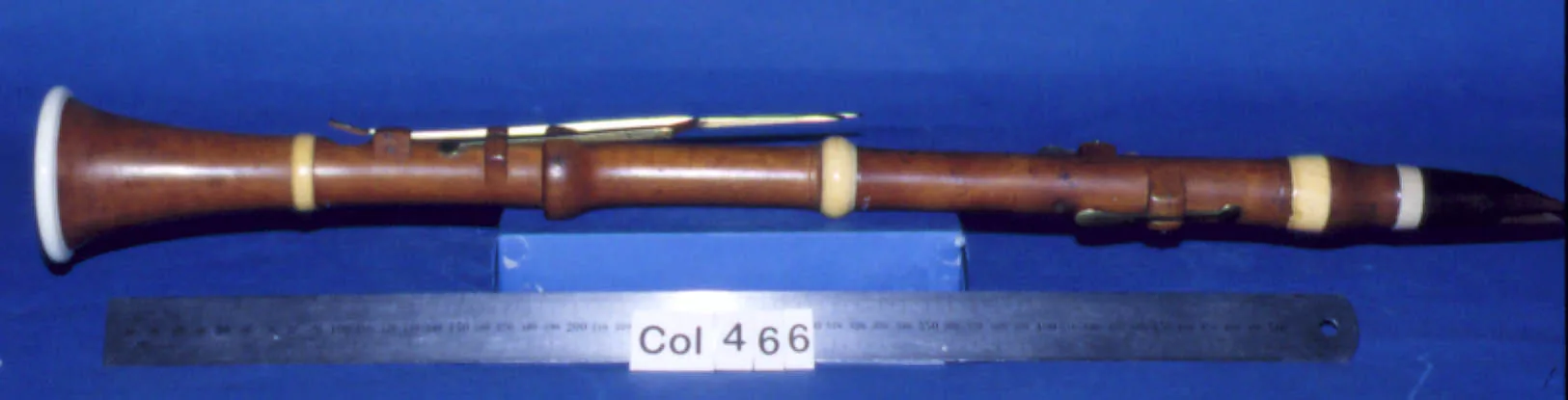
The original instrument: the basset clarinet
After Mozart’s death, changes were made to his work. Publishers adapted the concerto for clarinets in B-flat or A. Unfortunately, the original score was never published and is now lost. The earliest surviving version dates from 1801 and was published by Johann Anton André for clarinet in A.
In March 1802, a review published in the Allgemeine Musikalische Zeitung criticized the changes made to the original version. The review emphasized the importance of preserving the integrity of Mozart’s work. In 1948, musicologist George Dazeley confirmed that the commonly published solo part was actually an adaptation for the modern clarinet.
Adaptations for the modern clarinet and published editions
The first modern performance on the basset clarinet took place in Prague on June 21, 1951, and was given by Milan Kostorhyz. This performance marked a turning point in the rediscovery of the original work. In September 1968, Hans-Rudolf Stalder made the first recording on a modern basset clarinet with the Kölner Kammerorchester.
Musicologists such as Jiří Kratochvil attempted to reconstruct the original version for the Neue Mozart-Ausgabe. These efforts reflect the growing interest in the basset clarinet and its role in Mozart’s work. Today, performers such as Sabine Meyer continue to explore the concerto by pairing it with other compositions, including the Sinfonia Concertante, K. 297b, thereby illustrating the enduring importance of this music.
| Year | Event |
|---|---|
| 1788 | Creation of the basset clarinet by Stadler and Lotz |
| 1801 | Publication of the first version by Johann Anton André |
| 1802 | Review in the Allgemeine Musikalische Zeitung |
| 1948 | George Dazeley’s research into the modern adaptation |
| 1951 | First modern performance by Milan Kostorhyz |
| 1968 | First modern recording by Hans-Rudolf Stalder |
Mozart’s Clarinet Concerto explained simply
Wolfgang Amadeus Mozart’s masterful work unfolds across three captivating movements. This classical structure follows a fast-slow-fast pattern and consists of an allegro, an adagio, and a rondo. The work lasts approximately 28 minutes, making it one of the pinnacles of the clarinet repertoire.
Each movement has its own personality. The allegro stands out for its liveliness, while the adagio evokes profound melancholy. Finally, the rondo radiates optimism and joy. This emotional variety makes the work unforgettable.
Overview of the work and its structure
The concerto is dedicated to Anton Stadler, a virtuoso clarinetist and friend of Mozart. Stadler and his brother Johann were members of the Viennese court orchestra. Their Masonic connection undoubtedly helped inspire this composition.
Stadler was recognized as a man of exceptional talent, as noted by the Berlin Musikalisches Wochenblatt in January 1792. The work resulted from close collaboration between Mozart and Stadler and highlights the distinctive features of the basset clarinet, the instrument for which it was written.
Anton Stadler, dedicatee and source of inspiration
The basset clarinet, developed by Stadler and instrument maker Theodor Lotz, extended the clarinet’s range. This innovation influenced the composition of the work and provided a unique palette of sounds.
An arrangement for piano quintet, published by Schwencke between 1799 and 1805, provides valuable clues about the now-lost original version. The Masonic context shared by Mozart and Stadler imbues the work with a spirit of fraternity.
| Year | Event |
|---|---|
| 1791 | Composition of the Clarinet Concerto |
| 1792 | Recognition of Stadler as an exceptional talent |
| 1799-1805 | Publication of the arrangement for piano quintet |
Detailed analysis of the movements
Each movement of this work is a unique musical exploration. The first movement, Allegro, unfolds in A major. It is structured in sonata form, consists of 359 measures, and lasts approximately 12 minutes. The movement opens with the orchestra presenting the main theme, which is both gentle and delicate.
In this opening section, the soloist enters with elegance and playfulness. Notably, there is no traditional cadenza at the end; instead, Mozart uses two brief fermatas, emphasizing the soloist’s virtuosity. This choice creates a distinctive momentum that enriches the listening experience.
First movement: Allegro
Originally written in G major for basset horn, this movement illustrates the clarinet’s flexibility. The central theme, in A major, is played by the woodwinds, highlighting the instrument’s upper and lower registers. The coda, with alternating pizzicatos in the string quartet, carries us toward musical heights and invites us to look beyond.
Second movement: Adagio
The second movement, entitled Adagio, is in D major and is often considered the concerto’s most famous movement. Its aria-like structure (A-B-A) creates a poetic dialogue between soloist and orchestra. The gentle, serene main theme is imbued with a deep nostalgia that captivates the listener.
The development alternates between the low chalumeau register and the high clarino register. This contrast enriches the movement and gives it a dreamlike, melancholy quality that has also made the work popular in films.
Third movement: Rondo
The third movement, Rondo Allegro, in A major and 6/8 time, concludes the work with optimism and enthusiasm. From the outset, the soloist presents an airy theme that is quickly taken up by the orchestra. Filled with joy, this movement stands out for its virtuosity and brilliance.
A famous quotation describes this Rondo:
“No words can express how admirable this music is. Its formal perfection and spiritual elevation would unquestionably give it the status of a final testament… were it not for the Requiem.”
This statement underscores the importance and beauty of the piece.
The three movements thus form a complete emotional journey, progressing from energy to contemplation and then to joy. Each movement contributes to the richness of the work and bears witness to its composer’s genius.

The role of the orchestra and orchestration in the concerto
In Wolfgang Amadeus Mozart’s work, the orchestra plays a fundamental role. The composition is carefully orchestrated to showcase each instrument, thereby creating a unique harmony. This orchestration enriches the musical experience and emphasizes the soloist’s virtuosity.
The Clarinet Concerto is distinguished by its specific instrumentation. It includes:
- 1 clarinet in A (or basset clarinet in A)
- 2 flutes
- 2 bassoons
- 2 horns in A
- A string ensemble: first violins, second violins, violas, cellos, and double basses
This variety of instruments allows Mozart to explore fascinating combinations of sound. The woodwinds, particularly the flutes and bassoons, bring lightness and depth to their dialogue with the solo clarinet. The two horns in A enrich the harmony, adding a warm color to the orchestra as a whole.
The strings support the soloist and respond with delicacy. Mozart created a remarkable balance between the clarinet and the orchestra, avoiding any heaviness despite the richness of the timbres. This dialogue between soloist and orchestra is central to the architecture of the work.
The tutti passages, in which the orchestra interacts with the soloist, illustrate writing that is dense but never ponderous. The subtle distinction between melody and concertante parts characterizes Mozart’s orchestral writing. It allows each instrument to shine while maintaining a cohesive sound.
As one expert states:
“No composer has approached such a high level of quality in the genre of the wind-instrument concerto.”
This quotation emphasizes the excellence of Mozart’s orchestration and his ability to bring out the best in every instrument.
In short, the orchestra does more than merely accompany the soloist; it actively participates in presenting the themes, particularly in the first movement, where it introduces the main theme. This masterful orchestration contributes to the work’s evocative power.
| Instruments | Role |
|---|---|
| Clarinet in A | Main soloist, interacting with the orchestra |
| Flutes | Provide lightness and brilliance |
| Bassoons | Add depth and richness |
| Horns in A | Enrich the harmony and provide a warm color |
| Strings | Support and respond to the soloist |
The Clarinet Concerto’s technical characteristics
The distinctive nature of the basset clarinet directly influenced the composition of this work. The instrument can descend to low C, providing an extended range of four notes below that of the standard clarinet in A. Mozart probably incorporated these characteristics into his writing.
The passages that exploit the basset clarinet’s low register are essential. For example, measures 45 to 51 and measure 57 of the Adagio highlight the instrument’s rich sound. This demonstrates Mozart’s skill in making use of the basset clarinet’s unique capabilities.
An autograph sketch of 199 measures, held by the Rychenberg Stiftung in Winterthur, corresponds to the beginning of a concerto for basset horn (K. 584b/K. 621b). This sketch provides valuable clues about Mozart’s original intentions.
Jiří Kratochvil altered forty-two passages in his edition for the Neue Mozart-Ausgabe to restore the basset clarinet version. This highlights the challenges involved in reconstructing the original score, given the absence of the definitive autograph manuscript.
Furthermore, Schwencke’s quintet arrangement offers some interesting clues, including an unexpected interval of a ninth at the end of the Adagio. These elements reveal the compositional features that distinguish the work from other clarinet pieces of the Classical period.
The engraving discovered in Riga by Pamela Poulin in 1992, depicting Stadler’s basset clarinet with its pear-shaped bell, sheds light on the instrument’s development. Understanding these technical characteristics is essential for a performance faithful to the spirit of the work.

The evolution of performances through the ages
Since the work’s premiere in 1791, performances have undergone a fascinating evolution. Initially, the modified version was used for almost 150 years without critical scrutiny. It was not until 1938 that Oskar Kroll, a clarinetist and musicologist, began studying the work, paving the way for a reassessment of its performance.
In 1948, George Dazeley confirmed that the solo part was merely an adaptation. This discovery marked a turning point in performance history. The first modern performance on the basset clarinet took place in Prague on June 21, 1951, and was given by Milan Kostorhyz. This event made it possible to rediscover Mozart’s true intentions.
In September 1968, Hans-Rudolf Stalder made the first modern recording on the basset clarinet, further increasing interest in this approach. Today, most concerts still use the clarinet in A, but interest in historical instruments is enjoying a resurgence.
- An account of the evolution of performances from the premiere to modern period-instrument approaches.
- An analysis of the period from 1801 to 1950, during which the modified version was played without critical scrutiny.
- An introduction to the pioneering work of Oskar Kroll and George Dazeley, who paved the way for the rediscovery of the original version.
- A discussion of the first modern basset clarinet performance by Milan Kostorhyz.
- A description of the first recording on a modern basset clarinet by Hans-Rudolf Stalder, a milestone in performance history.
- An analysis of the different schools of performance: the Romantic approach, the historically informed approach, and the modern approach.
- A presentation of Pamela Poulin’s research, which uncovered Stadler concert programs in Riga featuring an engraving of the instrument.
- A comparison of performances on the modern clarinet and the basset clarinet, with the respective advantages of each.
- A discussion of the present-day coexistence of both performance traditions in the musical world.
- A reflection on the contribution of musicological research to the understanding and performance of this major work.
This interplay among different approaches enriches the work’s value and demonstrates its importance in the world of classical music. Today’s clarinetists continue to explore these variations, keeping Mozart’s legacy alive through their performances.
The technical challenges faced by clarinetists
Performing this masterpiece requires advanced technique and deep understanding. Clarinetists must master complex elements to do justice to the work. This concerto is considered one of the most difficult pieces in the clarinet repertoire.
The technical challenges include an extended range. With its additional low notes, the basset clarinet requires perfect breath control. This makes it possible to achieve the nuances required in each passage.
In the first movement, virtuoso passages featuring trills and arpeggios test the clarinetist’s dexterity. These sections demand great precision and remarkable agility.
Another challenge lies in alternating between the low chalumeau register and the high clarino register. Maintaining an even tone across these registers is crucial to the performance.
In the Adagio, tone and expression are paramount. Purity of tone and emotional depth must come to the fore, presenting the soloist with an additional challenge.
Moreover, the absence of a written cadenza in the first movement leaves room for improvisation. This requires a subtle understanding of Mozart’s style, balancing lightness and depth.
The Rondo also presents specific difficulties. Its fast tempo and virtuoso passages demand considerable agility and excellent technical preparation.
Performance choices concerning ornaments and appoggiaturas should be based on eighteenth-century performance practices. This enriches the interpretation while respecting the original work.
Clarinetists wishing to tackle this piece are advised to work on their breath control, study the different editions, and listen to leading performers. These elements are essential for a successful interpretation of the concerto.
Benchmark recordings and major performers
The performance history of this piece is marked by significant moments and memorable recordings. Since the 1950s, clarinetists have helped this work shine in the world of classical music.
The first recording on a modern basset clarinet was made by Hans-Rudolf Stalder in September 1968. He collaborated with the Kölner Kammerorchester under the direction of Helmut Müller-Brühl. This recording became an essential reference for modern performances.
Other notable recordings include those made by Hans Deinzer for Harmonia Mundi, based on Jiří Kratochvil’s reconstruction. These versions made it possible to rediscover the subtleties of the original work.
Clarinetists such as Sabine Meyer and Martin Fröst have also recorded the work with prestigious orchestras including the Berliner Philharmoniker and the London Symphony Orchestra.
Here are some key points concerning benchmark recordings:
- An introduction to the historic recordings that have shaped the concerto’s performance history since the 1950s.
- An analysis of the first recording on a modern basset clarinet by Hans-Rudolf Stalder, an essential reference.
- A discussion of Hans Deinzer’s recordings for Harmonia Mundi, based on Jiří Kratochvil’s reconstruction.
- Profiles of the great clarinetists who have shaped performances of this work: Sabine Meyer, Martin Fröst, Jack Brymer, and Gervase de Peyer.
- An analysis of period-instrument recordings by specialized ensembles such as the Orchestre des Champs-Élysées.
- A comparison of different interpretative approaches: tempo, ornamentation, and the use of either the basset clarinet or the modern clarinet.
- An introduction to the essential contemporary recordings regarded as authoritative by clarinetists and music lovers.
- A discussion of Michel Arrignon’s recording, a French-language reference for the Adagio.
- Advice on choosing a benchmark recording according to one’s stylistic preferences and familiarity with the work.
These recordings and performers have not only enriched the repertoire but have also helped preserve the value and legacy of this work in the world of music.
The concerto in culture and its musical legacy
The concerto’s place in modern culture is undeniable. Since its creation, the work has resonated in many fields, particularly cinema. One iconic example is Jean-Luc Godard’s 1960 film Breathless, in which music occupies a central place. The film paved the way for a series of cinematic works that incorporated this concerto.
In Godard’s Masculine Feminine, excerpts from the piece are also used to emphasize the aesthetics of the French New Wave. This artistic movement gave prominence to works of classical music, and the concerto found a natural place within that context. Films such as the Taviani brothers’ Padre Padrone and Bertrand Blier’s Get Out Your Handkerchiefs, both released in 1978, continued to explore this music.
The slow movement, the Adagio, was also adapted by John Barry for the soundtrack of Out of Africa (1985). This adaptation contributed to the work’s worldwide renown. The second movement also appears in Jean Becker’s Conversations with My Gardener (2007) and Yann Samuell’s With Love… from the Age of Reason (2010), demonstrating its enduring impact.
In addition, the concerto appears in the British film The King’s Speech (2010), which won several Academy Awards. The film illustrates how classical music can heighten cinematic emotion and storytelling. Even the television film Jaune iris (2015) features a few measures from the second movement, further demonstrating the work’s versatility.
In literature, Christian Gailly’s novel K. 622, published in 1989, takes its title from the piece’s catalogue number. This shows how Mozart’s music also inspires writers and enriches literary culture.
In terms of its musical legacy, the concerto continues to influence contemporary composers. Its inclusion in the classical repertoire makes it an essential work. It is also frequently performed in clarinet competitions around the world, demonstrating its importance in music education.
This timeless work continues to move listeners more than two centuries after its composition. Its ability to touch hearts across generations and in different contexts makes it unique in the history of classical music. With its emotional richness and beauty, the Clarinet Concerto remains a cornerstone of the musical repertoire.
Conclusion
This timeless masterpiece, created by Wolfgang Amadeus Mozart, left its mark on music history. The Concerto in A major, K. 622 is an iconic work that demands great technical mastery. It established the clarinet as a recognized solo instrument, showcasing its expressive and technical capabilities.
Anton Stadler, a virtuoso clarinetist and friend of Mozart, played an essential role in the creation of this unique work. Composed in October 1791, between The Magic Flute and the Requiem, it bears witness to its composer’s extraordinary creative energy.
The piece stands out for its three-movement structure: Allegro, Adagio, and Rondo. Each movement offers great richness in its orchestral writing, while the technical characteristics associated with the basset clarinet underscore the instrument’s importance.
Over the centuries, performance practices evolved, enabling the original version to be rediscovered in the twentieth century. The work’s cultural impact, particularly in cinema, reinforces its place in the repertoire of great musicians. Listen to this work and allow yourself to be moved by its timeless beauty.