
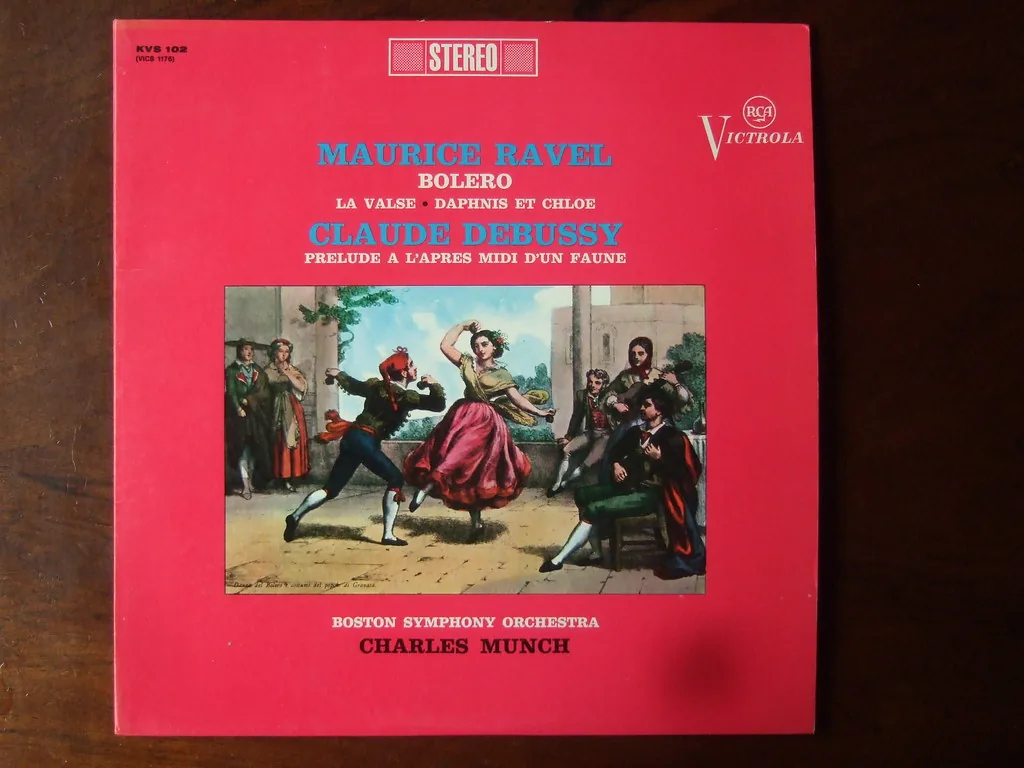
Claude Debussy, one of the most influential composers of the nineteenth century, left his mark on music history through his revolutionary approach. His work, often associated with Impressionist music, redefined the boundaries of harmony and melody.
His connection with Impressionism was not limited to music. Debussy drew inspiration from the visual arts, creating soundscapes that evoke paintings. The Prelude to the Afternoon of a Faun is often cited as a pivotal work illustrating this fusion of music and painting.
Nevertheless, applying the term “Impressionism” to his music remains controversial. Some believe that it diminishes the complexity of his style. Whatever the case, Debussy’s legacy continues to influence later generations, making him an essential figure in music history.
Introduction to Claude Debussy and Impressionist Music
At the heart of the nineteenth century, a new musical approach emerged, characterized by fluidity and suggestiveness. This Impressionist music stands out for its unresolved harmonies and fluid rhythms, creating evocative soundscapes.
What Is Impressionist Music?
Musical Impressionism, like its counterpart in painting, seeks to capture atmospheres rather than precise forms. Composers use complex harmonies and suggestive melodies to evoke emotions and images. According to Tristan Murail,
“If ‘Impressionism’ means, above all, the opposite of ‘Expressionism,’ I could agree”
.
Claude Debussy: A Pioneer of Musical Impressionism
Claude Debussy, often regarded as the leading representative of this movement, rejected the label “Impressionist.” Yet his work, such as La Mer, is often described as a “symphony of tonal colors.” Louis Laloy said of him:
“Debussy paints with sounds”
, thereby emphasizing his close connection with visual art.
To learn more about this debate, read this in-depth analysis.
The Life of Claude Debussy: A Unique Artistic Journey
Born in 1862 in Saint-Germain-en-Laye, Claude Debussy left an enduring mark on music history. From a very young age, he displayed exceptional talent, which led him to begin his musical training early and pursue a career rich in innovation.

Childhood and Musical Training
At the age of eight, Debussy began studying piano with his aunt, Antoinette Mauté, a pupil of Chopin. At ten, he entered the Paris Conservatory, where he developed his skills in composition and harmony. His talent was quickly recognized, and in 1884 he won the first Prix de Rome with his work L’Enfant prodigue.
Early Influences and First Compositions
Debussy was deeply influenced by his stays in Russia, particularly with Nadezhda von Meck, Tchaikovsky’s patron. These experiences enriched his musical style. At seventeen, he composed his first songs, inspired by poems by Musset. He also distinguished himself through his rejection of academic conventions, always seeking to push the boundaries of traditional music.
| Event | Year | Details |
|---|---|---|
| Birth | 1862 | Saint-Germain-en-Laye |
| Entry into the Conservatory | 1872 | Paris |
| First Prix de Rome | 1884 | L’Enfant prodigue |
| First compositions | 1879 | Inspired by Musset |
To learn more about his journey, read this detailed biography.
Debussy’s Major Works
Debussy’s creations redefined the conventions of music, paving the way for new explorations of sound. Among his most famous works, some marked a turning point in the history of musical art. These pieces, often inspired by nature and poetry, continue to captivate listeners with their originality and depth.
Prelude to the Afternoon of a Faun: A Musical Revolution
The Prelude to the Afternoon of a Faun, premiered in 1894, is often regarded as a pivotal work. Inspired by Mallarmé’s poem, the piece stands out for its metrical fluidity and innovative harmonies. Pierre Boulez stated:
“Debussy frees music from its formal constraints”
, thereby emphasizing the piece’s impact on musical development.
Pelléas et Mélisande: An Impressionist Opera
The opera Pelléas et Mélisande represents a break with operatic traditions. Debussy uses a natural voice and fluid prosody, creating an intimate, poetic atmosphere. Based on Maeterlinck’s play, this work is often described as a masterpiece of musical Impressionism.
La Mer: A Symphony of Tonal Colors
La Mer, composed between 1903 and 1905, is a masterful evocation of seascapes. Debussy uses aquatic motifs and complex harmonies to paint pictures in sound. This three-movement symphony is often compared to a pictorial work in which every note seems to convey a shade of color.
Impressionism in Debussy’s Music
Debussy knew how to capture the essence of the moment, transforming music into a sensory experience. His approach, characterized by the primacy of the moment, redefined the conventions of composition. He drew on Japanese art to enrich his musical language, creating works that evoke soundscapes.

The Characteristics of Musical Impressionism
Musical Impressionism is distinguished by its rejection of traditional structures. Debussy explored pentatonic scales and ancient modes, giving his compositions a unique sound. Timbre became a central element, often replacing melody as the structural foundation.
He also abandoned classical cadences, opting for fluid, suggestive transitions. This innovative use of harmony made it possible to create rich, evocative atmospheres. As this analysis explains, Debussy succeeded in fusing art and music.
How Did Debussy Transform Classical Music?
Debussy revolutionized music by introducing innovative concepts. Inspired by Japanese prints, he composed pieces such as Images for Piano, in which every note seems to paint a picture. His approach influenced many later composers.
He also emphasized tonal color, as shown by his correspondence with André Caplet. This search for nuance allowed music to become a visual and emotional experience. Debussy thus paved the way for a new aesthetic, permanently shaping the history of art.
| Element | Description |
|---|---|
| Pentatonic scales | Exploration of ancient sonorities |
| Timbre | Central structural element |
| Cadences | Abandonment of traditional forms |
| Japonism | Influence of Japanese prints |
Debussy and the Other Arts
Debussy’s artistic world extends far beyond music. He drew inspiration from many fields, building bridges between music, painting, and literature. This interdisciplinary approach enabled his work to reach a broader audience and take its place in an artistic world undergoing profound change.

The Connections Between Music and Impressionist Painting
Debussy was often compared with Impressionist painters, especially Monet. His compositions, such as Reflections in the Water, evoke Monet’s water lilies through their fluidity and chromatic richness. He was also influenced by Hokusai’s Japanese prints, which he admired for their minimalism and expressiveness.
This fusion of music and painting gave rise to works in which every note seems to paint a picture. Kandinsky, moreover, stated:
“Debussy paves the way for musical abstraction”
, thereby emphasizing the impact of his approach on modern art.
The Influence of Symbolist Literature on Debussy
Symbolist literature also played a key role in Debussy’s work. He collaborated with poets such as Mallarmé and Maeterlinck, translating their poems into soundscapes. The Five Poems of Baudelaire illustrate this influence perfectly: each song seems to capture the essence of the verse.
The debate over synesthesia in The Sounds and Perfumes Swirl Through the Evening Air shows the extent to which Debussy sought to fuse the senses. This quest for a total artistic universe shaped his legacy and continues to inspire today’s creators.
| Art | Influence on Debussy |
|---|---|
| Impressionist painting | Fluidity and chromatic richness |
| Japanese prints | Minimalism and expressiveness |
| Symbolist literature | Soundscapes and synesthesia |
Debussy’s Influence on Later Composers
Debussy’s legacy has endured across eras, profoundly influencing later generations. His revolutionary approach redefined the conventions of music, paving the way for new explorations of sound. The composers who followed him drew on his work to enrich their own musical language.

Debussy’s Heirs in Modern Music
Debussy inspired a direct line of composers, including Maurice Ravel and Henri Dutilleux. Ravel, often compared with Debussy, developed a distinct style while adopting some of his harmonic innovations. Dutilleux, for his part, explored tonal textures through an approach similar to that of his predecessor.
The spectral school, represented by Tristan Murail and Gérard Grisey, was also shaped by Debussy’s work. Grisey stated:
“Debussy paved the way for a new way of listening to sound, in which timbre becomes a living entity.”
Debussy’s Impact on Twentieth-Century Music
In the twentieth century, Debussy’s influence extended beyond classical music. Jazz musicians such as Bill Evans and Duke Ellington reinterpreted his harmonies, incorporating his chords into their improvisations. The composer György Ligeti also drew on Debussian clusters to enrich his own style.
Stravinsky, one of the greatest composers of the twentieth century, paid tribute to Debussy by stating:
“Debussy is the oxygen of modern music.”
| Composer/Movement | Debussy’s Influence |
|---|---|
| Maurice Ravel | Harmonic innovations and tonal textures |
| Spectral school | Exploration of timbre and sound |
| Bill Evans | Jazz reinterpretation of chords |
| György Ligeti | Use of Debussian clusters |
Debussy and the Prix de Rome
Winning the Prix de Rome in 1884 was a key milestone for Debussy, despite the institutional challenges. This prestigious competition, organized by the Academy of Fine Arts, was a springboard for young composers. However, it imposed strict rules that often conflicted with Debussy’s free spirit.
His victory with the cantata L’Enfant prodigue marked the beginning of his recognition. Although academic, this work already reveals his talent for harmony and melody. Nevertheless, Debussy soon expressed his discomfort with the rigid expectations of the Institut de France.
The Competition and Its Implications for Debussy
The Prix de Rome was an essential rite of passage for students at the Paris Conservatory. Debussy, then twenty-two years old, had to adapt his style to meet the jury’s criteria. Although this experience strengthened his technical abilities, it also intensified his rejection of academic conventions.
In his letters, Debussy often criticized the restrictions imposed by the Institut. He wrote:
“I cannot compose under constraint. Music must be free, like the mind.”
This tension shaped his artistic life, encouraging him to explore more personal paths.
Compositions from His Stay at the Villa Medici
Debussy’s stay at the Villa Medici (1885–1887) was a period of transition. Far from the constraints of Paris, he was able to experiment with new ideas. It was there that he composed Printemps, a piece that foreshadowed his Impressionist style.
The Roman landscapes also influenced his work. In La Damoiselle élue, one finds a subtle use of tonal colors inspired by Italian light and atmosphere. These works demonstrate his development toward a freer, more expressive musical language.
| Event | Year | Details |
|---|---|---|
| Prix de Rome | 1884 | Victory with L’Enfant prodigue |
| Stay at the Villa Medici | 1885-1887 | Composition of Printemps |
| Roman influence | 1886 | Inspiration for La Damoiselle élue |
To learn more about this period of his life, read this detailed biography.
The Critical Reception of Debussy
Debussy’s work prompted contrasting reactions from the time it was first performed. His innovative style often bewildered the public while attracting the admiration of certain avant-garde minds. This duality shaped his career and continues to influence his legacy.
Contemporary Reactions to His Work
The premiere of Pelléas et Mélisande in 1902 caused a genuine scandal. Some critics called the opera “decadent,” rejecting its unconventional approach. However, figures such as Colette and Pierre Louÿs defended his genius, recognizing his boldness and modernity.
Camille Saint-Saëns, one of his contemporaries, was particularly harsh. He criticized Debussy’s work for straying too far from classical traditions. This opposition illustrated the gulf between the guardians of academic convention and the pioneers of modernity.
Debussy’s Legacy in Music Criticism
In the 1920s, the Nouvelle Revue française reassessed Debussy’s work, emphasizing its importance in music history. This rediscovery enabled a better understanding of his contribution to musical art.
Pierre Boulez, one of the greatest conductors of the twentieth century, played a key role in this rehabilitation. He stated:
“Debussy paved the way for a new kind of listening, in which every sound becomes an experience.”
Today, Debussy’s works occupy a central place in symphonic programs around the world. His influence transcends eras, confirming his status as a major figure in musical history.
Debussy and Chamber Music
With his String Quartet, Debussy redefined the conventions of chamber music. Composed in 1893, this work marked a turning point in his career as a composer. It introduced cyclic forms, an innovation that influenced many artists after him.
Syrinx, a piece for solo flute, is also regarded as a pivotal work. It reveals Debussy’s ability to create intimate atmospheres with a single instrument. This part of his repertoire demonstrates his talent for economy of means and tonal suggestion.
The String Quartets and Other Chamber Works
The Quartet, Op. 10 is often compared with Chopin’s miniatures for its emotional density. Debussy explores complex textures while retaining a certain lightness. This work paved the way for new explorations in chamber music.
The late sonatas, particularly those for cello and violin, demonstrate the evolution of his style. They combine classical elements with modern harmonies, creating a dialogue between tradition and innovation.
The Evolution of Chamber Music Through Debussy
Debussy reinvented musical intimacy, as Francis Poulenc emphasized:
“Debussy reinvents musical intimacy, transforming every note into a sensory experience.”
His approach influenced generations of composers, who drew on his work to enrich their own language. The Estampes, for example, show how Debussy fused music with visual art to create evocative soundscapes.
Finally, his innovative use of the piano in works such as Clair de lune redefined the instrument’s role in chamber music. Debussy thus opened up new possibilities, making him an essential figure in music history.
Debussy’s House in Saint-Germain-en-Laye
In the heart of Saint-Germain-en-Laye, a place steeped in history welcomes music enthusiasts. Claude Debussy’s birthplace, converted into a museum in 1990, is a living tribute to his legacy. With its seventeenth- and eighteenth-century architecture, the house immerses visitors in the composer’s intimate world.
A Place of Remembrance and Culture
The house holds previously unpublished archives, including letters and annotated scores. The carefully reconstructed room where he was born offers a moving glimpse of Debussy’s beginnings. This place is far more than a museum: it is a window onto the composer’s artistic world.
Exhibitions and Concerts Dedicated to Debussy
Its cultural program is rich and varied. Master classes with renowned artists such as Pierre-Laurent Aimard are regularly organized there. The museum also collaborates with the CNSMDP to support young performers. These initiatives attract a diverse audience, from music lovers to music students.
One memorable anecdote concerns the Pleyel piano used for Children’s Corner. Still on display, this instrument recalls the piano’s importance in Debussy’s work. To learn more about this unique place, visit the museum bearing the “Maison des illustres” label.
Conclusion: Debussy’s Place in Impressionist Music
The legacy of Claude Debussy transcends eras, leaving its mark on the history of musical art. His approach to harmony, form, and timbre opened up new possibilities and influenced generations of composers. Film composers such as Desplat and Herrmann drew on his work to enrich their scores, demonstrating his lasting impact.
Recent musicological research, including the discovery of previously unknown manuscripts, continues to reveal overlooked aspects of his work. These developments show how alive and relevant his music remains. A comparative perspective with literary Impressionism also highlights his ability to fuse artistic disciplines.
As Bachelard said:
“Debussy is the poet of sounding water.”
This quotation perfectly sums up his genius, which continues to inspire and move listeners in the twenty-first century.